



Sign up today to get the best of our expert insight in your inbox
California’s grid under pressure: affordability, AI, and the future of electricity markets

Ed Crooks
Vice Chair Americas and host of Energy Gang podcast
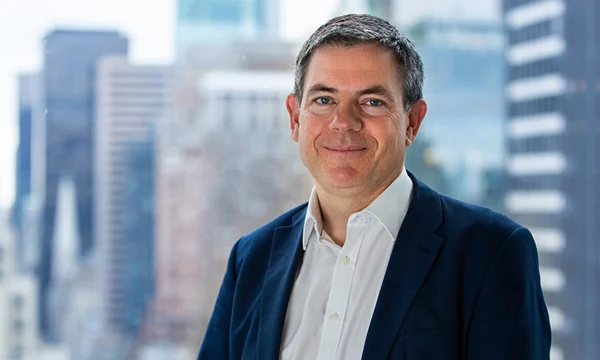
Ed Crooks
Vice Chair Americas and host of Energy Gang podcast
Ed examines the forces shaping the energy industry globally.
Latest articles by Ed
-
Opinion
What Big Oil needs to invest in Venezuela
-
Opinion
Venezuela and what to expect for energy in 2026
-
Opinion
Venezuela regime change: what it means for oil production, crude and product markets
-
Opinion
Electric vehicles create problems for the grid. Could they also help solve them?
-
Opinion
Energy evolution: navigating the path to a sustainable future
-
Opinion
The Energy Pulse review of 2025
California is often described as the state where you can see the future of the US, and of the world. That has certainly been true in terms of some of the problems faced by the electricity grid. California has been grappling with the impact of wildfires and a big shift to renewable generation and now faces the prospect of rising power demand from electrification and data centers.
In this episode, host Ed Crooks and regular guest Amy Myers Jaffe of NYU talk to Elliot Mainzer, President and CEO of the California Independent System Operator (CAISO), to dig into how the state is tackling those challenges.
California’s electricity prices have nearly doubled in eight years, rising to about 32 cents per kilowatt hour for residential customers. Affordability has become a political flashpoint, as it has in many other parts of the US, and other countries around the world. Elliot explains how CAISO is using reforms of transmission planning and interconnection queues to help “bend the cost curve” downwards.
The discussion also covers an important shift that is now under way in western power markets. Governor Gavin Newsom of California recently signed AB 825, advancing an independent regional governance structure for the emerging extended day-ahead market. Elliot outlines how implementing the new law could change reliability, capacity planning, and resource adequacy across 11 states.
Another pressure point is AI, and the data centers needed to support it. While large load growth in California is more modest than in some other states such as Texas or Virginia, the state still expects 2.3 gigawatts of new data center demand by 2030. Ed and Amy question how much flexibility these data centers can provide, whether price pressure is pushing hyperscalers elsewhere in the US, and how CAISO will manage the all-important issues around siting and grid integration.
The episode also dives into one of California’s most contentious debates: the role for distributed energy resources and virtual power plants. Elliot discusses what CAISO can see, what it can’t, and what needs to change for DERs to support affordability and reliability—while highlighting the remarkable performance of the state’s battery fleet in avoiding Flex Alerts for the past three summers.
Finally, the conversation looks ahead to California’s longer-term energy future. The state has set an ambitious energy goals, including sourcing all its electricity from zero-carbon generation by 2045. To achieve that, many gigawatts of new renewables are still required, and wide-area coordination across the western US will have to live up to its full potential. As Elliot puts it, managing this grid is challenging, but “the challenge is energising.”
Stay tuned to Energy Gang as we continue tracking the forces that are reshaping the power industry, from technology and finance to policy and climate.
Let us know what you think. We’re on X, at @theenergygang and Bluesky, at @theenergygang.bsky.social.
Got power? At HiTHIUM, we make sure the answer is always YES. Ranked Top 2 globally in battery shipments for 2025.
HiTHIUM delivers safe, reliable, and profitable energy solutions that keep the clean energy transition powering forward. Let green energy benefit all. Trusted worldwide. Built to last.
Reach out and let’s talk energy that works - for good!