


Digital load, clean grid: How data centres can catalyse grid decarbonisation in the UAE
Data centres are emerging as major power consumers in the UAE — 3 TWh in 2025, projected to exceed 6 TWh by 2030. Over the same period, clean energy will scale to nearly one-third of demand, supported by nuclear and solar, positioning the UAE as a low-carbon digital hub.
2 minute read

Nicolas Groues
Principal Consultant, Emissions and Low-carbon Fuels

Nicolas Groues
Principal Consultant, Emissions and Low-carbon Fuels
Nicolas is part of our emissions and low-carbon fuels consulting practice based in Dubai.
Latest articles by Nicolas
-
Opinion
Digital load, clean grid: How data centres can catalyse grid decarbonisation in the UAE
-
Opinion
Five trends to watch for in the electrolyser supply chain

Rory McCarthy
VP, Head of Power and Renewables Consulting EMEA

Rory McCarthy
VP, Head of Power and Renewables Consulting EMEA
Rory is a Director in the Power & Renewables Consulting division for Europe, the Middle East and African markets.
Latest articles by Rory
-
Opinion
Digital load, clean grid: How data centres can catalyse grid decarbonisation in the UAE
-
Opinion
BESS valuation: revenue and risk outlook for Germany
-
The Edge
Re-thinking energy transition supply chains
-
Opinion
Will renewable auctions underpin Europe’s net zero ambitions?
-
Featured
Will 2021 be a record-breaking year for renewables auctions in Europe?
-
Opinion
Three reasons why Europe is set to lose the energy storage race
The UAE is at a pivotal intersection of digital transformation and energy transition. On one hand, it is positioning itself as a regional leader in artificial intelligence, cloud infrastructure, and smart cities. On the other hand, it has committed to reaching net zero emissions by 2050 and scaling clean energy capacity to meet nearly a third of its power demand by 2030.
Data centres — especially hyperscalers — are central to this digital future. But they are also electricity-intensive assets, forecast to consume over 6TWh in 2030 in the UAE. This creates an urgent imperative to align digital growth with a sustainable power supply.
UAE Data Centre Landscape
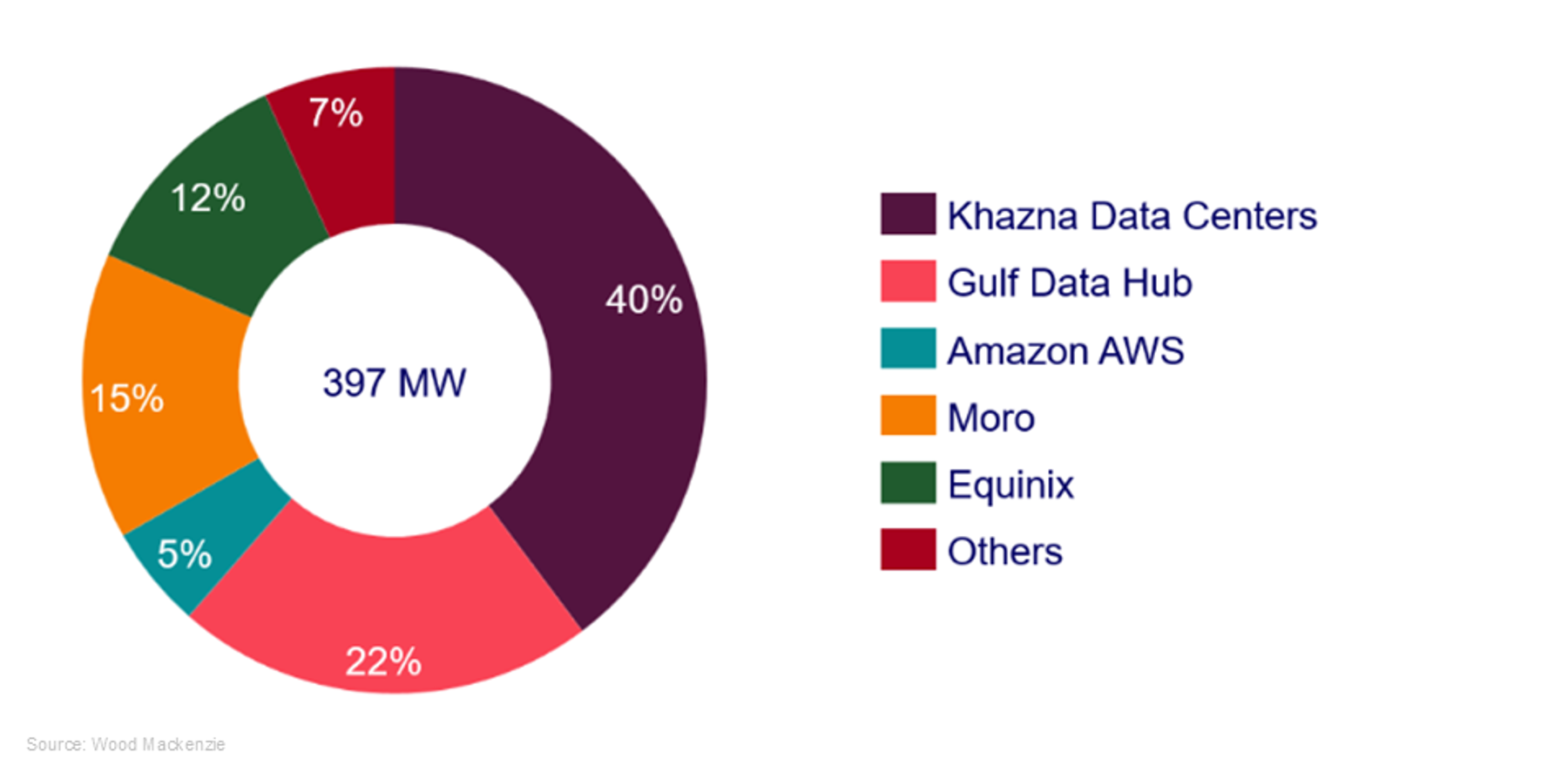
The UAE has rapidly positioned itself as the leading digital infrastructure hub in the Middle East, boasting the region’s largest base of operational data centers. The national market is currently dominated by local champions: Khazna Data Centers holds the largest share of installed capacity, followed by Gulf Data Hub, which is actively expanding with new builds. Global operators such as Amazon Web Services (AWS) and Equinix also maintain a significant and growing presence.
Data centers already represent a notable and rising share of the UAE’s electricity demand. In 2025, total national demand is projected to reach around 173 TWh, with data centers consuming approximately 3 TWh (≈2%). This figure is expected to double to over 6 TWh by 2030, driven by continued digitalization and AI adoption.
The UAE’s aggressive investments in cloud computing, AI, and digital infrastructure are fueling this demand and attracting hyperscalers and global cloud providers, including Microsoft, Google, AWS, Oracle, and OpenAI. Recent announcements underscore the scale and pace of this transformation:
-
Microsoft and G42 launched Stargate UAE — a $1.5 billion AI infrastructure JV (with OpenAI as a partner) — as the centerpiece of G42’s broader ambition to scale UAE data-centre capacity toward 5 GW via domestic and global investment.
-
DU (EITC) announced a $544 million hyperscale data center in partnership with Microsoft.
-
AWS and e& signed a $1 billion agreement to expand cloud services across the Middle East, with a strong UAE focus.

The key question is: can data centres become allies, rather than obstacles, in decarbonising the UAE power grid?
Wood Mackenzie's energy market expertise
If you would like to learn more about how Wood Mackenzie consulting can support your team through transaction or strategy advisory across power, tech, renewables or conventional power assets, please reach out to our team.
Read more
Don’t forget to fill out the form at the top of the page to access your complimentary copy of the full report.