



与我们分析师联系
Europe’s residential storage market: Plateau market growth and high competition push European brands towards HEMS
After decades of growth, Europe's residential energy storage market contracted in 2025 for a second consecutive year, but the market is set for recovery in 2026
1 minute read

Anna Darmani
Principal Analyst, Energy Storage EMEA

Anna Darmani
Principal Analyst, Energy Storage EMEA
Anna is a principal analyst focused on the European, Middle East and African storage markets.
Latest articles by Anna
-
Opinion
Global energy storage market surpasses 100 GW annual installation milestone in 2025
-
Opinion
European Power & Renewables: what to look for in 2026
-
Opinion
Europe’s residential storage market: Plateau market growth and high competition push European brands towards HEMS
-
Opinion
Europe’s power market transition and the role of energy storage
-
Opinion
European power in 2025: the pace, opportunities and challenges of the transition
-
The Edge
Battery energy storage comes of age

Isabel Nieto
Storage Research Analyst | Energy transition & market intelligence

Isabel Nieto
Storage Research Analyst | Energy transition & market intelligence
Isabel is a research analyst focused on the European, Middle East and African storage markets.
Latest articles by Isabel
-
Opinion
European Power & Renewables: what to look for in 2026
-
Opinion
Europe’s residential storage market: Plateau market growth and high competition push European brands towards HEMS
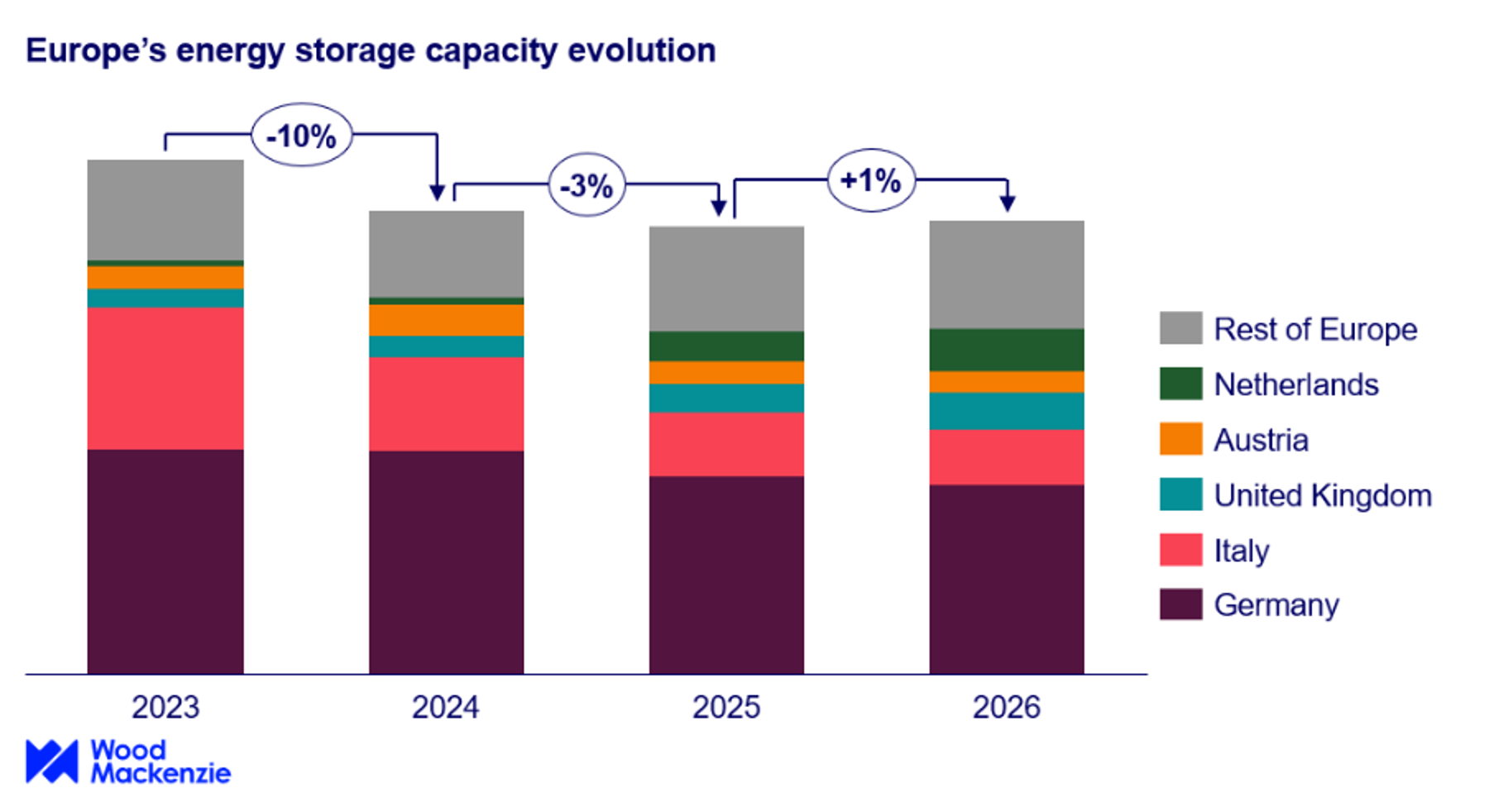
Europe remains the global leader in residential energy storage, accounting for 7 of the top 10 global residential storage markets. However, in 2024 and 2025, installations fell by 10% and 3%, respectively. This decline was driven by the fall in electricity prices following the energy crisis and by the expiry of major subsidies in key markets, which removed two key incentives for storage adoption.

The downturn is now nearing its end, with installations stabilising in 2026 and growth resuming in 2027 and beyond. This recovery is driven by several favourable factors: expanding residential PV markets, rapid home electrification, falling battery prices, and widening electricity import–export gaps. Looking ahead, the wide adoption of dynamic time-of-use tariffs and rising retail electricity prices will provide additional momentum, positioning Europe's residential storage market for sustained long-term growth.
Who stands to benefit from this recovery?
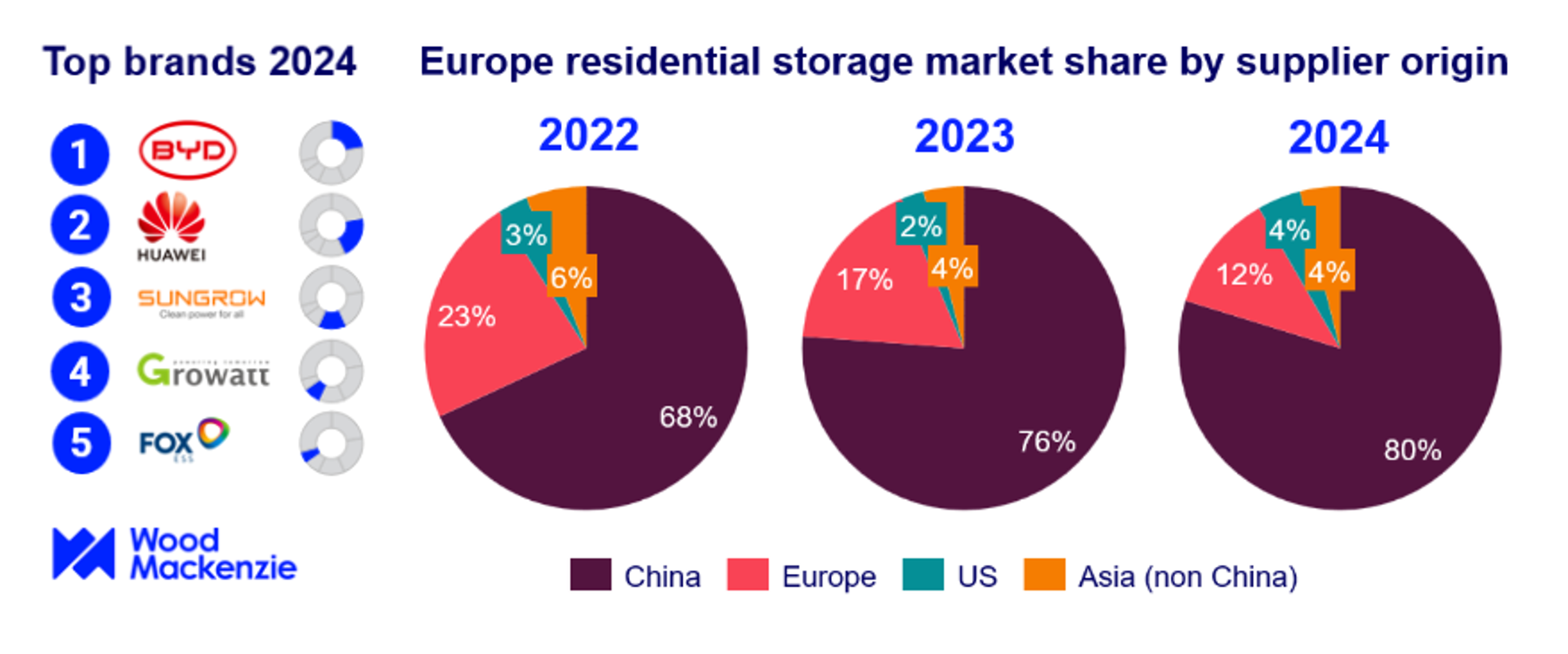
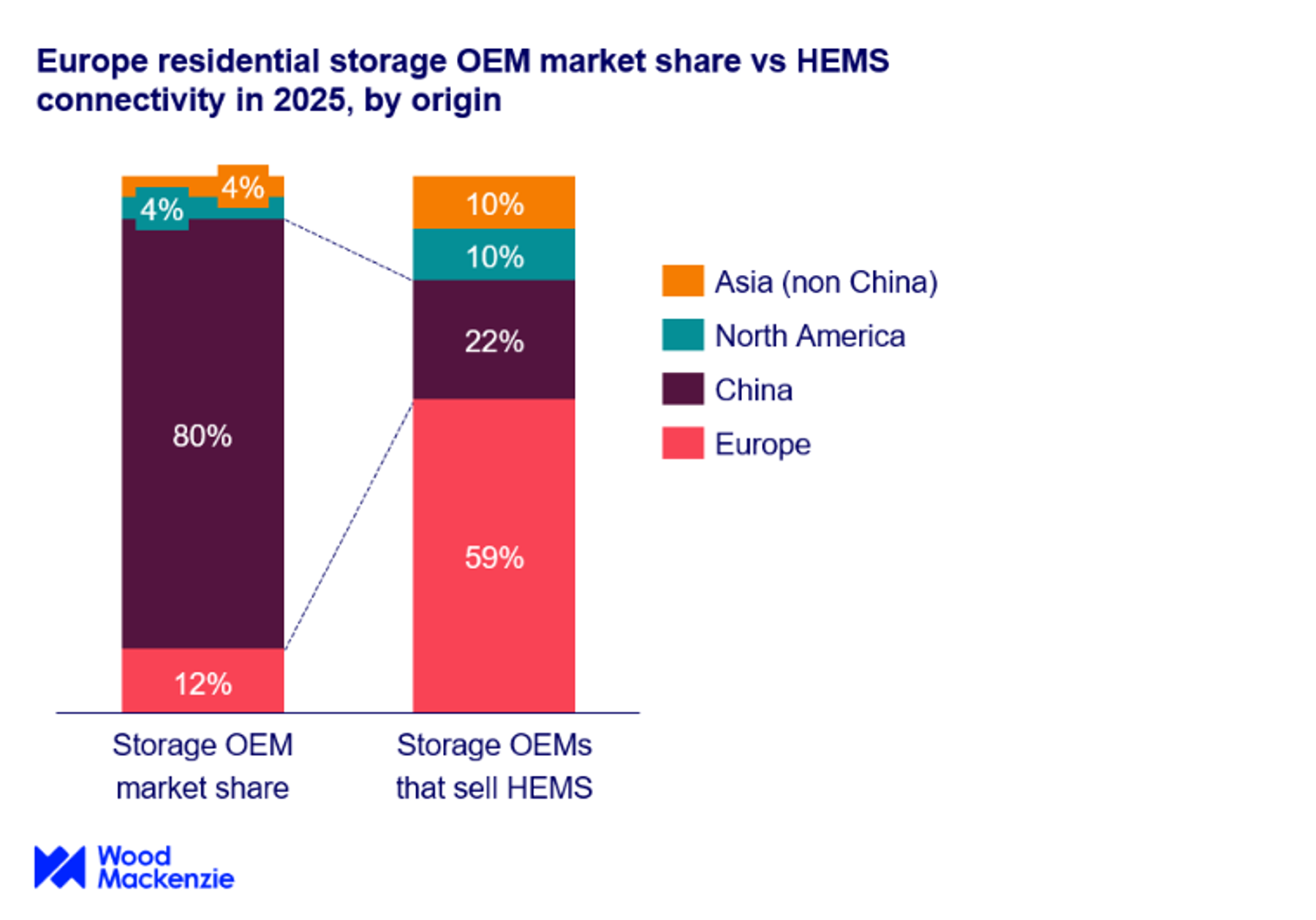
Chinese manufacturers have captured a significant portion of the European residential storage market. If we look at the evolution of company installation shares from 2022 until 2024, this is evident. With Chinese suppliers’ market share growing from 68% in 2022 to 80% in 2024, while European companies' market share fell from 23% to 12%. Indeed, in 2024, all of the top 5 market players had Chinese origins. This dominance has fundamentally reshaped competitive dynamics, forcing once well-established European suppliers to fight over increasingly marginal market segments as Chinese players capitalise on cost advantages and scale to benefit from the market's long-term growth tailwinds.

How are European brands reacting to Chinese dominance?
Unable to match Chinese competitors on price, European storage OEMs are differentiating themselves through home energy management solutions (HEMS). HEMS are systems that monitor, control, and optimise energy flows across household devices, reducing consumption and lowering electricity bills for homeowners. By offering HEMS, European brands can justify their premium hardware costs through added-value services. This strategic focus is evident in the market, with 59% of all storage OEMs providing HEMS being European, compared to just 22% being Chinese.

What does the future of HEMS in Europe look like?
Our recently published report "HEMS in Europe: market overview & future potential" provides a comprehensive analysis of the broader HEMS landscape. The report examines the competitive player ecosystem (looking into 90+ companies that offer HEMS), country-specific market potential, and key use cases with associated revenue opportunities. The three key takeaways from the report are:
- Sweden, Germany, the UK, and the Netherlands demonstrate the highest future HEMS owing to the high installation of residential DERs (PV, storage, EVs and heat pumps), as well as uptake in smart time-of-use tariffs, VPPs and electricity prices,.
- There is a trade-off between revenue and complexity when it comes to connecting devices and offering use-cases. With self-consumption optimisation and storage bringing the highest revenue, and heat pump and grid service market participation bringing the highest complexity.
- Chinese brands are starting to enter the HEMS market, directly challenging European OEMs' differentiation strategy. This poses a significant threat to European brands that have yet to successfully leverage HEMS to capture a significant market share. The key challenge for European OEMs is whether they can establish meaningful HEMS revenue streams and customer lock-in before advanced software capabilities become standard across the industry. Transforming what is now a differentiator into merely another expected feature.