




US L48 gas: injection season ends
Storage inventories peak at 3.96 Tcf after third-largest injection season of the last decade
1 minute read

Daniel Myers
Senior Research Analyst, North America Gas

Daniel Myers
Senior Research Analyst, North America Gas
Daniel delivers short-term fundamental modelling and regional market analysis.
Latest articles by Daniel
-
Opinion
US gas prices slide as storage expectations tighten: what it means for summer 2026
-
Opinion
Natural gas futures shrug off winter storm impact despite storage drawdown
-
Opinion
Winter Storm Fern shuts in 18.3 bcfd of US gas production at its peak
-
Opinion
US L48 gas: injection season ends
-
Opinion
Managing the nitrogen challenge in Permian gas
-
Opinion
NG3 pipeline begins deliveries ahead of schedule
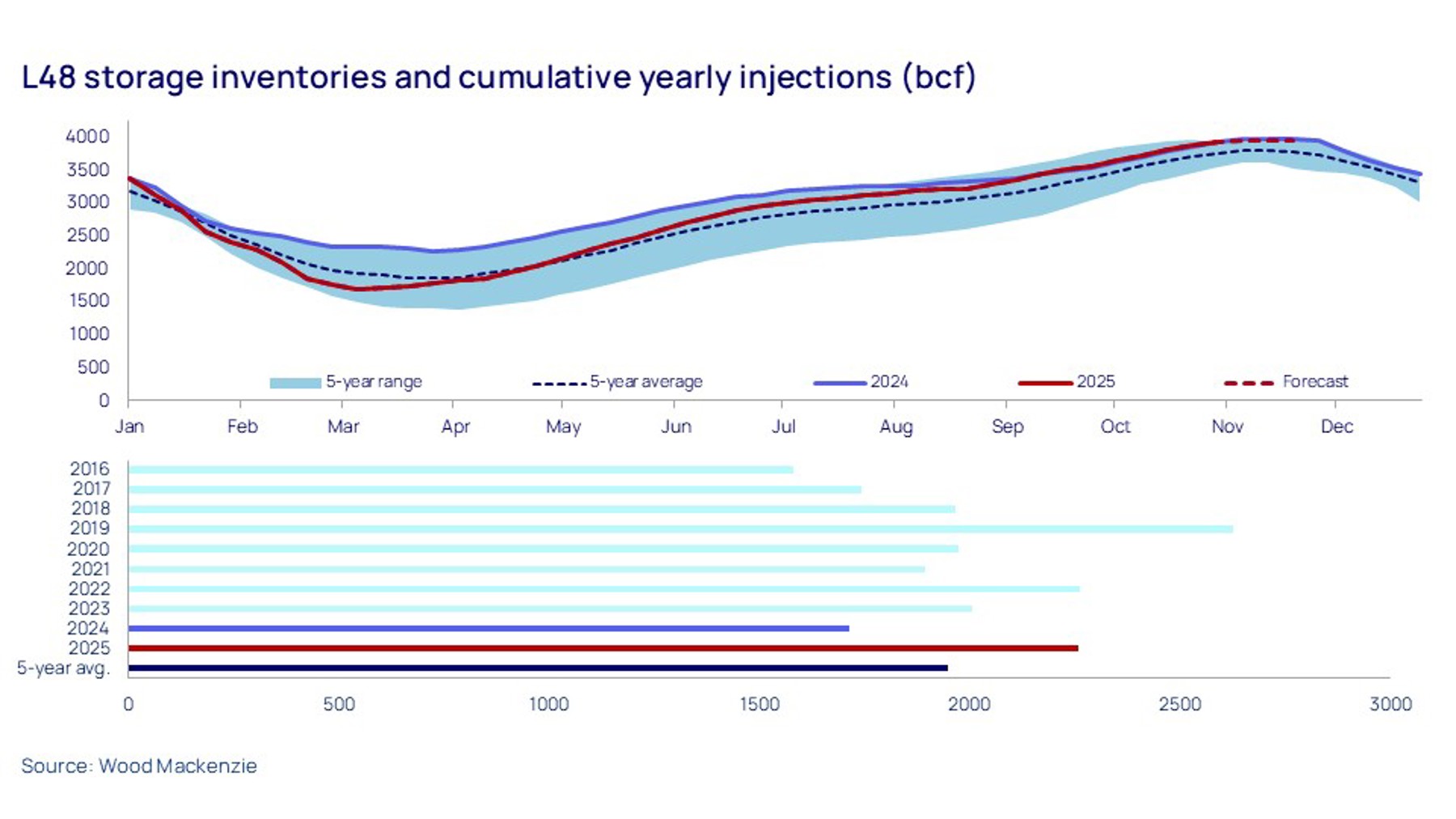
The 2025 injection season began with storage just under 1.7 Tcf—about 27% below last year and 12% below the five-year average. Despite the low starting point, Lower 48 inventories topped out near 3.96 Tcf in early November, essentially matching last year and ending about 4% above the five-year average. Total seasonal injections will reach roughly 2.26 Tcf, the third-largest build of the past decade, behind only 2019 and just marginally below 2022.
Early-Season Drivers
Most of the season’s progress occurred in the spring. A record-tying stretch of seven consecutive triple-digit injections between late April and early June accelerated the storage recovery. The fall shoulder season was more tempered, with the largest injection of 90 Bcf recorded the week ending 10 September.
Market Outlook: Risks Tilted to the Upside
While storage is entering winter in a healthy position, price risks remain skewed upward. The recent rally above $4.50/MMBtu in the front month reflects bullish seasonal price pressures and increasingly tight daily balances, driven primarily by record and rising LNG export levels. Sustained demand growth highlights the importance of supply keeping pace heading into 2025.
Winter Expectations
Our November short-term outlook projects storage exiting winter slightly above 2 Tcf, even under relatively cold, normal-weather assumptions. Cold weather risks in December raise the possibility of lower end-of-season storage scenarios and explain the recent run-up in winter natural gas prices. With exports strong and balances tight, winter dynamics will remain sensitive to both temperature volatility and supply responsiveness.

Fill in the form above to receive future updates and market insights directly in your inbox.