



Q&A: Fields of dreams
Learning how to do more with existing oil fields to meet future demand
1 minute read

Andrew Latham
Senior Vice President, Energy Research

Andrew Latham
Senior Vice President, Energy Research
With his extensive exploration expertise Andrew shapes portfolio development for international oil and gas companies.
Latest articles by Andrew
-
The Edge
How AI can unlock an extra trillion barrels of oil
-
Opinion
Q&A: Fields of dreams
-
Opinion
SEC 2025: Why the SEAPEX region still needs high-impact exploration
-
The Edge
How ultra-deepwater is revitalising oil and gas exploration
-
Opinion
Geothermal energy: the hottest low-carbon solution?
-
The Edge
Low-carbon tech: is geothermal close to a breakthrough?

Josh Dixon
Senior Research Analyst, Upstream

Josh Dixon
Senior Research Analyst, Upstream
Josh co-leads the Wood Mackenzie Plays Centre of Excellence.
Latest articles by Josh
-
The Edge
How AI can unlock an extra trillion barrels of oil
-
Opinion
Q&A: Fields of dreams
-
Opinion
Introducing Analogues
-
Opinion
More running room in Lower 48 efficiencies?

Orla Marnell
Principal Data Scientist, Upstream

Orla Marnell
Principal Data Scientist, Upstream
Latest articles by Orla
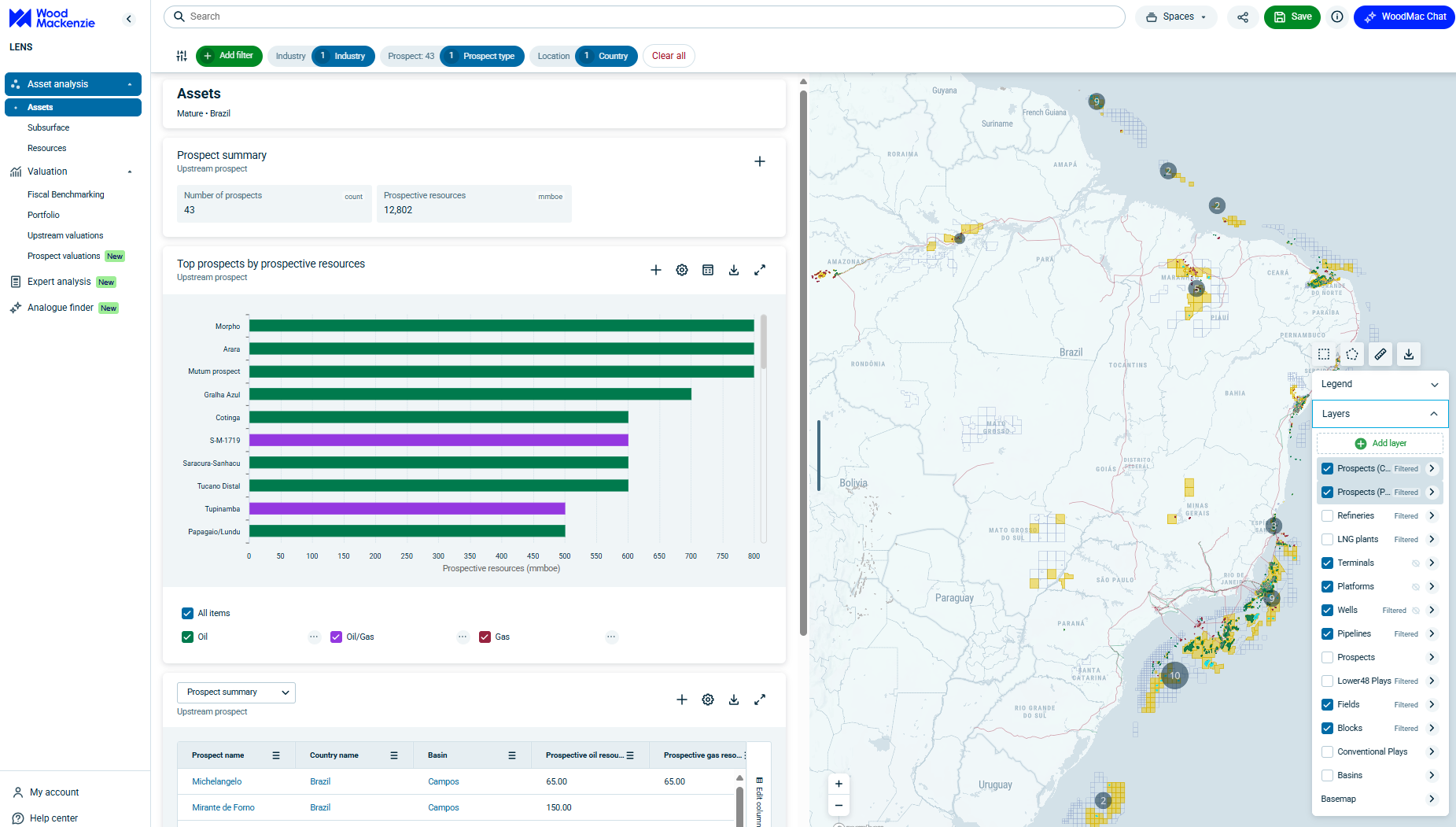
View Orla Marnell's full profileIf the upstream industry is to meet expected oil demand through the middle of the century, it is going to have to do far more with the oil fields it has. Wood Mackenzie’s proprietary Synoptic AI-powered analysis of oil-field performance shows how it might be possible.
Using our data on reservoir geology, hydrocarbon quality, in-place resources, operator access to finance and technology, costs and fiscal terms, we can estimate upside oil recovery factors for every significant field in the world.
In a recent webinar to accompany our latest edition of Horizons on the topic, our analysts answered audience questions on why it is important to understand the potential of existing fields in order to gauge how much the world will need new oil fields in future.
Read on as we answer the first question, or fill out the form to receive the full Q&A.
What is the outlook for oil supply in the coming years?
In the last 2‒3 years, the perception of where oil demand is going has changed. We now think it is likely to be more resilient than we thought a few years ago. We are very unlikely to get the steep dive that would be needed if the world were ploughing ahead to achieve net zero by 2050.
In our base case, we expect oil demand to climb steadily to a peak of around a 108 million barrels per day (mbpd) by 2031. However, we have also developed a delayed energy transition scenario, which sees demand peak at 114 mbpd in 2035, so stronger for longer.
In both cases, the decline after that is quite gradual. Our best guess is that we are going to see oil demand at a pretty high level for at least two decades and probably much longer.
Fill in the form above to read the full Q&A, where we answer:
-
How do we meet longer-term oil demand?
-
Hasn't the world always wondered where the next supply will come from?
-
Does the same question apply to U.S. shale?
-
How can AI help us understand the future — and what kind of data have we tapped into?