




Power decisions are made in gas markets. Gas strategy is shaped in power markets.
Navigate the intersection of fuel supply, generation economics and system reliability with integrated intelligence across both.
An integrated view of power and gas interdependencies
The relationship between gas and power has never been more complex - or more consequential
As demand grows, renewables scale and geopolitical uncertainty intensifies. The decisions that determine whether your generation portfolio performs - and whether your customers have reliable, affordable power - depend on understanding both markets together.
Gas price movements drive dispatch economics. LNG supply disruptions ripple into generation costs. Power price trajectories shape the commercial case for gas-backed capacity. Planning markets in isolation means working with an incomplete picture at exactly the moment when the stakes are highest.

The Challenges
Gas price volatility is directly reshaping your generation economics
The cost and availability of gas no longer moves in isolation from power markets. Fuel price spikes, supply chain disruptions and LNG trade flow shifts all feed directly into generation dispatch costs, wholesale power prices and the commercial viability of gas-backed capacity.
Lacking a forward-looking view of gas market dynamics means exposure to margin risk and planning failures that are increasingly difficult to explain to boards and regulators, particularly when the data to anticipate those moves was available.
Energy security has become a structural planning challenge - not a periodic risk
Geopolitical disruption is no longer a periodic shock to plan around - it has become a structural feature of the energy landscape. The expectation is now to demonstrate to regulators, investors and governments that your portfolio is built to withstand sustained fuel supply volatility, LNG market disruption and long-term supply risk.
That requires not just monitoring market events, but understanding how shocks in global gas markets translate into domestic generation adequacy and cost-of-supply outcomes. Without that connected view, your resilience case rests on assumptions rather than evidence.
Maintaining reliability means making fuel and power decisions together
As the generation mix evolves and renewable penetration grows, the role of dispatchable gas-backed capacity becomes more - not less - critical to system stability. Balancing intermittent generation with the fuel supply strategy required to maintain adequacy demands a connected view of power market dynamics and gas procurement realities.
Planning one without the other creates reliability gaps that are costly to close and difficult to defend under regulatory scrutiny.
Make decisions with confidence
30-year
industry-leading power + gas price forecasts
17TW
of assets tracked in all stages across renewables and gas
Outlooks to 2060
Gas and power demand and supply
100+
markets tracked globally
Wood Mackenzie helps you navigate the gas-power nexus with confidence
Our intelligence spans both markets - power fundamentals, pricing and demand forecasting alongside gas and LNG supply, trade flows and market dynamics - within a single integrated platform. Because when power and gas decisions are made together, they are made better.

The gas-power link is tightening
The gas-power link is tightening
As renewables grow, dispatchable gas underpins reliability. Understanding gas markets is now essential for confident power decisions.

LNG disruption drives generation costs
LNG disruption drives generation costs
Global LNG shifts quickly affect fuel costs. Forward market visibility helps you stay ahead of the impact.

Stakeholders expect a connected market view
Stakeholders expect a connected market view
Support cost, resilience and investment decisions with intelligence across both gas and power markets.

Disconnected planning is expensive
Disconnected planning is expensive
Misaligned gas and power decisions increase risk. Connected market intelligence strengthens every investment decision.

Trusted by the world's leading utilities
Trusted by the world's leading utilities
All of the world's top 10 utilities rely on Wood Mackenzie to optimise portfolios and manage market uncertainty.

Trusted by leading financial institutions
Trusted by leading financial institutions
All of the UK's top 10 investment banks rely on Wood Mackenzie for independent, defensible energy market intelligence.
Request a demo
Contact our team today
Solutions that help you see the full picture
Power market intelligence and gas market intelligence have long been managed as separate disciplines - often by separate teams, using separate data sources and separate planning processes. But these markets do not operate in isolation, and planning them separately creates blind spots that compound over time.
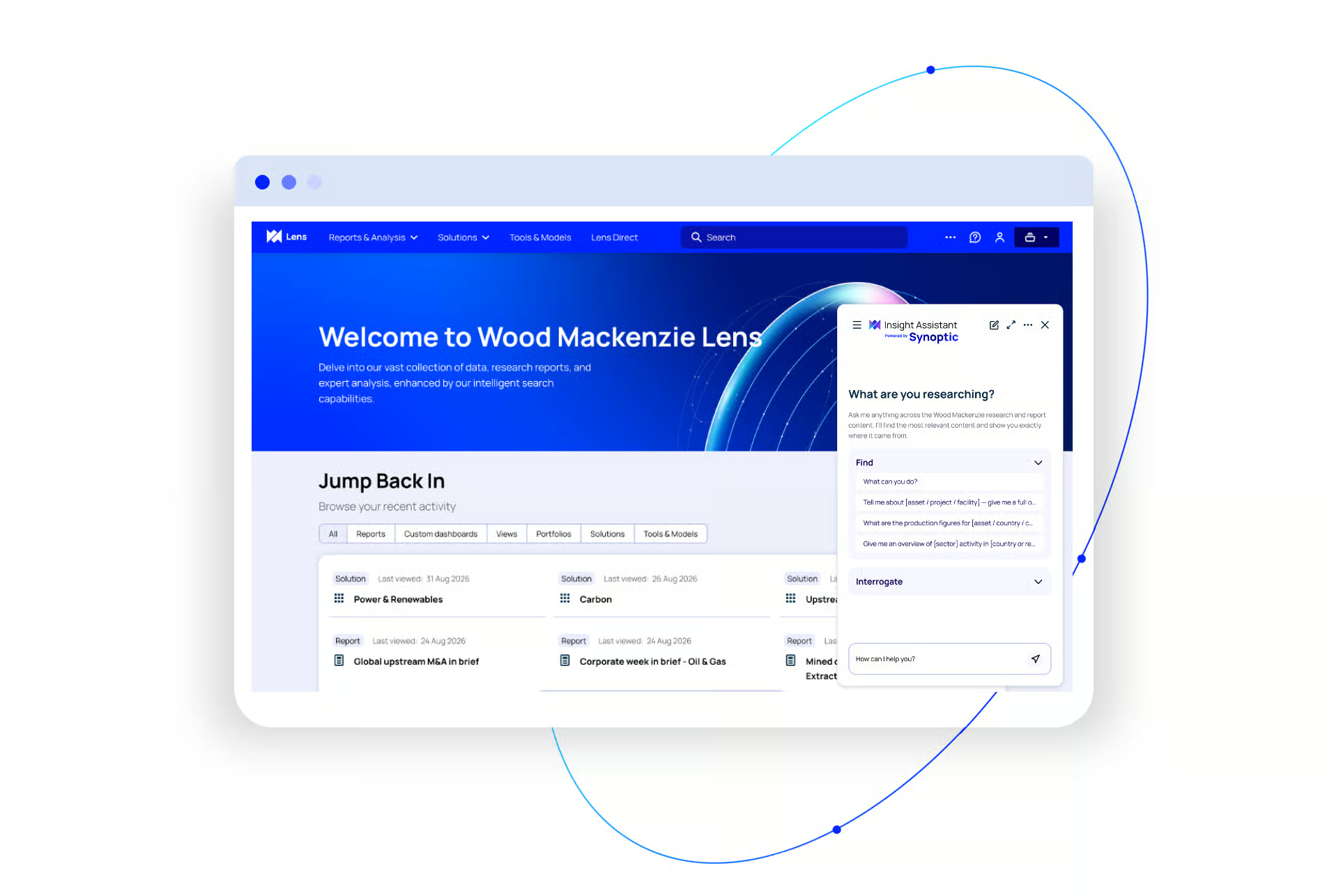
Wood Mackenzie's Lens platform brings gas and power intelligence together, giving you a connected view of the forces that drive generation economics, system reliability and long-term portfolio performance.



Frequently asked questions
Lens Power & Renewables gives you a robust view of how power markets are evolving. But power market outcomes — particularly around generation dispatch, wholesale pricing and system adequacy — are directly shaped by gas market dynamics. Without visibility into gas and LNG supply, pricing and disruption risk, you are modelling the outputs of a system without understanding one of its most important inputs. Lens Gas & LNG provides the fuel market layer that completes that picture, enabling you to stress-test your capacity plans against real fuel market scenarios and make procurement and hedging decisions that are aligned with your longer-term power market view.
Lens Gas & LNG gives you an authoritative view of global gas supply, demand and pricing dynamics. But for utilities, the commercial and operational implications of gas market movements play out in the power market — in dispatch economics, wholesale price formation and the long-term revenue case for gas-backed assets. Without a connected power market view, you are monitoring the fuel market without fully understanding where it leads. Lens Power & Renewables provides the demand, generation and pricing intelligence that translates your gas market insight into actionable capacity and investment decisions.
Lens is built as an integrated platform rather than a collection of separate data products. This means the assumptions, methodologies and data inputs that underpin our gas and LNG analysis are consistent with those that drive our power market forecasts — so when you are examining how an LNG supply disruption might affect domestic gas prices, you can also assess the downstream implications for generation dispatch economics and wholesale power prices within the same analytical framework. This connected approach is what allows utilities to move beyond siloed planning.
Lens Gas & LNG provides continuous visibility into the global supply and demand balance, LNG trade flows, infrastructure risks and price dynamics that determine the cost and availability of gas for generation. It allows you to monitor emerging supply risks, model price volatility scenarios, and assess how changes in LNG export policy or geopolitical disruptions could affect your fuel cost exposure. Used alongside Lens Power & Renewables, you can evaluate not just the cost impact of those risks, but how they interact with your power market revenue outlook to affect overall asset economics.
Yes. A consistent challenge for utilities is not just making well-informed decisions internally, but being able to demonstrate the quality and independence of the analysis behind those decisions to external stakeholders. Wood Mackenzie's data and methodology are fully transparent and auditable, which means the forecasts, scenarios and market views you draw from Lens can be presented to regulators, investors and boards with confidence. The independence and credibility of Wood Mackenzie's analysis is one of the reasons 10 out of 10 of the UK's top investment banks rely on our intelligence.
Our approach connects global LNG supply and trade flow modelling with regional gas market analysis and power market fundamentals. When an LNG supply disruption occurs — whether from geopolitical events, infrastructure outages or export policy shifts — our models trace how that affects regional gas availability and pricing, and how those changes in turn affect the dispatch economics of gas-fired generation, wholesale power price formation and the competitive position of other generation technologies. This integrated methodology means you are not separately interpreting a gas market report and a power market forecast — you are working from a connected view of how the two interact.

Contact an expert