




US gas prices slide as storage expectations tighten: what it means for summer 2026
Softer Henry Hub outlook spurs power demand gains, slower injections and rising winter 2026/27 price risk
1 minute read

Eugene Kim
Research Director, Americas Gas

Eugene Kim
Research Director, Americas Gas
Eugene Kim is a Research Director on Wood Mackenzie’s Americas Gas Research team.
View Eugene Kim's full profile
Daniel Myers
Senior Research Analyst, North America Gas

Daniel Myers
Senior Research Analyst, North America Gas
Daniel delivers short-term fundamental modelling and regional market analysis.
View Daniel Myers's full profileAfter peaking above $4.20/mmbtu on 30 January, Henry Hub futures for the 2026 summer strip have fallen nearly a dollar to around $3.25/mmbtu. In its February short-term outlook, Wood Mackenzie similarly revised its price expectations lower, reflecting the turn to widespread and sustained mild weather following Winter Storm Fern.
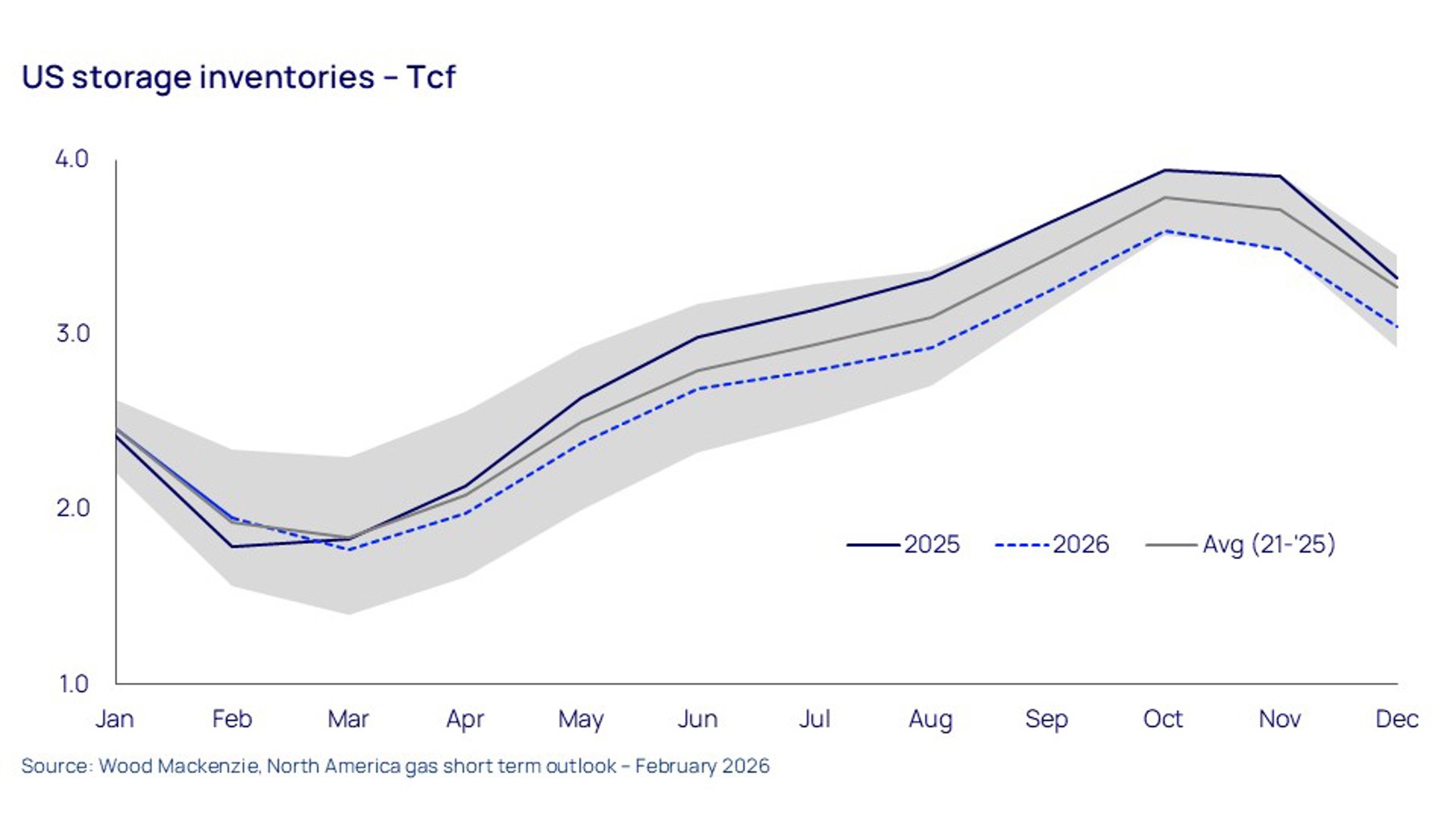
Storage expectations have shifted accordingly. Projections for the 2026 injection season now point to a slower refill pace, with end-of-October inventories expected to reach 3.59 Tcf — roughly 5% below the five-year average.
Read on for a breakdown of shifting supply-demand dynamics, revised storage expectations, and the growing upside price risks embedded in the current forward curve.

Slower refill, tighter end-of-season balance
The accompanying US storage inventory graph (Tcf) highlights a more constrained trajectory through the injection season. Compared to earlier expectations, injections are projected to lag as stronger underlying demand absorbs incremental supply.
While 3.59 Tcf is not critically low, it meaningfully narrows the buffer relative to historical norms — reducing flexibility heading into winter and increasing sensitivity to weather-driven demand swings.
Power demand strengthens on coal-to-gas switching
Lower summer 2026 price expectations increase the economic incentive for coal-to-gas switching in the power sector. Power burn is now projected to grow by 1.2 bcfd versus last summer — an upward revision of approximately 0.7 bcfd compared to January forecasts.
This stronger domestic demand offsets a slower ramp-up in LNG exports from:
- Corpus Christi LNG Train 3
- Golden Pass LNG
Although LNG remains a structural growth driver, timing adjustments shift more of the tightening burden to the power sector in 2026.
Supply gains fall short of offsetting demand
Production expectations have been revised modestly higher, particularly in:
- The Permian Basin, where higher gas-oil ratios — reflecting annual recalibrations by the U.S. Energy Information Administration — are boosting associated gas output.
- The Haynesville shale, where drilling activity has exceeded prior assumptions.
Even so, demand growth outweighs these supply upgrades. The net result is a tighter storage trajectory and a thinner cushion entering next winter.
Winter risk builds beneath a softer summer
If prices remain suppressed through the summer, as implied by the current forward curve, the expanding storage deficit could amplify upward price risk heading into winter 2026–27. A tighter end-of-season inventory level would leave the market more exposed to colder-than-normal weather or unexpected supply disruptions.
Fill in the form above to receive future updates and market insights directly in your inbox.