





Get in touch
-
Mark Thomtonmark.thomton@woodmac.com
+1 630 881 6885 -
Hla Myat Monhla.myatmon@woodmac.com
+65 8533 8860 -
Chris Bobachris.boba@woodmac.com
+44 7408 841129 -
Angélica Juárezangelica.juarez@woodmac.com
+5256 4171 1980
Wood Mackenzie connects trusted energy intelligence with Microsoft Copilot
New Model Context Protocol (MCP) connector brings Wood Mackenzie's proprietary energy insights, data and analytical capabilities directly into Microsoft Copilot, enabling faster, more confident decisions
5 minute read
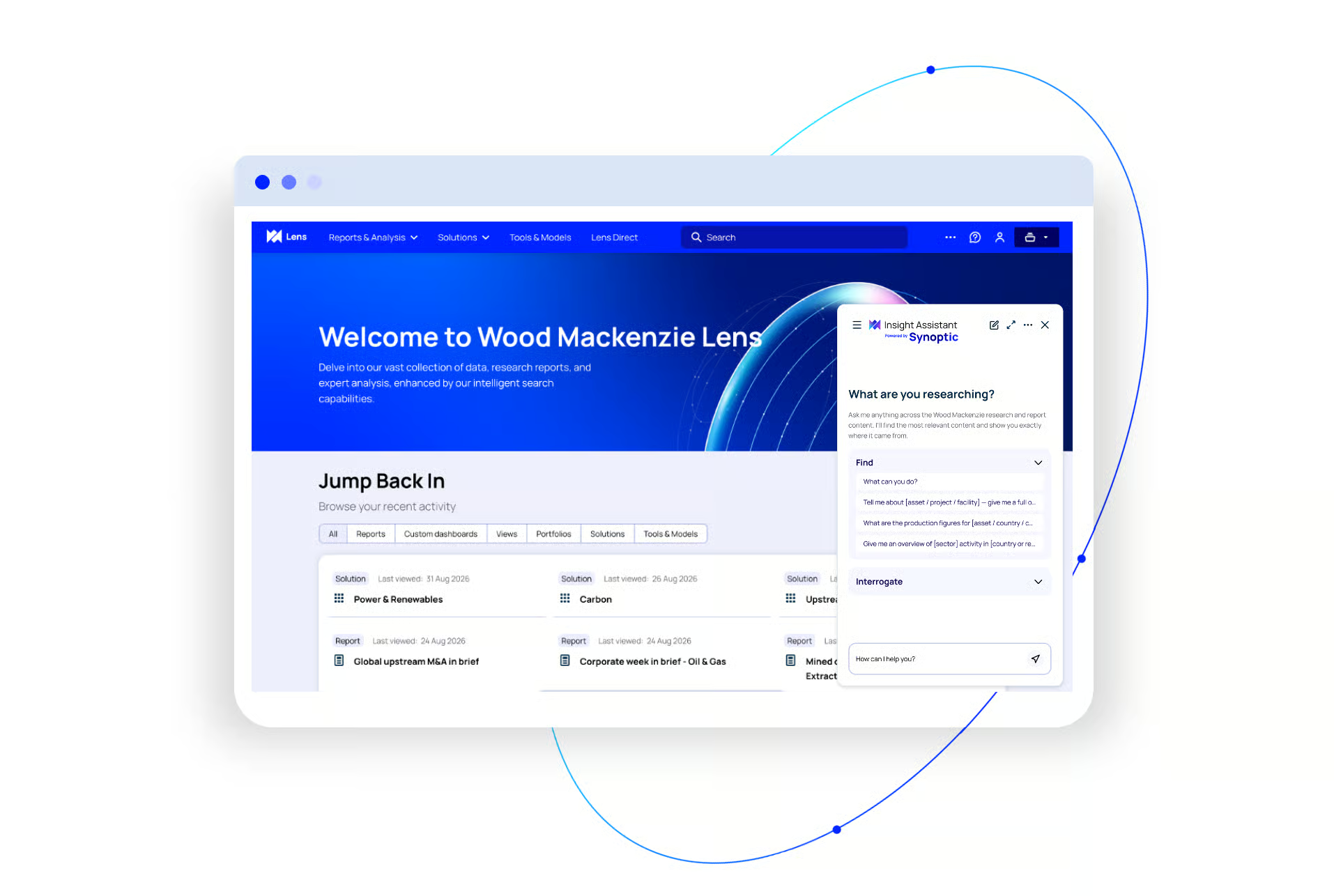
Wood Mackenzie today announced that customers can now access Wood Mackenzie's proprietary content, data and analytical capabilities directly within their Microsoft Copilot environment. Wood Mackenzie for Microsoft Copilot gives authorised users access to Wood Mackenzie research, data and analytical insight through natural-language prompts, directly within Copilot.
The new capability is built on the Model Context Protocol (MCP), an open standard that enables AI environments to dynamically discover and use external intelligence. The integration connects Wood Mackenzie's trusted research, datasets and analytical models to Copilot, so that energy and natural resource professionals can surface relevant intelligence without leaving the workflows they already use.
Embedded where decisions happen
As enterprise organisations move from AI experimentation toward embedded AI solutions and agentic workflows, the demand for high-quality, governed external intelligence inside those environments has grown significantly. Enterprise teams increasingly need trusted domain intelligence inside day-to-day decision workflows, not simply general-purpose answers. Wood Mackenzie’s plugin for Copilot is designed to meet that demand, bringing trusted energy and natural resource intelligence directly into the environment where professionals are already working.
Intelligent discovery across content, data and analytics
Teams have previously needed to navigate workflow fragmentation, switching between platforms and manually exporting, cleaning and reconciling information from separate systems. Wood Mackenzie’s plugin for Copilot addresses this directly. Customers can now ask natural-language questions and surface relevant Wood Mackenzie written analysis, discover and retrieve content without manually searching across separate platforms, and bring Wood Mackenzie insights into documents, spreadsheets and internal workflows, all within their Microsoft Copilot environment.
The result is faster access to precise, domain-specific intelligence, less manual searching, exporting and reconciling, and more confident decisions grounded in trusted Wood Mackenzie data, methodologies and analyst expertise.
Grounded in proprietary data, methodology and analyst expertise
The intelligence surfaced through the integration is grounded in Wood Mackenzie's proprietary datasets, methodologies, models and analyst expertise all of which is enhanced by Synoptic, Wood Mackenzie's own application of AI, giving customers greater confidence in the evidence behind critical decisions. By reducing workflow friction and accelerating time to insight, Wood Mackenzie for Copilot is designed to help organisations improve the quality and speed of decision-making across screening, benchmarking, strategic analysis and decision preparation.
The Microsoft Copilot integration marks the beginning of Wood Mackenzie's AI connector strategy, designed to bring trusted intelligence into the platforms and workflows customers already use.
"AI is becoming the primary environment where analysis is done, decisions are prepared and strategies are tested. Our job is to make sure Wood Mackenzie intelligence, enhanced by our own Synoptic AI, is available inside that environment, governed, traceable and ready to use. This integration means our clients spend less time moving between systems and more time connecting with and applying the insight that matters. This is the first step in a broader initiative and there is more to come as we continue to expand."
— Bernardo Rodriguez, Executive Vice President and Chief Product & Technology Officer, Wood Mackenzie
“Wood Mackenzie's plugin for Microsoft Copilot demonstrates how domain-specific knowledge can be made accessible directly within the workflows and AI environments organizations are already using. For customers in the energy and natural resources sector, this means the evidence they need to support critical decisions is available where the work is happening."
— Chantrelle Nielsen, Principal Product Manager for Microsoft Copilot, Microsoft
The integration is available now, with expanded data and analytical capabilities being introduced on a phased basis as additional datasets and models become MCP-ready.
Wood Mackenzie for Microsoft Copilot connects trusted energy and natural resources intelligence with enterprise AI workflows, helping customers access relevant research, data and analytics through natural-language discovery.
Learn more here: Connecting to our intelligence | Wood Mackenzie
What is WoodMac’s AI connector strategy?
Wood Mackenzie are activating a number of AI connectors to enable our customers to access Wood Mackenzie intelligencethrough the AI workflows they already use. This will include a number of universal tools, such as Microsoft Copilot, as well as more specialist tools for specific industries.
We are taking a significant first step in this with the activation of Microsoft Copilot.
Throughout the remainder of 2026 and into early 2027 we will be activating new AI connectors.
What is the benefit of using AI connectors for Wood Mackenzie customers?
Using AI connectors or Model Context Protocols (MCPs) enables Wood Mackenzie customers to discover and apply trusted Wood Mackenzie insight, data and analytical capabilities through their existing workflows and tools, using natural-language interactions, bringing Wood Mackenzie intelligence directly into the day-to-day the flow of their work. It:
- reduces the need to search across multiple systems and sources.
- connects domain expertise with everyday productivity workflows, helping teams move more efficiently from questions to analysis and decision-making.
- allows customers to incorporate Wood Mackenzie intelligence into AI-assisted research, planning and strategy development while maintaining access to underlying evidence, sources and supporting analysis.
What does Wood Mackenzie mean by AI Connector?
MCP (Model Context Protocol) is an open standard that lets AI assistants connect securely to tools and data sources. It lets a Wood Mackenzie customer’s own AI assistant (e.g. Microsoft Copilot) draw on Wood Mackenzie information directly. We sometimes refer to MCPs as AI connectors, as MCP is a technical term.
Which AI connectors will Wood Mackenzie data and insights be available through?
Wood Mackenzie’s AI integration with Microsoft Copilot is live from 1 October 2026.
Integration of Wood Mackenzie intelligence with other AI connectors will be announced throughout 2026 and early 2027.
Will all the AI connectors be available to all Wood Mackenzie customers?
The Microsoft Copilot connector is available to all customers with a relevant Wood Mackenzie subscription and access to Microsoft Copilot Standard or higher.
Availability of other AI connectors will be announced in due course.