


Sign up today to get the best of our expert insight in your inbox
Energy in a more dangerous world
Resilience, affordability and self-sufficiency are the priorities now. What does that mean for our energy future?

Ed Crooks
Vice Chair Americas and host of Energy Gang podcast
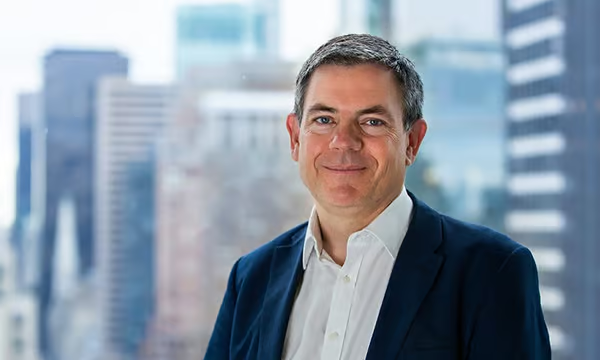
Ed Crooks
Vice Chair Americas and host of Energy Gang podcast
Ed examines the forces shaping the energy industry globally.
Latest articles by Ed
-
Opinion
Elon Musk’s gas strategy shows how the US market is changing
-
Podcast
AI beyond the hype
-
Opinion
US oil production starts to respond to higher prices
-
Podcast
Can energy security and climate action work together?
-
Opinion
US permitting reform plan could transform energy investment
-
Podcast
Energy in a more dangerous world
This year’s Climate Week NYC was about much more than climate. The conversation kept being pulled back to energy security and resilience in an increasingly volatile world. The conflict in the Middle East, drone attacks on critical infrastructure, and threats to international shipping are forcing policymakers, companies and investors to confront one of the toughest questions in energy: how do you build a system that can absorb shocks without pushing costs even higher for consumers?
In this special live edition of Energy Gang, recorded in front of invited audience at NYU in New York, host Ed Crooks is joined by regular contributor Amy Myers Jaffe and three guests with very different vantage points on that question. Neil Brown is a managing director at KKR. Anna Shpitsberg is Wood Mackenzie’s head of global power and renewables research. And Dr Sarah Kapnick is global head of climate advisory at JPMorgan. Together they explore how geopolitics, technology and climate risk are colliding to reshape the energy agenda.
Neil argues that the attacks on Gulf infrastructure mark a strategic break with the past: energy systems are no longer exposed only to familiar market risks, but to cheaper, more agile weaponry that can inflict outsized damage. He makes the case that the Gulf states have shown real resilience through defence spending, sovereign capital and economic diversification, but warns that energy markets may be entering a prolonged era of instability, rather than a temporary shock.
Sarah argues that resilience now means more than access to fuel: it means the ability to keep supplying energy through geopolitical, technological and climate volatility. Anna points to Ukraine’s experience to show why distributed systems can recover faster than large centralised assets, while also stressing that resilience is not the same as self-sufficiency. Building a more secure system may require domestic capacity, strategic partnerships, and industrial policy. Those things all cost money, at a time when affordability pressures are already intense.
Volatility is endemic to the energy industry. Political, economic and technological shocks have created dramatic swings in energy markets for centuries. But the combination of a new era of international conflict with world-changing breakthroughs in AI is creating challenges that are genuinely new.
The result is a more complex energy system with fewer easy answers: decentralisation can reduce single points of failure but create new cyber risks; trade policy can support domestic manufacturing but raise prices; and climate policy becomes much harder to sustain when voters no longer feel they can afford the transition. The risks from climate change have not gone away. But they will have to be addressed along with more urgent questions about whether energy systems can stay secure and durable in a more dangerous world.