



Sign up today to get the best of our expert insight in your inbox
High oil prices could accelerate EV adoption
The closure of the Strait of Hormuz could be a game-changer for EVs
1 minute read

David Brown
Director, Energy Transition Research

David Brown
Director, Energy Transition Research
David is a key author of our Energy Transition Outlook and Accelerated Energy Transition Scenarios.
Latest articles by David
-
Opinion
High oil prices could accelerate EV adoption
-
Featured
Autonomous electric vehicles: four things to look for in 2026
-
Opinion
Five things to watch at COP30
-
Opinion
Five things to watch at COP30
-
Opinion
How LNG and power are shaping US gas pipeline development
-
Opinion
US DOE raises the spectre of severe power outages
Fortune 500 CEOs often need to deliver tough messages to investors. Reflecting on why Ford Motor Company booked a US$19.5 billion write-down for electric vehicles (EVs), CEO Jim Farley recently concluded: “I think the customer has spoken.” But given recent events, they may soon change their minds. A sustained period of US$100 oil prices due to the Middle East conflict may accelerate EV adoption around the world.
Since President Donald Trump’s second inauguration in January 2025, US$60 oil prices and lower EV incentives in the One Big Beautiful Bill Act have given gasoline-fuelled vehicles the economic advantage in the US. Softer federal regulations on fuel efficiency standards and carbon dioxide emissions also reduced regulatory incentives for EV investment.
So far in 2026, five automakers – representing 47% of US manufacturing – have announced a combined US$73 billion in write-downs for EVs. These financial charges reflect lower market values and sunk capital for EV manufacturing. Facing its first financial loss since the 1950s, Honda cancelled three EV models for North America in early March.
But other auto manufacturers are doubling down on the US EV market. The Hyundai Group has launched its US$7.6 billion Georgia EV plant and Toyota is ramping up a US$14 billion battery hub in North Carolina. European giants, including BMW and Volkswagen, are also expanding US-based EV manufacturing.
Even with legal challenges from the Trump administration, several states are expanding EV policy support. California’s 2026-2027 budget proposes a US$200 million zero-carbon vehicle incentive program and New York’s US$885 million EV Make-Ready Program will offset EV charging costs. Meanwhile, Washington state is trying to secure US$71 million in frozen funds from the national electric vehicle infrastructure program.
Then there’s March’s eye-watering 50% increase in international oil prices, which could also incentivise consumers to choose EVs. According to the US National Bureau of Economic Research, gasoline prices are the biggest factor influencing California consumers in choosing EV transport. Other studies from the University of Denmark and Jiangsu University reached similar conclusions about consumer decision-making.
The Wood Mackenzie view
With the Strait of Hormuz closed, 15 million b/d of liquids exports are off the market. Close to 7% of global production is offline, primarily from Saudi Arabia and Iraq. While Brent is hovering around US$110/bbl, competition for liquids, the amount of supply at risk and potential for an extended conflict mean US$150 to US$200/bbl is a real possibility.
And oil prices remain elevated despite the 400 million barrels of stock release from the International Energy Agency. The attack on the South Pars gas field in Iran and Qatar added upward pressure on Brent prices this week. Key Gulf oil and natural gas infrastructure is now in play.
With the world facing higher oil prices, we’ve updated our total cost of ownership (TCO) model for the US passenger car sector. High purchasing power, combined with price sensitivity at the pump, makes the US an ideal test case for how oil price volatility impacts the move toward electric vehicles.
At the moment, TCO calculations in the US still strongly favour gasoline vehicles, especially now that federal tax incentives have been withdrawn. If high oil prices are sustained, that could change. At US$150 Brent, an EV could have a lower TCO than its gasoline-fuelled equivalent as soon as next year, concludes Andrew Brown, Global Head of Wood Mackenzie’s Integrated Demand Model.
US$150 Brent for a sustained period through 2030, while not impossible, would be incredibly challenging for the global economy. For every 10% increase in oil prices, global GDP growth drops by around 0.13 percentage points, according to Wood Mackenzie’s Head of Economics, Peter Martin.
Oil prices in real terms ranged from US$85 to US$105/bbl for the 24 months following the initial market shocks from both the Great Recession in 2008 and Russia’s war with Ukraine in 2022. These high price periods offer a guideline for testing the boundaries of oil prices in the current Middle East conflict, even though its scale and duration are unique.
Even at US$90 Brent, the TCO comparison in the US is still likely to favour EVs by 2029-30. US consumers could also shift to pre-owned EVs to provide a hedge against liquid fuel volatility, noted Egor Prokhodtsev, Principal Analyst, Commodities. This market, according to Cox Automotive, is around 400,000 vehicles and is expanding at 30% to 40% per year in the US.

In those countries with access to low-cost Chinese EVs, the competitive advantage over gasoline-engined cars will come even sooner.
Brazil is already BYD’s largest market outside of China. Canada has reduced tariffs on selected Chinese models from 100% to 6%. In Asia, China’s clean energy supply chain can scale EVs across the region while, in Europe, accelerating EV sales under the Fit for 55 framework could reduce oil import costs.
One hurdle could be higher power prices. Qatar’s LNG supply outage and competition for LNG cargoes between the Atlantic and Pacific basins are increasing power prices in markets that rely on LNG for natural gas-fired power. For example, power prices in major European markets have increased by at least 40% since early March.
The build-out of battery storage and renewable power, gas-to-coal switching and demand side management are tools to limit gas-price volatility in Europe and Asia. In the US, however, the Middle East conflict hasn’t moved power prices because the country is a net exporter of natural gas, rather than an importer. The April contract for Henry Hub prices remains disconnected from the Middle East turmoil, landing at around US$3 for the April contract.
New EV charging technologies could underpin a quicker shift to EVs, too. In mid-March, BYD, the world’s largest EV producer, announced charging from 10% to 70% in five minutes, about the time to refuel a gasoline passenger car. In the US, The Oak Ridge National Labs recently demonstrated battery charging to 80% in 10 minutes, while Stanford University researchers are targeting six-minute charging.
In sum, the Middle East conflict could be a tailwind for EV adoption. Elevated oil prices, energy security objectives, the growth in renewable capacity and rapid advancements in battery charging technology support our base case outlook for around 80 million new EVs for the global passenger segment from 2026 to 2030.
In brief
In a new report from the Center for Public Enterprise, The Firm Frontier, makes the case for geothermal technology as a supply source to meet US load growth, lower carbon emissions and revolutionise the power grid in the Western US.
The report highlights several unique characteristics for geothermal power generation technology. Enhanced geothermal systems (EGS) can achieve 80% capacity factors with zero fuel costs, allowing 1 MW of geothermal to displace up to 5 MW of solar-plus-storage in capacity models, according to the report. Check out our Geothermal: 2025 in review for Wood Mackenzies snapshot of this evolving industry.
The Middle East conflict is also affecting the supply chain for the metals sector. As a top five producer supplying 8% of global aluminum production excluding China, Emirates Global Aluminum (EGA) is a vital link for the European automotive and aerospace sectors.
However, the 2026 conflict has forced a massive logistical pivot. EGA is moving some volumes from maritime exports to land-based routes across the Arabian Peninsula.
But these alternative routes are untenable for any significant volumes, according to Uday Patel, Principal Analyst, Metals and Mining. Getting metal to the Sohar port in Oman or importing alumina and bauxite for metal production would need unrealistic load times. Volumes, too, would be limited by the single lanes available for land-based options. While available emergency stockpiles can satisfy demand from key customers in Asia and Europe, concerns are growing that stockpiles will not be enough to meet demand.
Other views
The energy crisis is coming to the boil –– Simon Flowers, Alan Gelder, Massimo Di Odoardo
How might sustained higher prices impact North Sea output? – Gail Anderson, Daniel Rogers, James Reid
How could US Lower 48 rigs and supply respond to the Middle East conflict? – Nathan Nemeth, Robert Clarke, Jack Christian
Downstream of Hormuz: who's exposed, who benefits, and where's the relief? – Raphael Portela Chalhub
The state of safe harboring: A strategic outlook for US utility-scale solar development – Elissa Pierce, Katilin Fung
Envision Chifeng - the global outlier in RFNBO ammonia – Neus Ferrer, Hector Arreola
The Middle East Conflict and the impact on zinc and lead – Jonathan Leng, Kevin Clarke, Alan Soever
Wood Mackenzie | Australia’s energy strategy pivot – Natalie Thompson, Fauzi Said
Quote of the week
Dr. Fatih Birol, Executive Director, International Energy Agency, told the Financial Times on 20 March that the Middle East conflict is “the greatest global energy security threat in history”.
Chart of the week
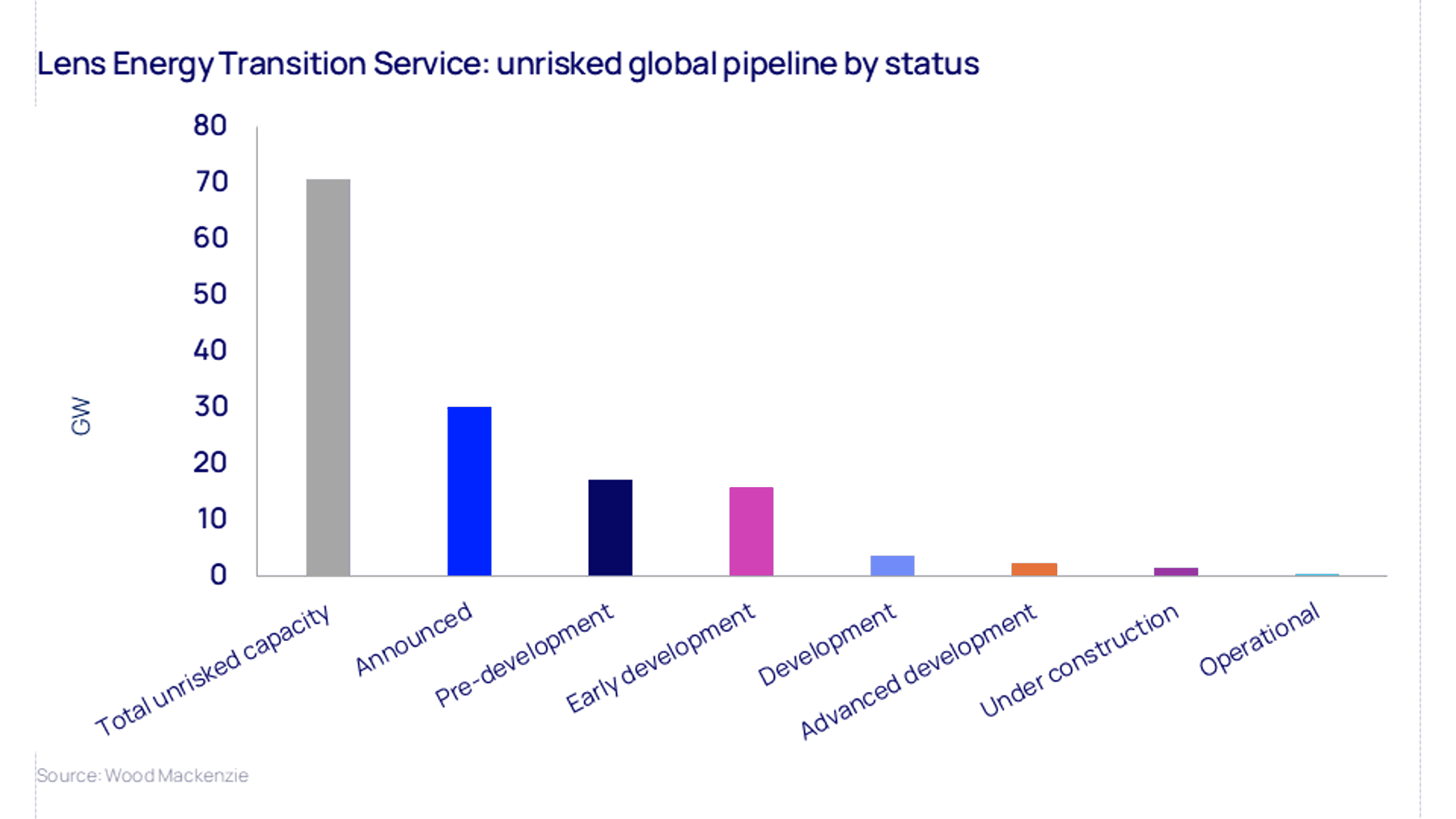
In Wood Mackenzie’s latest next-generation nuclear outlook, the nuclear landscape is undergoing a significant transformation as power demand surges around the world. To meet this need for clean baseload energy, established powers like the US, Japan and the UK are prioritising plant restarts and 60-year lifetime extensions.
At the same time, there is a massive shift toward next-generation reactors, with the global pipeline for these technologies expanding rapidly in 2025 – a development requiring hundreds of billions of dollars in investment. In response, the industry is moving swiftly from theoretical planning to commercial operation across projects in China, the US, Canada and the UK.
Get The Inside Track
Ed Crooks’ Energy Pulse is featured in our weekly newsletter, the Inside Track, alongside more news and views from our global energy and natural resources experts. Sign up today via the form at the top of the page to ensure you don’t miss a thing.