


5 things to know about the EU's domestic gas outlook
We model three scenarios for EU domestic gas. Where is the upside, what impact does it have, and what would it take to unlock it?
2 minute read

Lewis Lawrence
Senior Research Analyst, Europe Upstream

Lewis Lawrence
Senior Research Analyst, Europe Upstream
Latest articles by Lewis
-
Opinion
5 things to know about the EU's domestic gas outlook
-
Opinion
North Sea and European upstream: the shift towards energy security
-
Opinion
The energy security opportunity for North Sea oil & gas
-
Opinion
Breakthrough oil finds in the North Sea and Baltic Sea
-
Opinion
Deepwater Black Sea: a new contender in the global gas landscape
-
Opinion
Video | Lens Upstream: Piecing together Cyprus' gas export deals with Egypt
Back-to-back energy crises have forced security of supply to the top of Europe's policy agenda. The LNG dependency that has replaced Russian supply continues to expose the EU to external supply risks.
Gas imports currently make up 85% of EU demand, and domestic production is unlikely to ever make the bloc self-sufficient. But how much gas the EU produces through to 2050 remains an open question. If exploration and production potential is maximised, domestic supply could add up to 1,000 bcm, displacing more than 600 LNG cargoes annually.
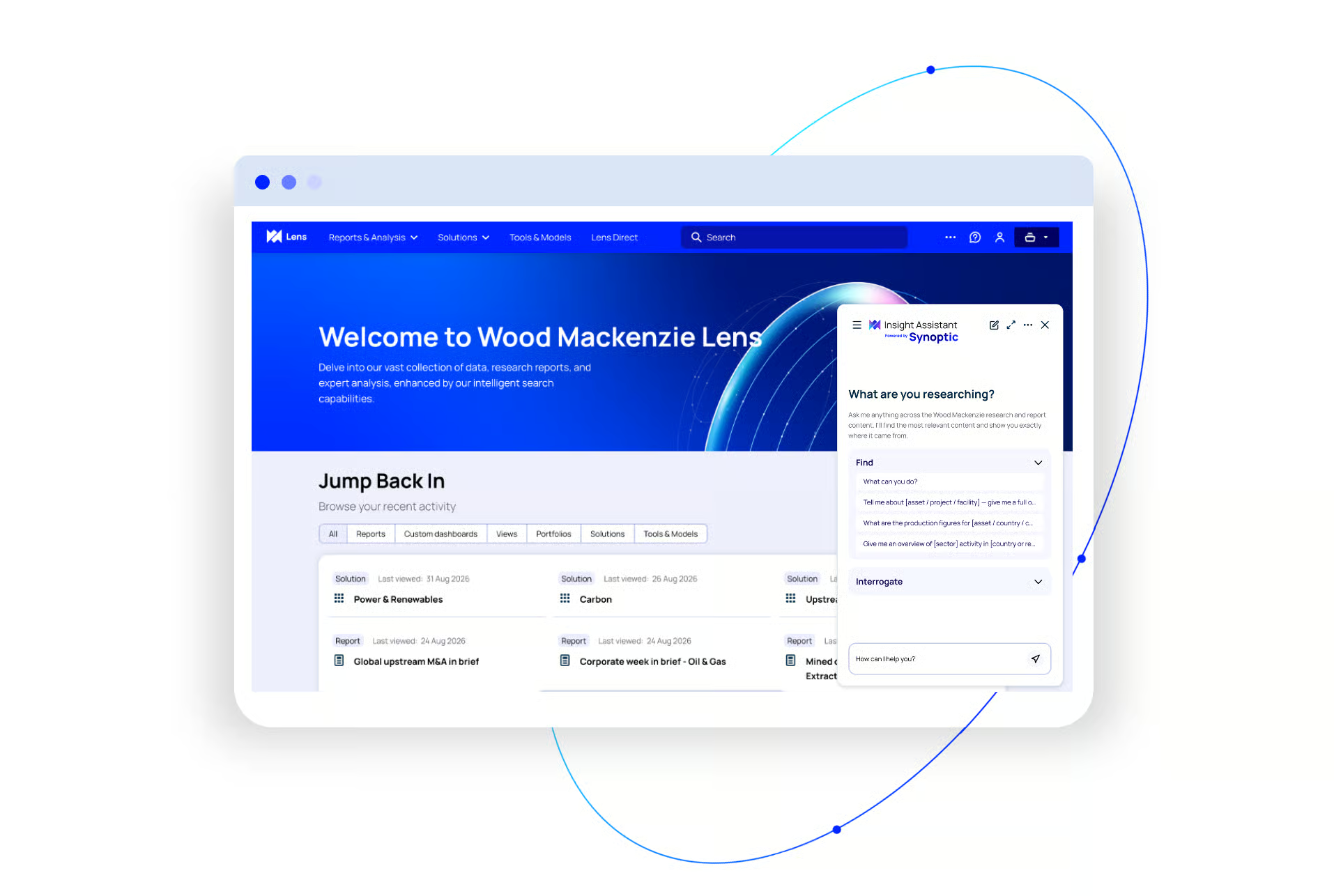
Using proprietary data, analytics and upstream intelligence from Wood Mackenzie Lens Upstream, our experts have modelled three scenarios for the future of EU domestic gas production. The full report is available only to subscribers, but this complimentary report explores five key questions about the bloc's domestic gas outlook, energy security and future supply potential.
- How exposed is the EU to import risk? We assess why gas import dependency is structural, with LNG expected to account for an increasing share of supply, and what this means for Europe's energy security.
- How do policy and fiscal terms vary across the bloc? We map the sharply diverging approaches to exploration and production, from countries competing for investment to those closing the door on new developments, and explain why policy stability remains a critical factor for investors.
- Why is the corporate landscape important? We assess how Majors, national champions and specialist operators are shaping Europe's domestic gas future across both frontier and mature basins.
- What is the benefit of delivering more domestic gas? We quantify the potential value across energy security, economic contribution and emissions intensity.
- How much could the EU produce by 2050? Our three scenarios show domestic output ranging from near-zero to 34% of demand by 2040, with almost 1,000 bcm separating the most ambitious and most restrictive outcomes.
Get the report
Fill out the form at the top of the page to download the complimentary report and explore the key findings from Wood Mackenzie's analysis of EU domestic gas production through to 2050.