



Discuss your challenges with our solutions experts
3 things to know about how APAC power systems should adapt to LNG disruptions
How should individual Asia Pacific countries hedge their specific risk to the ongoing Gulf LNG supply shock?
3 minute read

Nikhil Babu
Research Analyst, Power & Renewables Research, APAC

Nikhil Babu
Research Analyst, Power & Renewables Research, APAC
Nikhil has 5 years of experience in energy research and product development
Latest articles by Nikhil
-
Opinion
Can gas grow its role in Indian power markets?
-
Opinion
3 things to know about how APAC power systems should adapt to LNG disruptions
With 90% of LNG through the Strait of Hormuz flowing east, disruption to global LNG supplies caused by the war on Iran have disproportionately affected the Asia Pacific region. However, countries’ individual exposure is determined by market-specific factors rather than simply by import volumes.
At its peak, the closure of the Strait of Hormuz removed around 80 million tonnes per annum (mmtpa) from the market - around a fifth of global supply. The resulting disruption has been disproportionately felt by Asian countries - and it’s not over yet.
Drawing on unique Wood Mackenzie data and insight, our APAC power market analysts have compiled an in-depth report on how Asia Pacific power systems have responded and how they can best adapt to an ongoing supply crunch. Read on for an overview of some of its key findings:
1. This is not a short-term price spike but a multi-year supply loss
Iranian strikes on LNG plants at Ras Laffan have removed significant Qatari export capacity for up to five years. So, while reopening the Strait of Hormuz will restore much of the supply lost to the Asian market since March, there will be no ‘back to normal’.
2. The risk is backloaded into the second half of 2026
The loss in LNG supply hit APAC markets just when power systems had the least flexibility to absorb a shortfall. Every grid in the region has experienced huge loads driven by record temperatures. However, while some countries have moved past the period of greatest cooling-driven demand, others peak later.
3. Exposure to the issue varies significantly by country
The impact on power generation in individual markets is dependent on two key factors: the role of gas in the generation mix and the diversity of a country’s gas supply. Only one country scores highly on both counts, leaving it vulnerable to Gulf LNG at roughly seven times the cost of its domestic gas.
What it means: the need to hedge a lasting supply shock
In the face of a multi-year supply loss, the winners will be markets that focus on improved flexibility rather than importing more Gulf gas. However, the best combination of solutions for individual countries will depend on the specific characteristics of their markets.
For utilities, route and counterparty diversification is now a security requirement rather than a cost-optimisation measure. Meanwhile, for developers, the impact on gas economics is likely to drive an accelerated renewables-and-storage pipeline.
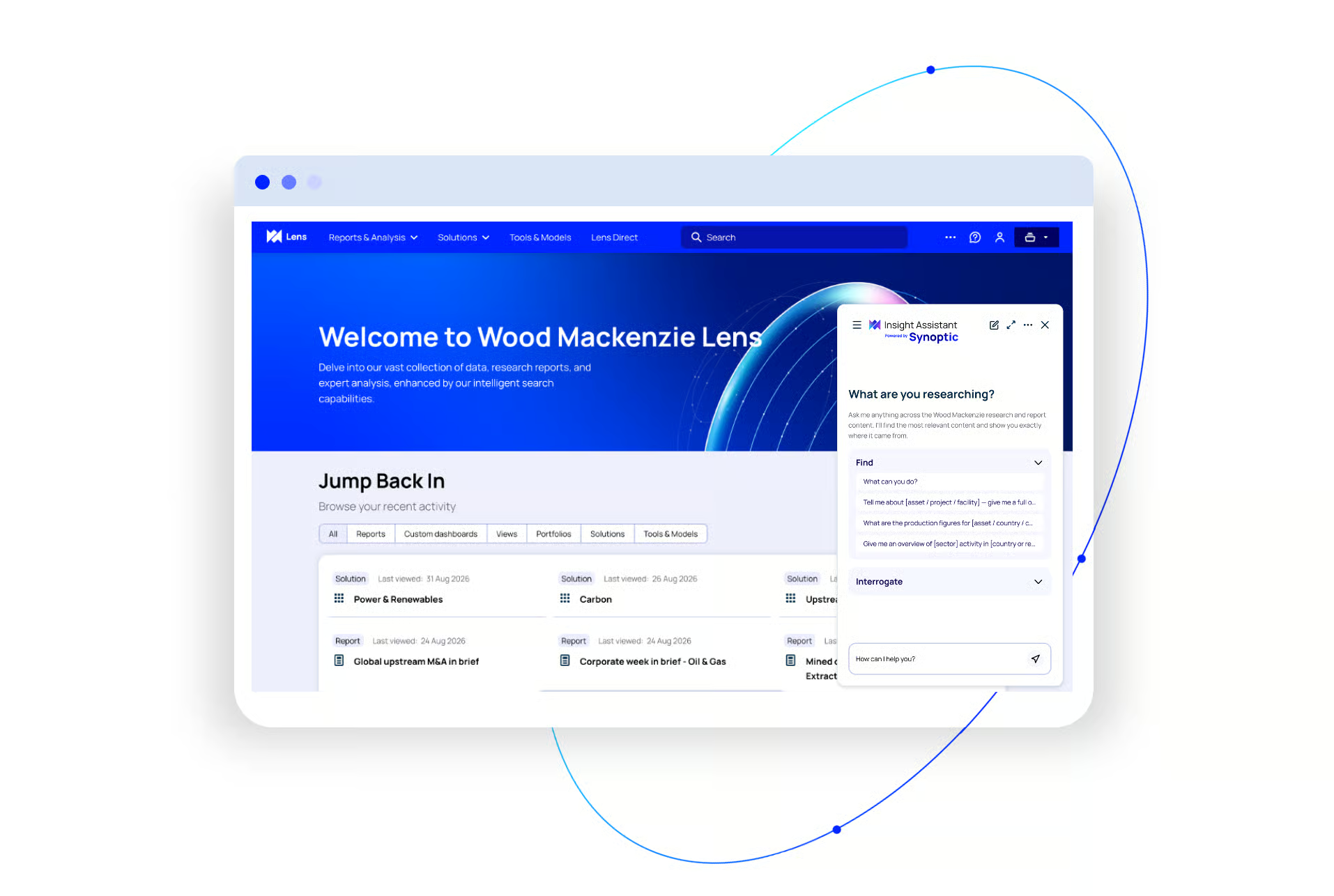
You may also want to learn more about our Lens Power & Renewables Asia Pacific solution, which provides interconnected intelligence across the APAC value chain. It's the solution that powered the report this article is based on, which is available through Lens and offers a country-by-country deep dive and analysis of the most effective levers for individual markets to hedge ongoing risk.