



Discuss your challenges with our solutions experts
What the Middle East conflict means for the global power sector
Five ways sustained Middle East disruption could reshape power markets, project economics and investment priorities
5 minute read

David Brown
Director, Global Integrated Energy Research

David Brown
Director, Global Integrated Energy Research
David is a key author of our Energy Transition Outlook and Accelerated Energy Transition Scenarios.
Latest articles by David
-
Opinion
Speed to power: the infrastructure solutions shaping the global data centre race
-
Opinion
Congress pushes back on restrictions to US wind
-
Opinion
What the Middle East conflict means for the global power sector
-
Opinion
High oil prices could accelerate EV adoption
-
Featured
Autonomous electric vehicles: four things to look for in 2026
-
Opinion
Five things to watch at COP30
The Middle East conflict is emerging as a potential geopolitical dividend for the power and renewables sector. Facing elevated prices, import-dependent economies are impacted in the near-term but may look to expand zero-carbon investment goals.
While coal is a short-term solution to LNG supply shocks in Northeast Asia, new power market policies will leverage zero-carbon resources to enhance energy security. High oil prices give EVs the economic edge, accelerating global transport electrification especially in Asia and Europe. Finally, wind is a priority: despite higher logistics costs, investment goals for the wind sector are rising rapidly in Europe and Asia.
Wood Mackenzie assessed the implications of the Middle East conflict for global power and renewables markets. Read on for five emerging themes relevant to utilities, generators and project developers:
1. Supply chain and project costs are rising
The effective closure of the Strait of Hormuz has reduced global supply of a range of key commodities.
At the start of the conflict, higher oil prices sharply increased jet fuel and marine bunker fuel costs. Although prices have eased from those initial peaks, they remain above pre-conflict levels.
For utilities and developers, the commercial impact is broader than fuel alone. Higher shipping costs, longer trade routes and supplier diversification can raise delivered costs for equipment and materials across the power value chain - including turbines, transformers, cables, batteries and renewable energy components.
Projects with near-term procurement exposure may face margin pressure unless cost escalation mechanisms or pricing flexibility are already built into contracts.
2. Import-dependent power markets face the greatest exposure
Not all markets are equally affected. Countries with diversified domestic energy resources or stronger supply optionality are generally better positioned to absorb disruption.
By contrast, economies that rely heavily on imported fossil fuels for power generation - including Italy, Japan, South Korea and the UK - are more exposed to higher wholesale power prices and greater fuel procurement risk.
For utilities in these markets, sustained volatility can create pressure on retail margins, tariff structures and hedging strategies. For policymakers, it can strengthen the strategic case for accelerating domestic sources of generation, particularly renewables, nuclear power and energy storage.
For developers, this may translate into stronger medium-term demand for projects that improve energy security and reduce import dependence.
3. Asia may use more coal in the short term - but flexibility and zero-carbon investment remain critical
Asian markets are among the largest importers of LNG from Qatar and the United Arab Emirates. When gas becomes more expensive or harder to secure, some utilities may increase coal generation where existing fleet capacity is available.
That may improve short-run generation economics relative to LNG, but it does not remove the underlying need for new capacity, system flexibility and lower-cost domestic energy supply.
If disruption persists into periods of peak summer demand and beyond, system operators may need additional tools to maintain reliability. These include:
- stronger wholesale market signals that reward flexible capacity
- faster grid expansion and cross-border interconnection
- battery storage paired with renewables
- continued consideration of new nuclear build in selected markets
For developers, markets seeking to reduce imported fuel exposure may become more supportive of utility-scale renewables and storage investment.
4. Higher oil prices improve electric vehicle economics - and long-term power demand
Sustained higher oil prices can improve the relative economics of electric vehicles, particularly in Europe and Asia where fuel prices already create a stronger case for electrification.
If EV adoption accelerates, the implications extend beyond transport. Utilities may need to plan for higher long-term electricity demand, more distributed charging load and greater need for flexible generation and network reinforcement.
For developers, stronger EV penetration can support additional demand for renewable generation, storage, smart charging infrastructure and demand-side flexibility solutions.
In the US, EV competitiveness remains influenced by vehicle pricing, incentives and the growth of the secondary EV market, not oil prices alone.
5. Wind costs may rise, but energy security can strengthen policy support
Wind developers are also exposed to higher logistics costs, particularly for transporting nacelles, blades and turbine assemblies.
If elevated oil prices persist, turbine and installation costs may rise relative to pre-conflict assumptions. That can place pressure on project returns, especially where auction pricing or offtake agreements were set under lower cost expectations.
However, geopolitical shocks have historically reinforced government focus on domestic, non-fuel-based generation. Energy security concerns following the war in Ukraine contributed to stronger renewable ambitions in multiple markets.
The Iran conflict could have a similar effect by reinforcing existing policy goals around renewables, grid resilience and reduced fuel import dependence.
For utilities and developers, that means short-term cost pressure may be offset by stronger long-term market support.
Make smarter, more confident decisions around clean energy investment
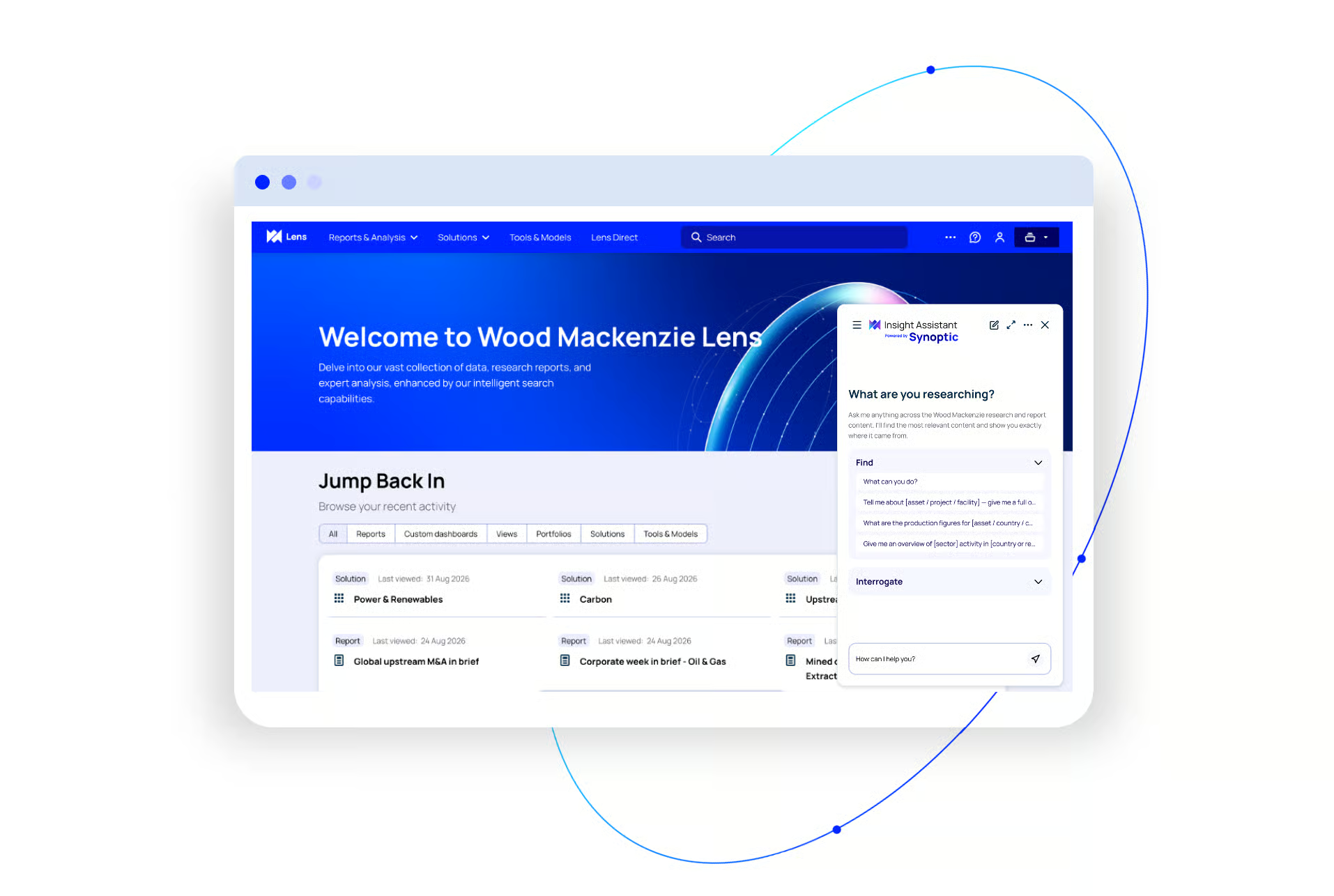
Transform the way you make strategic investment decisions in clean energy with Wood Mackenzie’s global Lens Power & Renewables platform; providing interconnected intelligence across the entire power value chain.