




Natural gas futures shrug off winter storm impact despite storage drawdown
Forward curve remains subdued even as recent cold snap drives massive inventory withdrawals and production freeze-off
1 minute read

Daniel Myers
Senior Research Analyst, North America Gas

Daniel Myers
Senior Research Analyst, North America Gas
Daniel delivers short-term fundamental modelling and regional market analysis.
Latest articles by Daniel
-
Opinion
US gas prices slide as storage expectations tighten: what it means for summer 2026
-
Opinion
Natural gas futures shrug off winter storm impact despite storage drawdown
-
Opinion
Winter Storm Fern shuts in 18.3 bcfd of US gas production at its peak
-
Opinion
US L48 gas: injection season ends
-
Opinion
Managing the nitrogen challenge in Permian gas
-
Opinion
NG3 pipeline begins deliveries ahead of schedule
Natural gas traders are witnessing a curious disconnect between dramatic near-term market events and longer-term price expectations. While Winter Storm Fern delivered a powerful one-two punch, driving Henry Hub’s February contract to nearly $7.50/MMBtu at expiration and triggering production freeze-offs and record weekly demand that could drain storage by over 1 Tcf in just four weeks, the forward curve tells a surprisingly subtle story.

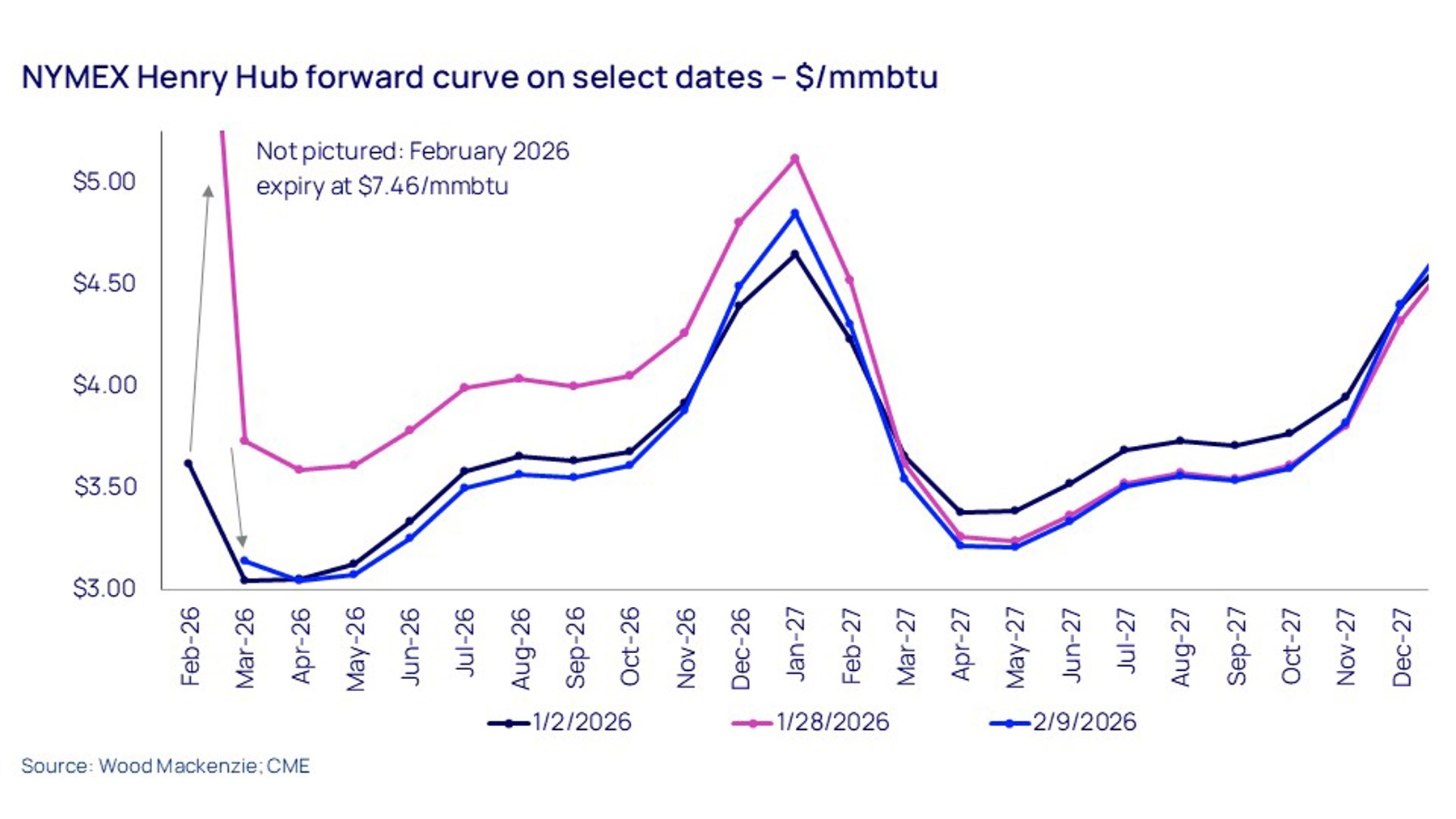
The 2026 summer strip (April–October) has actually declined 2% since early January, following a brief 12% rally through February’s contract expiration. Only next winter’s contracts have maintained meaningful gains from the winter run-up, with January 2027 roughly 20 cents above year-start levels.
The Paradox
This market behavior reflects a complex interplay of bearish and bullish forces. Earlier concerns about mild weather creating a storage overhang, which sent the March–April 2026 widowmaker spread negative in early January, initially weighed on production incentives for the coming summer. Ironically, this bearish summer outlook supported higher full year 2027 price expectations, as reduced drilling activity would theoretically tighten next year’s supply-demand balance.
However, with near-term price surges offering ample producer hedging opportunities amid the recent cold snap, both summer 2026 and 2027 summer premiums have begun to fade.
The opportunity
Even so, during this typical end-of-winter collapse, market participants may be underestimating the bullish implications of the current storage drawdown on the coming injection season. The steep inventory decline following Winter Storm Fern creates a more supportive backdrop for summer 2026 prices, as the market will need robust refill activity to prepare for next winter. To make things more difficult, this will occur in a structurally growing demand environment. These dynamics logically extend to higher price expectations for the 2026–2027 heating season but may not stop there.
Fill in the form above to receive future updates and market insights directly in your inbox.