


Sign up today to get the best of our expert insight in your inbox
How are energy supply chains changing as electricity demand surges?
A special episode from the ACORE Policy Forum in Washington

Ed Crooks
Vice Chair Americas and host of Energy Gang podcast
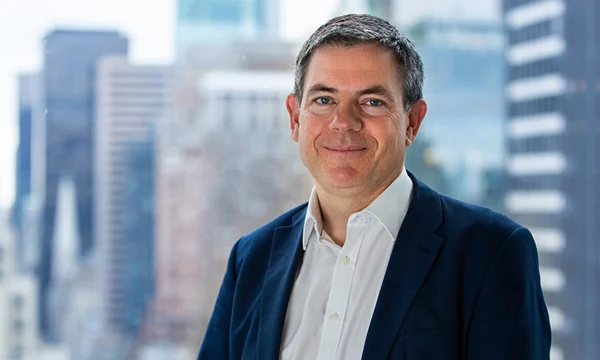
Ed Crooks
Vice Chair Americas and host of Energy Gang podcast
Ed examines the forces shaping the energy industry globally.
Latest articles by Ed
-
Opinion
The mother of all disruptions
-
Opinion
Higher energy prices raise stagflation fears
-
Opinion
A power producer’s view of keeping the lights on. What does rising electricity demand from data centers mean for the US grid?
-
Opinion
Oil prices rise despite IEA reserves release
-
Opinion
The war with Iran: what does the disruption in the Strait of Hormuz mean for global energy?
-
Opinion
Iran conflict a test of US energy supply response
ACORE, the power and renewables industry group, is this week hosting its annual Policy Forum in Washinton DC. It’s an event where industry leaders and experts discuss how the changing landscape of US energy policy is shaping infrastructure investment, the growth of electricity supply, and the affordability of power.
Host Ed Crooks is recording two special episodes from the forum. This first show is focused on the US government’s attempts to build up a domestic supply chain for renewables and other energy equipment. Ed speaks with Dr Sarah Kapnick, who is the global head of Climate Advisory at JP Morgan, and Peter Toomey, the Chief Development Officer at Cypress Creek Renewables, which is one of the country’s leading energy developers.
They discuss how supply chains and infrastructure for renewable energy are evolving. Demand for electricity is booming, but supply chains are under pressure. Volatile government support creates uncertainty for developers and suppliers. The “one big beautiful bill” (OB3) last year, which scrapped tax credits for wind and solar power, created “cliffs” in support for projects as the deadlines for eligibility are passed. That creates challenges for equipment manufacturers thinking about investing in new production capacity in the US.
The Trump administration, like the Biden administration before it, faces a tension between its objectives of building up US manufacturing, accelerating US electricity supply growth, and making consumers’ power bills more affordable. The ultimate question is whether the US can build resilient, competitive, domestic energy supply chains while balancing affordability, energy security, and surging demand from AI.
Plus, Ed talks to Alice Lin, a senior tax advisor at the Natural Resource Defense council who worked on the Biden administration’s move to increase tax credits for low-carbon energy with the Inflation Reduction Act. They debate the realities of clean energy tax incentives, and in particular the latest changes to the FEOC (Foreign Entities of Concern) rules. The aim is to stop companies from China, Russia, North Korea and Iran from benefiting from US tax credits. But even though the US Treasury recently published guidance on how it will apply the rules from the legislation last year, it is still not entirely clear what effect they will have. Developers, manufacturers and investors are still cautiously feeling their way.
Follow the show wherever you’re listening to it so you don’t miss an episode: there’s more from the Policy Forum coming tomorrow. Let us know what you think. We’re on X, at @theenergygang.
This episode is brought to you by ACORE, the nonpartisan nonprofit organization uniquely operating at the intersection of energy affordability, reliability, and clean energy deployment. ACORE is focused on strengthening the electric grid and driving clean energy investment that delivers for the American people.
ACORE’s membership includes industry leaders across the clean energy economy. Nearly 80% of the booming utility-scale domestic clean energy growth was financed, developed, owned, equipped, or contracted by ACORE members.
Visit www.acore.org to learn more about ACORE's work and upcoming events, like the ACORE Finance Forum on May 12-13 in New York City.

Energy Gang is a bi-weekly podcast. Join Ed Crooks and the gang for their take on the biggest energy stories shaping the world, with sharp analysis from top experts in climate, policy and the energy industry.