


Sign up today to get the best of our expert insight in your inbox
The Energy Pulse review of 2025
Ten key events from the year in energy, chosen by Wood Mackenzie analysts
1 minute read

Ed Crooks
Vice Chair Americas and host of Energy Gang podcast

Ed Crooks
Vice Chair Americas and host of Energy Gang podcast
Ed examines the forces shaping the energy industry globally.
Latest articles by Ed
-
Opinion
Higher energy prices raise stagflation fears
-
Opinion
A power producer’s view of keeping the lights on. What does rising electricity demand from data centers mean for the US grid?
-
Opinion
Oil prices rise despite IEA reserves release
-
Opinion
The war with Iran: what does the disruption in the Strait of Hormuz mean for global energy?
-
Opinion
Iran conflict a test of US energy supply response
-
Opinion
Are VPPs really a viable solution for easing strain on the grid?
For the final Energy Pulse of 2025, we are looking back at the year just ending. This has been another year when energy affordability and security continued to displace climate change as priorities for government policies and corporate strategies. It has also been a year when the prospect of transformational change, driven by new breakthroughs in AI, has loomed ever closer.
To assess how 2025 has changed the world of energy, I asked ten Wood Mackenzie analysts to nominate significant events in their sector. Some have hit the headlines; some went under the radar. All will have a lasting impact in 2026 and beyond.
1. China powered ahead as the global motor of low-carbon energy
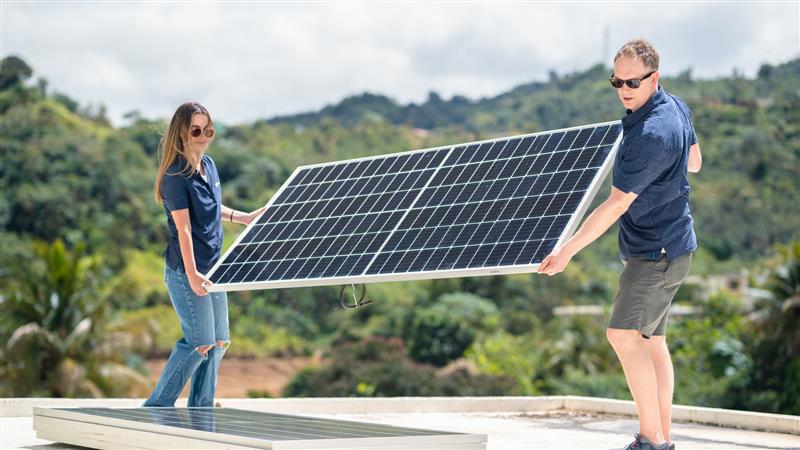
As the US exited the Paris Agreement and Europe struggled to balance energy security with climate ambitions, China continued to seize leadership in low-carbon technologies. In 2025 alone, China added about 380 gigawatts (GW) of wind and solar capacity, more than three times the US and Europe combined. Plug-in vehicles – battery electrics and plug-in hybrids – now have a market share of about 55% and rising in China, versus 15-20% in the US and Europe. Through dominance in critical minerals and low-cost manufacturing, China is reshaping global energy infrastructure for decades to come. Its low-carbon exports will continue to displace fossil fuels worldwide.
Lindsey Entwistle, Principal Analyst, Energy Transition
2. Studies have suggested that entirely new architectures may be required for AI to achieve its promise
One of the year’s most-discussed assessments of AI was ‘The GenAI Divide – State of AI in Business 2025’, from Project NANDA at MIT. The headline conclusion was that although organisations had spent $30 billion to $40 billion on Generative AI (GenAI), 95% of them were getting zero return. The report warned: “The core barrier to scaling is not infrastructure, regulation, or talent. It is learning. Most GenAI systems do not retain feedback, adapt to context, or improve over time.” This limitation is fundamental to today's common AI architecture. It means a radical redevelopment may be required to reach a reasonable threshold for reliability from GenAI systems. This poses risk to investors in data centers and their supporting infrastructure, including energy suppliers. The scale, design, and equipment in the current data center build-out are predicated specifically on today's AI architecture.
Ben Hertz-Shargel, Global Head of Grid Edge
3. Oil production from countries outside OPEC grew strongly
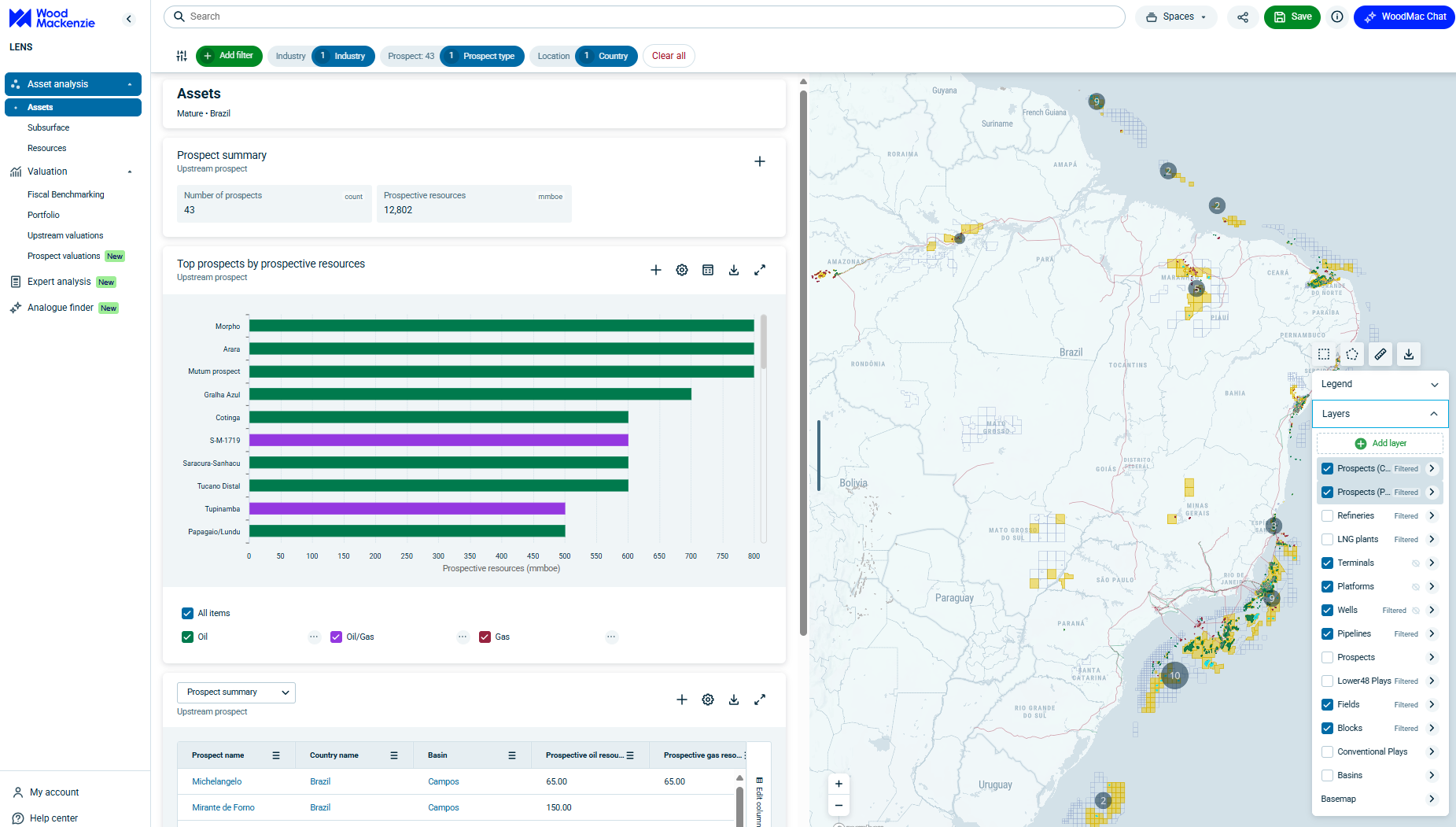
After fitful growth coming out of the pandemic, Brazil clicked into gear this year, with oil production reaching 4 million barrels per day in October (y-o-y growth of almost 800 kb/d). Meanwhile Guyana steadily increased, and the US Gulf of America / Gulf of Mexico was strong thanks to numerous new start-ups and a lack of hurricane-related outages. Total non-OPEC liquids production growth from January to December 2025 is likely to come out at about 2.5 million b/d. The key questions now are over how the OPEC+ group will react. Production increases previously planned for the first quarter of 2026 have already been postponed. We are forecasting a slight fall in US Lower 48 production next year; but if growth there picks up again, then OPEC+'s role will become even more challenging.
Douglas Thyne, Research Director, Oil Supply
4. The US derailed the landmark deal to curb emissions from the global maritime sector
Countries that are members of the International Maritime Organisation voted 57-49 to delay the implementation of their net zero framework for emissions, following pressure from the US. Formally adoption has been postponed by just a year, but it is difficult to envisage it going ahead while the current US administration remains in office. The decision delays the transition of a sector that is responsible for about 3% of global emissions, sustaining fuel oil as the primary bunker fuel. It also undermines low-carbon liquid fuel projects that were relying on the maritime sector as a key offtaker.
Iain Mowat, Principal Analyst, EMEARC Refining and Oil Product Markets
5. European LNG demand surged
European LNG demand rose 29% in 2025, pushing imports above the 2022 record. A cold winter increased the need to refill storage, and the end of Russian pipeline gas flows through Ukraine meant more imports from other sources were needed. Meanwhile Europe’s overall gas demand was resilient, after years of decline. Record FIDs for LNG export projects, particularly in the US, and declining demand in China have shifted industry sentiment towards a looming oversupply. Europe will be critical for soaking up the next wave of LNG coming on to the market.
Massimo Di Odoardo, Vice-President of Gas and LNG Research
6. Oil and gas companies sought strategic joint venture deals
Eni and PETRONAS signed a joint venture agreement to combine their upstream assets in Indonesia and Malaysia. By pairing PETRONAS’s domestic cash flow in Malaysia with Eni’s Indonesian growth engine, the venture is positioned to reach ~500,000 barrels of oil equivalent per day, underscoring how operators can use strategic ventures to raise investment capacity without compromising shareholder returns. We expect more strategic ventures to emerge in other parts of the world, as international and national oil and gas companies seek solutions to capital allocation constraints.
Greig Aitken, Head of the Upstream M&A Service
6. The US Majors announced new innovations to improve recovery from US tight oil
At its Investor Day in November, Chevron unveiled a suite of technologies that it plans to use in its Permian tight oil operations to unlock greater volumes. Its goal is to increase recovery factors and redefine the performance of the world's largest tight oil basin in the 2030s and beyond. The move followed ExxonMobil’s earlier announcements on using new proppants and other technologies to improve the economics and longevity of its own massive Permian project. The two companies, which between them produce roughly 3 million boe/d in the Permian, are sending a clear message to smaller Lower 48 competitors: "If your reservoir technology toolkits don’t evolve, you risk becoming stale in shale."
Robert Clarke, Vice-President, Upstream Research
7. A pioneering solar and storage mega-project in Abu Dhabi is testing whether hybrid facilities can provide true baseload power
In October, Masdar and the Emirates Water and Electricity Company broke ground on a 5.2 GW solar PV facility with 19 GW hours of battery storage. It is the world’s first gigawatt-scale hybrid project designed to provide 1 GW of “around-the-clock” baseload power. In other regions, this would be too expensive. Even in Abu Dhabi, the project is expected to cost roughly six times a new gas-fired CCGT plant in Saudi Arabia. But assuming successful project execution and continued cost declines, it could redefine baseload power.
Michelle Davis, Head of Global Solar
9. Google became the first hyperscaler to announce a major project commitment for a power plant with carbon capture and storage
Google in October signed a first-of-a-kind power purchase agreement for a big tech company to buy electricity from a gas-fired power plant with carbon capture and storage (CCS). It has agreed with Broadwing Energy to take most of the power from a 400 megawatt plant to power Google’s data centres. Until that deal, proponents of CCS for power generation were wondering which would be the first hyperscaler to announce a major project commitment. Google's PPA with Broadwing was followed in December by a "strategic energy and technology partnership" with NextEra, which concurrently announced an agreement with ExxonMobil to build CCS into a 1.2 GW gas-fired power plant. It could act as a tipping point for CCS, making it possible for more power projects with carbon capture to advance next year.
Peter Findlay, Director of CCUS Economics
10. Western governments and financial institutions moved to build critical mineral supply chains independent of China
China’s restrictions on exports of rare earths and other critical materials meant that mining and minerals surged in the public consciousness this year. Chinese companies have for years been dominant in critical minerals processing and increasingly have been investing upstream as well. After years of warnings about the potential risks inherent in that position, the US finally moved decisively to reduce its reliance on China. A deal to invest in the end-to-end rare earths supply chain at Mountain Pass was followed by a raft of commitments of capital for critical minerals development. There were also inter-governmental agreements with Australia, valued at $8.1 billion, and with Japan, valued at $550 billion, which included critical minerals. Not to be left out, the private sector also stepped in, with JPMorgan allocating $1.5 trillion to a ten-year security and resiliency initiative. One key question remains: will the capital be deployed fast enough and at the scale required to make a meaningful dent in China’s dominance?
Julian Kettle, Vice Chairman of Metals and Mining
That’s all from Energy Pulse for this year. We hope you have a great holiday season and a very happy New Year. We look forward to returning in 2026.
Business as usual is over
Introducing the latest insight from our thought leaders, the book Connected: Bringing predictability to the increasingly uncertain world of energy.
As climate change accelerates and geopolitical tensions reshape global markets, the energy landscape has become increasingly interconnected. Connected explores why those interconnections have developed, and how they bring clarity to the most important decisions we make about the future of energy.

Get The Inside Track
Ed Crooks’ Energy Pulse is featured in our weekly newsletter, the Inside Track, alongside more news and views from our global energy and natural resources experts. Sign up today via the form at the top of the page to ensure you don’t miss a thing.