


Discuss your challenges with our solutions experts
Middle East conflict delays solar supply chain diversification and reintroduces cost pressures
Geopolitical disruption stalls emerging manufacturing hubs, tightening global solar supply chains and reversing cost deflation trends
1 minute read

Yana Hryshko
Senior Research Analyst and Head of Global Solar Supply Chain

Yana Hryshko
Senior Research Analyst and Head of Global Solar Supply Chain
Latest articles by Yana
-
Opinion
Middle East conflict delays solar supply chain diversification and reintroduces cost pressures
-
Opinion
3 clouds on the horizon for solar and storage developers
-
Opinion
The impact of China’s 2024 solar PV manufacturing guidelines
-
Opinion
How are companies managing excess capacity in Asia Pacific’s solar supply chain amid a solar boom?
The solar industry is entering a new phase of disruption as the escalation of conflict in the Middle East begins to affect not only regional project execution, but also the trajectory of global supply chain development.
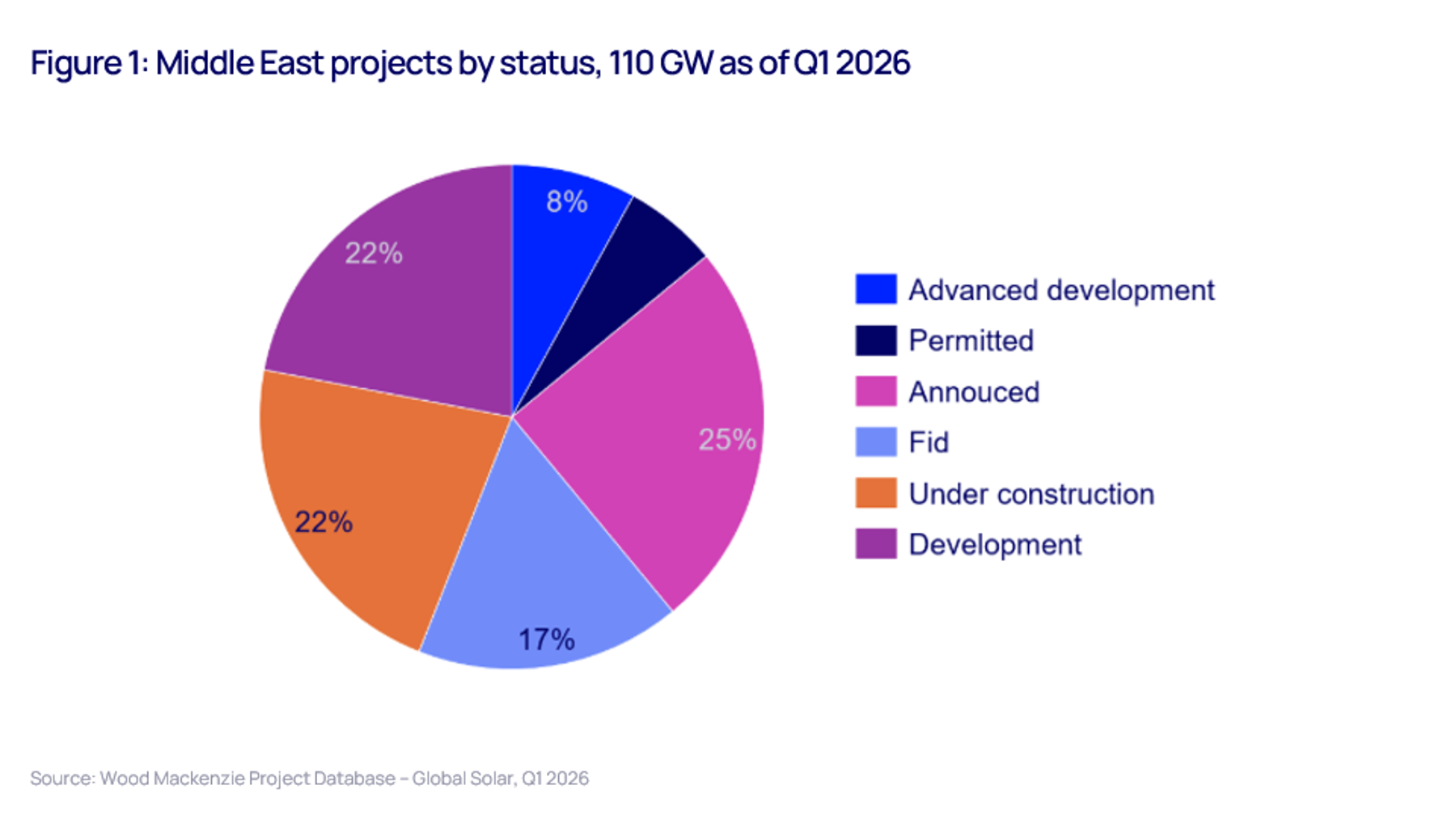
In the near term, the impact is most visible across projects under construction. Approximately 110 GW of solar capacity in the Middle East is currently in execution or various stages of development, with early signs of disruption already emerging. While impacts are most immediate for projects under construction, the broader pipeline is increasingly exposed to delays, cost inflation, and supply uncertainty. Developers and EPC contractors are delaying shipments, adjusting delivery schedules, and reassessing procurement timelines in response to growing uncertainty across logistics and transport routes.

These challenges are primarily driven by increased risk exposure along key maritime corridors, rising freight rates, and higher insurance costs. As a result, project CAPEX across the region is expected to increase by ~1–3%, with commissioning timelines extending by several months in some cases.
However, the impact is not contained within the Middle East. Logistics disruption is already transmitting into global markets, particularly Europe. Shipping costs from China to Europe have increased by up to 18% on routes to Rotterdam and around 10% to Southern Europe since the onset of the conflict. These increases are being immediately absorbed by developers, introducing additional cost pressure at a time when the industry had been expecting continued price declines.
While these near-term effects are material, the more significant implications are structural. The Middle East had been emerging as a potential hub for solar manufacturing, supported by access to low-cost energy, strategic industrial policies, and proximity to key demand markets. Announced capacity across modules, cells and upstream segments exceeded 30 GW, with ambitions to serve both domestic demand and export markets.
The current disruption is delaying this trajectory. Project timelines are being extended, investment decisions are being deferred, and attention is shifting toward short-term operational stability. Importantly, the impact extends beyond module assembly. The development of supporting component supply chains - including solar glass, aluminium frames, and mounting structures - is also being delayed. These components are critical for achieving cost-competitive, localised production. Without them, manufacturing remains dependent on imported inputs and structurally less competitive.
This delay has direct implications for global supply chain diversification. Instead of accelerating the development of alternative manufacturing hubs, the current environment is likely to reinforce reliance on established supply chains, particularly in China. The scale, cost structure and ecosystem integration of Chinese manufacturing remain unmatched, and delays in competing regions further strengthen this position.

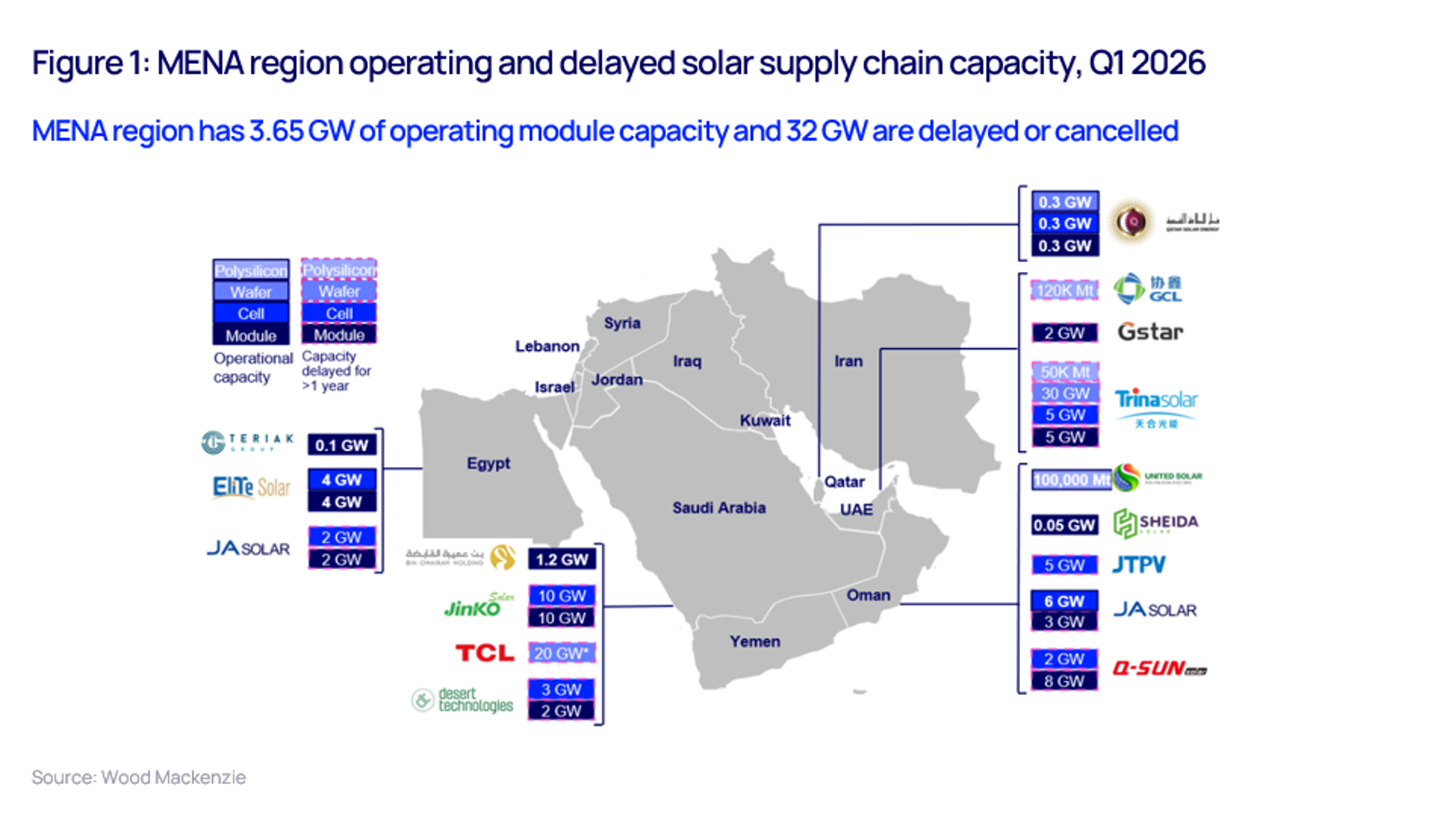
At the same time, the disruption is exposing vulnerabilities in upstream supply, particularly in the United States. While US module assembly capacity is expected to reach 50–60 GW by 2026, domestic cell production remains significantly lower, creating a structural reliance on imported cells.
A meaningful share of this supply is sourced from regions now exposed to elevated risk, including Oman and Ethiopia. If disruptions materialize, the US could lose up to 20–25% of its external cell supply, tightening availability and driving cell prices higher by 2–4 US cents per watt. This would have direct implications for manufacturing costs, project timelines, and the pace of domestic capacity expansion.
Taken together, these developments point to a shift in market dynamics. In the short term, cost pressures are re-emerging through logistics. In the medium term, supply constraints - particularly at the cell level - are likely to introduce upward pressure on prices. In the longer term, delays in manufacturing expansion in the Middle East are expected to extend the timeline for global supply chain diversification.
The result is a more complex and less predictable operating environment for developers, manufacturers and policymakers. While the solar industry has demonstrated resilience through previous disruptions, the current situation highlights the extent to which geopolitical risk is becoming a defining factor in supply chain development.
Rather than accelerating the transition toward a more distributed manufacturing base, the Middle East conflict is likely to delay that transition and reinforce existing supply concentration, at least over the next investment cycle.
Learn more
Read our latest in-depth insights exploring the consequences to Middle East energy production, supply chains and energy security across international markets.