




Discuss your challenges with our solutions experts
Need to know: European refined product markets April 2026
How are refinery operations and shifting trade dynamics impacting inventories across crucial ARA hub locations?
1 minute read

Jim Venhoff
Head of Oil Assets, Commodities Trading Data & Analytics

Jim Venhoff
Head of Oil Assets, Commodities Trading Data & Analytics
Jim oversees oil assets operations for our Commodity Trading Data & Analytics team.
Latest articles by Jim
View Jim Venhoff's full profile
Jim Mitchell
Director of Oil Trading Analytics

Jim Mitchell
Director of Oil Trading Analytics
Jim has 29 years of commodity market experience in crude oil, refined products, shipping, Natural gas, power and grains.
Latest articles by Jim
-
Opinion
What defined oil trading in 2025: five moments that mattered
-
Opinion
5 top takeaways from our APPEC 2025 briefings
-
Opinion
Japan sweeps the dust from its energy strategy
-
Opinion
Oil and refined products in 2025: a commodity trader’s guide
-
Opinion
The impact of tariffs on Canada’s export market
-
Opinion
Canada’s oil export future: what’s next?
Global refined product markets are demanding increased attention as refinery operations, inventory levels and trade dynamics continue to shift. Traders in Europe need to stay particularly close to these issues, as changes in inventories at key Amsterdam-Rotterdam-Antwerp (ARA) hub locations can materially influence regional supply, pricing, and market sentiment. So, what’s happening on the ground?
Crude oil inventories hit four-year seasonal highs
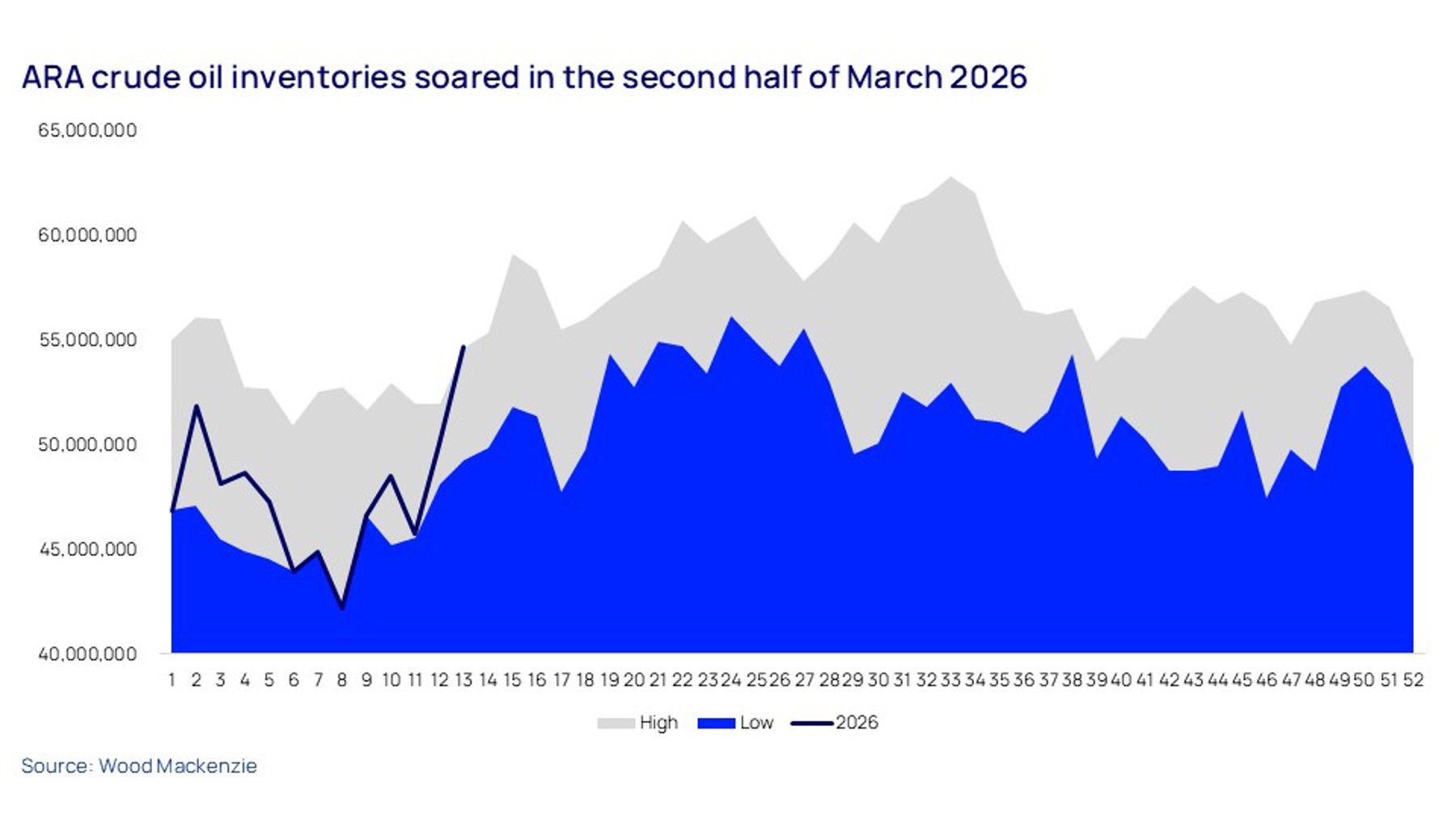
ARA crude inventories were down to 46.6 million barrels for the week ending 27 February 2026 (see chart below). In mid-March, they were at four-year lows compared to the equivalent calendar week in previous years. However, by the end of the month they had jumped by over 8 million barrels to 54.7 million barrels — a four-year high for the equivalent calendar week.

Gasoline inventories see four-year seasonal lows
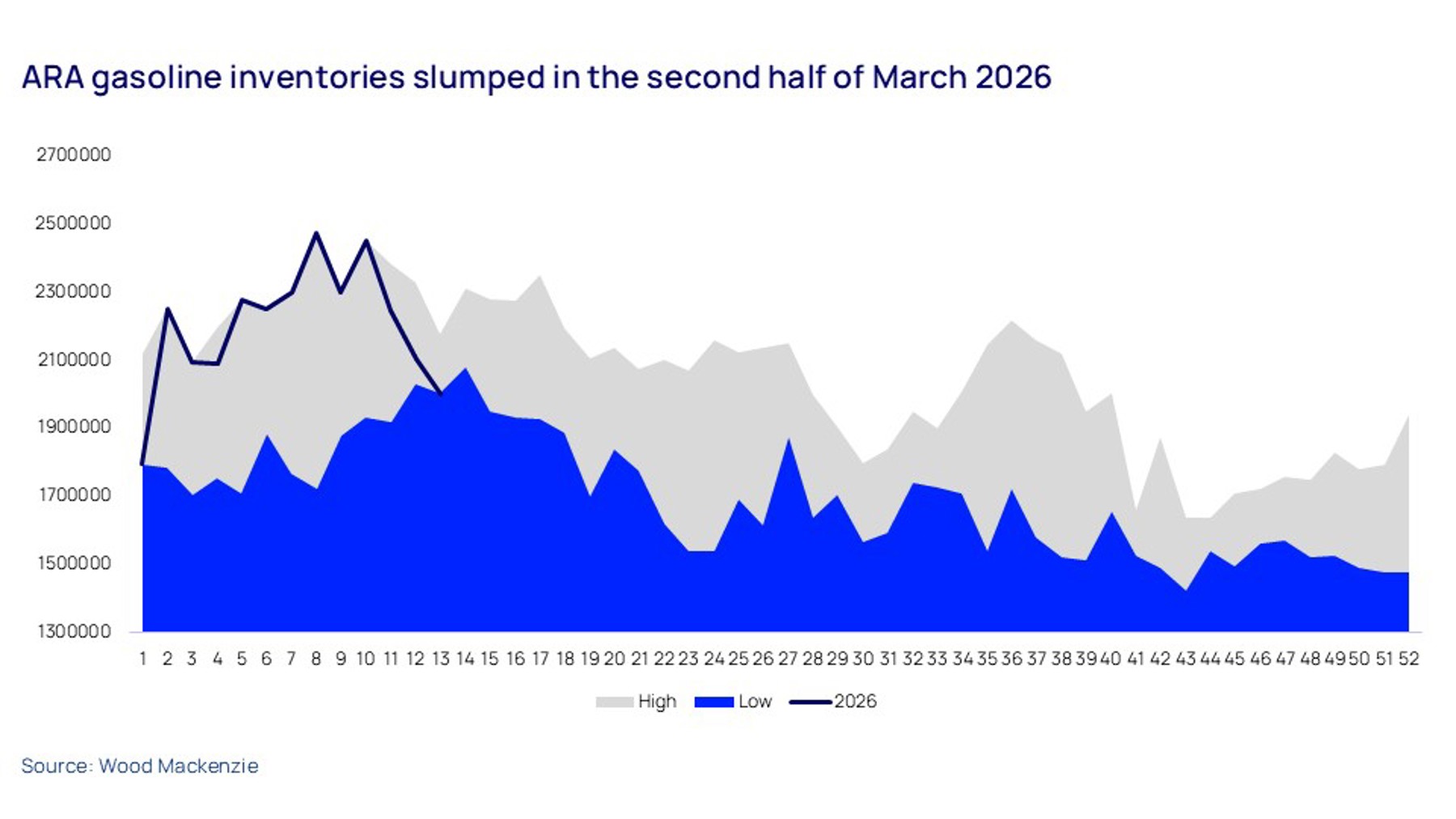
In sharp contrast, gasoline inventories slumped over the same period, mirroring crude’s seasonal shift in reverse. The week ending 6 March saw inventories hit 2.45 million barrels; however, by the end of the month stocks had slumped by nearly 20% to 2.0 million barrels (see chart below).

Gasoil and jet fuel inventories increased slightly
ARA inventories of middle distillates including gasoil and jet fuel/kerosene have been more stable. Having risen steadily throughout February, draws on gasoil reduced stocks to 3.44 million barrels for the week ending 13 March. However, in the second half of the month they rebounded slightly, rising to 3.60 million barrels by the week ending 27 March.
Jet fuel inventories followed a similar trajectory, dipping slightly in early March before finishing higher by the end of the quarter. From 0.86 million barrels for the week ending 27 February, they had risen to 0.93 million barrels four weeks later.
How crude oil grades affect the quantity of refined products produced
One factor worth noting is that the particular grade of crude oil refined can result in quite different quantities of individual distillates. In general, the lighter crudes such as those extracted from the North Sea contain relatively higher volumes of gasoline, for example. However, there can be significant variation between oil from different fields within the region. For example, blended crude from the Åsgard field in Norway contains 41% gasoline, whereas a barrel of oil from the British Forties field contains less than 36%. The table below shows examples of typical percentages for other distillates.
|
Crude type |
Industrial gas |
Petrochemical Naphtha |
Gasoline |
Jet fuel |
Gasoil |
Fuel oil |
|
Åsgard Blend |
4.22 |
11.19 |
41.06 |
11.98 |
27.39 |
4.16 |
|
Forties |
2.85 |
8.51 |
35.52 |
10.6 |
30.57 |
11.95 |
Find out more
Wood Mackenzie’s Commodity Trading Analytics provide traders with fast, accurate insights to optimise trading strategies. Our Oil and Gas Transportation, Pipelines, and Storage service uses proprietary asset monitoring and expert forecasting to assess inventories, predict flows and anticipate disruptions. Find out more on our website.