



Find out how our Consulting team can help you and your organisation
The Strategic Repricing of Mining: Insights from the 2026 PDAC Convention
Key takeaways from meetings with Private and Institutional Investors, Operators, Developers and Government Representatives and Agencies
4 minute read

Nassam Estibill Zalaquett
Director, Metals & Mining, Americas

Nassam Estibill Zalaquett
Director, Metals & Mining, Americas
Nassam has extensive experience across the natural resources value chain.
Latest articles by Nassam
-
Opinion
The Strategic Repricing of Mining: Insights from the 2026 PDAC Convention
-
Opinion
Splitting at the source: trade-offs between lithium brine and hard rock extraction
-
Opinion
Optimism amidst despair: key takeaways from the 17th Lithium Supply and Battery Raw Materials Conference
-
Opinion
Copper: strategic insight amid policy risk and smelter margin pressures
-
Opinion
PDAC during turbulent times: navigating geopolitical shifts while placing bets on potentially resilient commodities
-
Opinion
Direct lithium extraction: is the hype justified by the reality?

Johann Schmid
VP, Metals and Mining Consulting

Johann Schmid
VP, Metals and Mining Consulting
Johann excels at guiding our consulting team through even the most challenging engagements.
Latest articles by Johann
-
Opinion
The Strategic Repricing of Mining: Insights from the 2026 PDAC Convention
-
Opinion
Battery power play: countercyclical opportunities in raw materials
PDAC 2026 reflected a meaningful shift in investor sentiment compared to a year ago. While the 2025 conference was dominated by geopolitical uncertainty — particularly the anticipated impact of US tariffs — this year’s conversations centred on commodity fundamentals, capital discipline, and the structural role of metals in national security and energy transition. Despite the ongoing conflict in Iran weighing on broader geopolitical risk assessments, the prevailing tone was one of cautious optimism grounded in long-term demand visibility.
Copper: supercycle or superhype?
Copper remained the dominant topic of discussion at PDAC 2026. The primary debate centred on whether the surge in data centre announcements will translate into accelerated construction and represent a genuine demand supercycle, or merely an overhyped narrative. Wood Mackenzie's analysis, presented to clients, framed this as a risk. Data centre–driven demand is expected to contribute approximately 1.5–2 million tonnes of incremental copper demand over the next decade—significant, but modest compared to the roughly ~10 million tonnes added during China's infrastructure boom in the 2000s. More than 70% of projected data centre copper demand remains in the "proposed" stage rather than "committed." In the PJM market, a 3:1 imbalance between committed load (78 GW) and risk-adjusted accredited generation capacity (26 GW) highlights the gap between theoretical demand and physical grid realities.
Meanwhile, although supply experienced disruptions across several global assets in 2025, it has not materially faltered. That said, the structural case for copper remains strong. Growing electrification demand beyond data centres — EVs, grid infrastructure, renewable energy — continues to underpin a positive demand story, whilst declining ore grades and lengthy permitting timelines weigh on future supply. Yet supply does respond: already in 2026, nearly 800 ktpa of additional capacity has been sanctioned, with further upside from mega-projects in standby such as Cobre Panamá and Reko Diq. Wood Mackenzie estimates that ~880 ktpa of new capacity must be sanctioned annually for the next decade to meet primary demand. With prices at elevated levels and 1.2 Mtpa of projects approaching FID, we raise the question: is this fundamentally a resource scarcity problem, or a willingness-to-pay question?
Valuation pressures and shifting investment strategies
A major theme amongst institutional investors, private equity firms, and mining-focused banks was the challenge of deploying capital at reasonable valuations. Transaction multiples for advanced-stage copper and gold assets have reached historically elevated levels, driven by an influx of non-traditional investors, including sovereign wealth funds, technology sector strategists, and generalist private equity, who are willing to pay premiums above what disciplined mining investors would consider fundamental value.
In response, experienced participants are adapting in three key ways:
- Shift to debt: Many traditional equity investors are rotating into royalty streams, streaming deals, and project-level debt to avoid overpaying for equity.
- Gold company diversification: With gold prices at elevated levels, above US$5,000/oz in early 2026, gold producers are generating exceptional free cash flow. Several are actively using surplus capital to acquire copper exposure and divest Tier 2 gold assets, whilst maintaining strong dividend programmes. This targeted diversification has further supported copper asset valuations, as well-capitalised gold companies compete aggressively for acquisitions with robust balance sheets. Wood Mackenzie expects gold to average between US$4,000 to US$5,000/oz in 2026, with a long-term assumption of US$3,400/oz sustaining strong sector margins.
- Early-stage repositioning: Unable to compete on advanced-stage valuations, investors are moving earlier in the project lifecycle — targeting advanced exploration and pre-feasibility stage assets. This is reflected in the notable re-rating of junior mining equities over the past 12 months, with the GDXJ index up ~183% in 2025 and the junior miner index outperforming broader mining benchmarks.
Capital returns on mining — with discipline
Following the capital destruction of the previous supercycle, the top eight diversified miners peaked at approximately US$76 billion in annual capital allocation around 2012, whilst paying only about US$20 billion in dividends. The sector has since spent the past decade rebuilding financial credibility. CapEx bottomed in 2017, after which the industry shifted towards prioritising shareholder returns.
Today, a more balanced posture is emerging. CapEx is rising again, primarily directed towards strategic commodities, whilst dividends have remained relatively stable since peaking around 2020. This reflects a structurally healthier capital allocation framework that prioritises investment in future supply whilst protecting shareholder returns, rather than the volume growth focus that defined the 2008–2012 period. A critical tension persists, however. Ex-China supply growth is increasingly a capital allocation choice rather than a geological constraint, as Western miners optimise for return on capital over volume growth, whilst China continues to deploy capital counter-cyclically across the value chain.
Building an ex-China supply chain: progress, cost, and realism
A defining macro theme at PDAC 2026 was the accelerating effort by Western governments to build supply chains independent of Chinese processing dominance. Since 2015, China has invested an estimated US$176 billion in global metals and mining and has been the dominant provider of capital for midstream processing, whilst U.S. and allied investment has remained largely passive. This dynamic is now changing rapidly.
Over the past two years, an estimated US$50 billion in U.S. government, allied, and private capital has been committed or targeted towards critical minerals value chains. This includes initiatives such as the "One Big Beautiful Bill" Act, signed in July 2025, Project Vault, a US$10 billion EXIM Bank-backed strategic critical minerals reserve, the U.S.–Australia Critical Minerals Framework, the Canada Critical Minerals Sovereign Fund at C$2 billion, and private investment vehicles such as the Appian-IFC Minerals Fund and JPMorgan's Security and Resilience Fund.
The critical caveat is that ex-China supply chains are inherently more expensive and will take longer to scale, given project lead times of 8–15 years for large mines. Participants broadly acknowledged that this represents a strategic premium worth paying, but only if investment is sustained and not subject to political volatility.
Argentina: from no to maybe
Argentina's investment climate showed measurable improvement at PDAC 2026. At last year's conference, most private bank representatives expressed interest but reluctance to deploy capital in the country. This year, the tone shifted towards cautious openness, driven by the continued presence of major mining companies — including BHP, Rio Tinto, FQM and Lundin — validating the jurisdiction. Key projects advancing in the country include the Tier 1 Vicuña integrated copper–gold district (~400 ktpa Cu, 700 koz Au over 25 years) and Taca Taca (~291 kt Cu first decade average), both benefiting from Argentina's RIGI regime which grants investments over US$2 billion a series of benefits, most importantly 30 years of stable fiscal terms. Private bank appetite remains conditional on participation from export credit agencies (ECAs) and other senior lenders to de-risk project financing. The direction of travel is still cautious but clearly more positive.
Beyond copper: gold, lithium, and broader commodity interest
Copper dominated, but three additional commodity narratives emerged prominently:
- Gold: Strong investor interest in price trajectory, with spot prices near multi-year highs. Gold demand has shifted structurally, with investment and central bank purchases now driving incremental demand over jewellery — global ETF flows surged from ~US$4 billion in 2024 to US$89 billion in 2025 (World Gold Council). Producers are optimistic with strong cash flow, repositioning portfolios, and returning capital.
- Lithium: Despite a difficult 2023–2024 price cycle, interest in the lithium value chain remained meaningful. Over 95% of demand is driven by energy transition sectors via EVs and energy storage. Investors are taking a longer-term view on EV adoption and battery storage demand, with Wood Mackenzie anticipating battery-grade carbonate prices recovering towards US$21/kg.
- Steel: This was discussed in the context of data centres, construction, broader infrastructure build-out, the materialisation of a green premium, and continued strategic national interest in the sector. There was particular focus on DR-grade pellet feed, given its importance for electric arc furnace decarbonisation. The combined steel market is forecast to reach US$2.6 trillion by 2050, compared to approximately US$1 trillion for key energy transition commodities, although with less urgency than copper or battery metals.
Conclusion
PDAC 2026 confirmed that the sector is in transition, with stronger balance sheets, clearer strategic direction, and a growing recognition as a critical geopolitical priority rather than a purely cyclical commodity play. The convergence of the energy transition, national security considerations, and AI-driven power demand is creating a durable demand narrative across multiple metals.
The challenge for investors and operators is not a lack of conviction, but the difficulty of identifying attractive assets in an increasingly crowded market. For those navigating this complex landscape, the imperative is clear: understand where disciplined capital is flowing, recognise the structural shifts reshaping valuations, and identify opportunities where fundamental investment principles can still deliver compelling returns.
Embrace the opportunities
This insight was brought to you by our Metals and Mining Consulting team. Fill out the form at the top of the page to get in touch with our specialists to learn how we can help you navigate valuation pressures, supply chain transitions, and emerging opportunities with confidence.
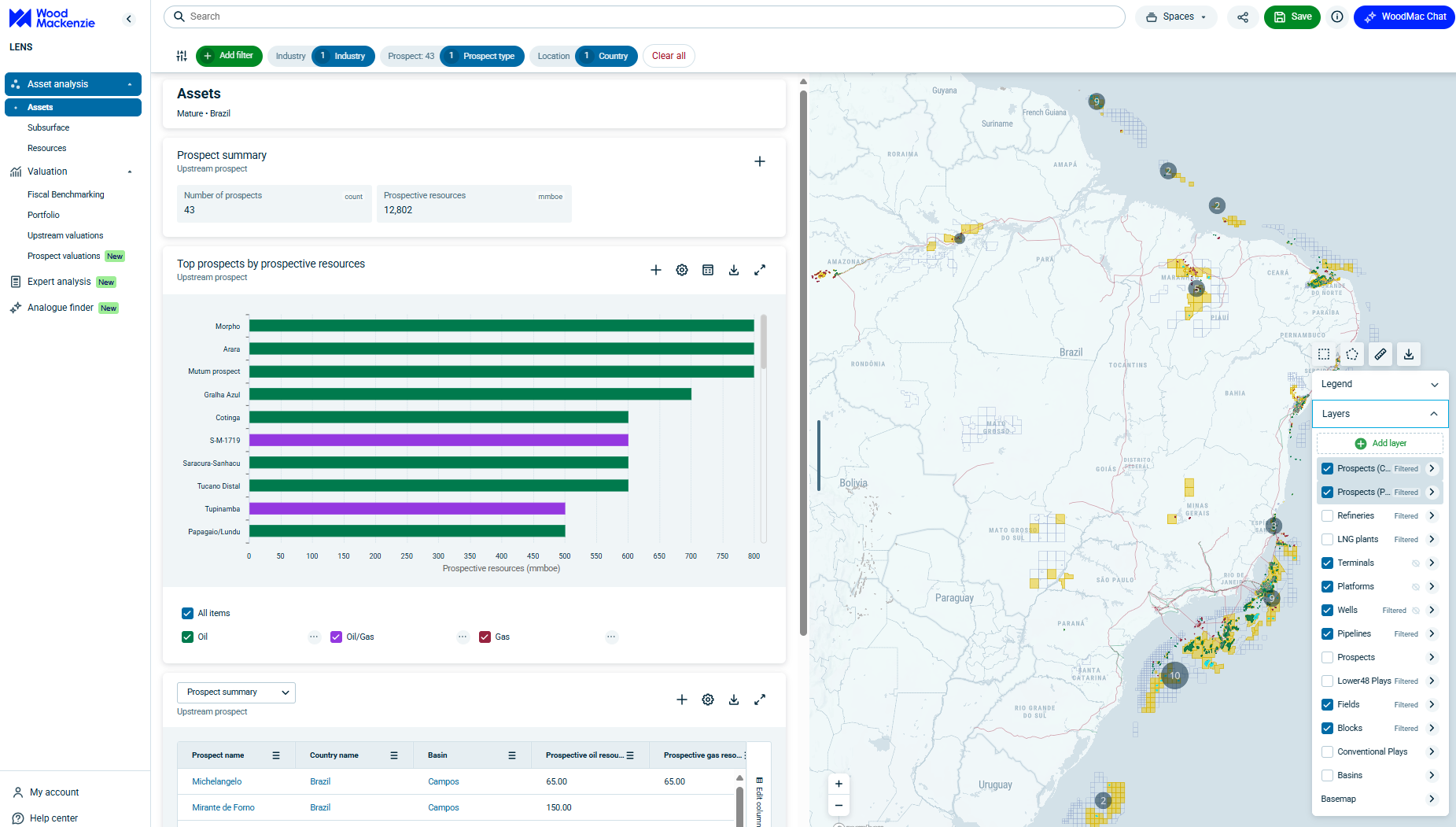
Plus, discover Lens Metals & Mining — our comprehensive all-in-one platform delivering robust data analytics from mine to market. With over 3,330 assets encompassing mines, smelters, refineries and new projects across key mined commodities, Lens Metals & Mining enables investors and financiers to identify, evaluate and screen for growth opportunities in today's dynamic market. Find out more about Lens Metals & Mining.