



Sign up today to get the best of our expert insight in your inbox
Climate finance without Washington
The new coalition funding community clean energy in America

Ed Crooks
Vice Chair Americas and host of Energy Gang podcast
Ed Crooks
Vice Chair Americas and host of Energy Gang podcast
Ed examines the forces shaping the energy industry globally.
Latest articles by Ed
-
Opinion
US oil production starts to respond to higher prices
-
Podcast
Can energy security and climate action work together?
-
Opinion
US permitting reform plan could transform energy investment
-
Podcast
Energy in a more dangerous world
-
Opinion
US considers diesel export restrictions
-
Podcast
Power under pressure | Climate Week NYC special
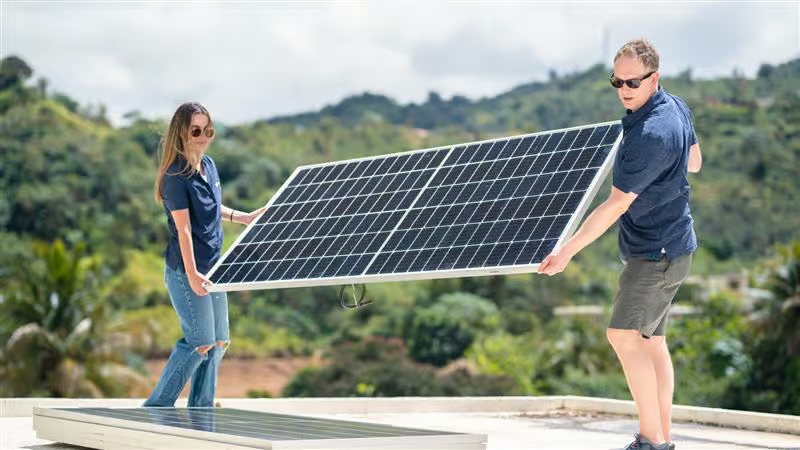
As federal support for climate action in the US is cut back, a difficult question is coming into focus: what happens to clean-energy projects that still make economic sense, but no longer have Washington behind them? For low-income communities in particular, this is not just a policy story. It is about electricity bills, resilience during storms and heatwaves, access to financing, and whether practical projects such as solar, storage, and efficiency upgrades can still get built.
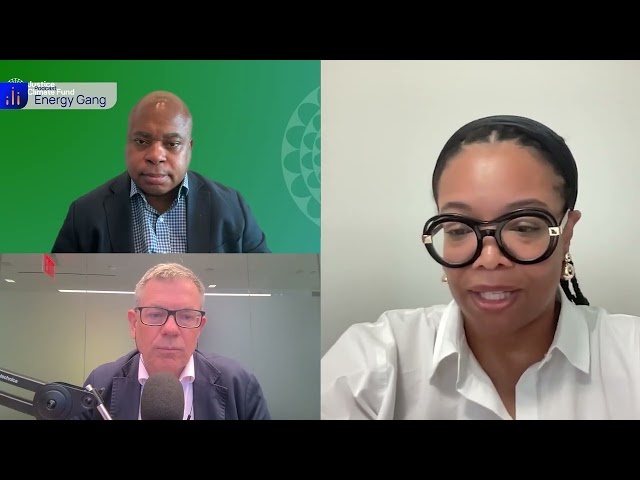
Host Ed Crooks is joined by Amir Kirkwood, Chief Executive of the Justice Climate Fund, and Melanie Allen, Chief Executive of the Hive Fund for Climate and Gender Justice. Together, they explain how a network of community lenders, philanthropies, green banks and local partners is trying to keep momentum alive even as federal climate funding is frozen, litigated or wound back.
A central theme of the conversation is that the real constraint is not just ideology or even demand for clean energy, but the structure of finance. Amir argues that many community projects do not need breakthrough technology so much as access to affordable capital and better risk sharing. His case is that catalytic tools such as credit enhancements, loan-loss reserves and blended capital can still unlock much larger pools of private investment, even if they cannot fully replace the scale of federal support that the Inflation Reduction Act was meant to provide.
Melanie brings that argument down to ground level with examples of what those projects look like in practice. In Texas, local “hub homes” equipped with solar panels and batteries are giving neighbourhoods places to charge phones, run medical devices and stay cool during outages. In North Carolina, a stalled solar project for a wastewater facility was revived through a mix of local partnership and creative financing. In Georgia, a church cut its monthly energy bill sharply after installing solar, storage and EV charging. Across those examples, the point is the same: in many communities, clean energy is advancing less as an abstract climate commitment than as a practical answer to affordability, reliability and local resilience.
That tension between climate ambition and kitchen-table economics runs through the entire discussion. Both guests argue that people move first for pocketbook reasons, and that the strongest case for these investments is often lower bills, stronger community institutions and better protection against system shocks. The politics may have changed in Washington, but the local need for cheaper, more reliable energy has not. In that sense, the conversation suggests that the next phase of US climate action may be driven less by federal grants and more by the ability to assemble credible local deals that solve several problems at once.
But Melanie and Amir are also clear-eyed about the limits of that approach. Philanthropy can be catalytic, not substitutive. Tax-credit changes, direct-pay deadlines and higher supply-chain costs are all making projects harder to close. The question, then, is whether this emerging blend of community finance and private capital can keep enough projects moving to prove the model at scale. What is at stake is not only the pace of decarbonisation, but whether the benefits of the energy transition will still reach the communities that need them most.
Justice Climate Fund (JCF) mobilizes capital and resources to strengthen under-resourced communities across the United States, investing in climate and clean energy projects that expand energy independence, support cleaner air and healthier communities, and reduce energy costs.
JCF partners with mission-driven funders and investors and a network of more than 400 community lenders, nonprofits, and state and local stakeholders to build financing tools that scale climate and clean energy solutions in communities that need them most. By combining deep local expertise with flexible, blended capital, JCF unlocks a pipeline of shovel-ready projects more quickly and efficiently.
These investments deliver lasting impact where it’s needed most, lowering energy costs for families and small businesses, creating quality jobs, and strengthening economic and environmental resilience.
Funders and investors interested in learning more or partnering with JCF can email the Justice Climate Fund team at Impact@JusticeClimateFund.org.
Learn more about Justice Climate Fund’s work.

Full video episodes of the Energy Gang are live on YouTube. Watch the latest episode now and browse the archive.
Energy Gang is a bi-weekly podcast. Join Ed Crooks and the gang for their take on the biggest energy stories shaping the world, with sharp analysis from top experts in climate, policy and the energy industry.