


Sign up today to get the best of our expert insight in your inbox
Is fusion power here at last?
The imagined energy of the future is becoming very real right now

Ed Crooks
Vice Chair Americas and host of Energy Gang podcast

Ed Crooks
Vice Chair Americas and host of Energy Gang podcast
Ed examines the forces shaping the energy industry globally.
Latest articles by Ed
-
Opinion
US permitting reform plan could transform energy investment
-
Podcast
Energy in a more dangerous world
-
Opinion
US considers diesel export restrictions
-
Podcast
Power under pressure | Climate Week NYC special
-
Opinion
The US Federal Reserve responds to the rise in oil prices
-
Podcast
Climate finance without Washington
The old joke about nuclear fusion power is that commercial deployment is 30 years in the future: it always has been and it always will be. It may be time to retire that joke. Private fusion companies have now raised billions in capital, and pilot plants are moving from slide decks and plans into steel and concrete. The questions now are not so much around whether fusion power can ever work, and more about how soon it can reach the grid, and at what cost
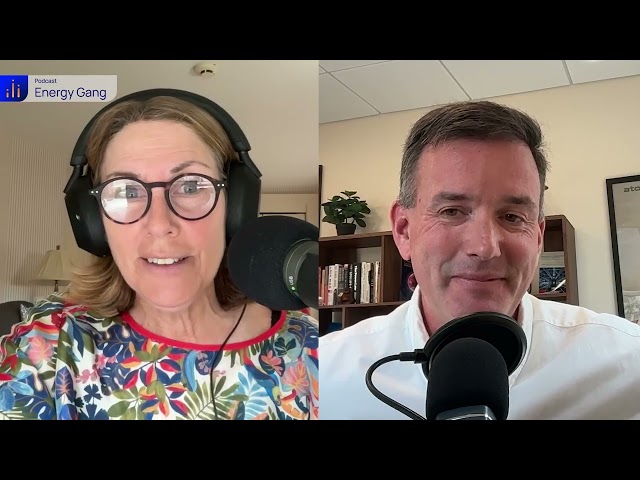
Host Ed Crooks and regular contributor Amy Myers Jaffe, director of the Global Energy, Climate, & Sustainability Lab at NYU are joined by two fusion industry leaders to discuss the rapid progress they are making. Andrew Holland is founder and chief executive of the Fusion Industry Association, and Bob Mumgaard is chief executive of Commonwealth Fusion Systems, one of the companies vying to have the first commercial fusion power plant in operation.
Andrew lays out the state of the sector. There are 56 private fusion companies globally, which between them have raised more than $14 billion in private capital. And there is a growing conviction inside the industry that commercial fusion could arrive in the early 2030s. Bob explains why Commonwealth believes SPARC, its demonstration project in Massachusetts, and ARC, its planned power plant in Virginia, can help make that timetable real.
Fusion has moved beyond the era when government science programs defined the pace of progress. Research backed by governments and universities has played a vital role in moving the technology forward, but Andrew argues that competition, venture capital and milestone-based development have changed the industry’s tempo. Crucially, the industry has not put all its eggs in one basket. Multiple companies are pursuing different technical paths, including both laser-based approaches and magnetic confinement systems, in a race to commerciality.
Bob offers the clearest lay explanation of what fusion power means in practice. Commonwealth Fusion Systems uses a tokamak, which is essentially a magnetic bottle that holds a star inside it. Fusion creates heat, which can be used to run a steam turbine. Unlike wind and solar, fusion does not depend on weather or geography. Unlike fossil fuels, it does not rely on continual fuel deliveries.
The episode also explores why fusion developers believe the technology could avoid some of the political and regulatory burdens that have constrained nuclear fission power. Because fusion reactions are hard to start and easy to stop, the risks are fundamentally different from those of a conventional fission reactor. Bob and Andrew argue that this changes everything from plant safety to siting to licensing, and could make fusion much faster to deploy if the technical hurdles are cleared.
They also discuss what it will take to build an industry, not just a few prototypes. Amy pushes on fuel cycles, lithium, superconducting tape and supply-chain readiness. Bob argues that these challenges are real but manageable, and Andrew points to the growing ecosystem of manufacturers now positioning themselves for a future fusion market. The wider point is that fusion is increasingly starting to look like a manufacturing and industrial-policy story, not just a laboratory science story.
That leads to the biggest question of all: if fusion works, how much could it matter? Bob sketches outcomes ranging from a valuable but still niche source of clean baseload power to a genuinely transformative technology. Andrew goes even further, arguing that fusion could decouple energy from geography and geopolitics in a way no fuel-based system ever has. If the industry’s ambitions are realized, within the next ten years fusion could emerge as a commercial energy source with real consequences for grids, markets and global power.
This episode of Energy Gang is brought to you by ENGIE, the smarter energy supplier. ENGIE doesn't just provide the power to run your business — they supply the energy to move it forward, with reliable, flexible solutions built for what's next. Learn more at engieresources.com.

Full video episodes of the Energy Gang are live on YouTube. Watch the latest episode now and browse the archive.
Energy Gang is a bi-weekly podcast. Join Ed Crooks and the gang for their take on the biggest energy stories shaping the world, with sharp analysis from top experts in climate, policy and the energy industry.