


Insight
Creaming curve fingerprinting Part 1: Introducing the technique
*Please note that this report only includes an Excel data file if this is indicated in "What's included" below
Report summary
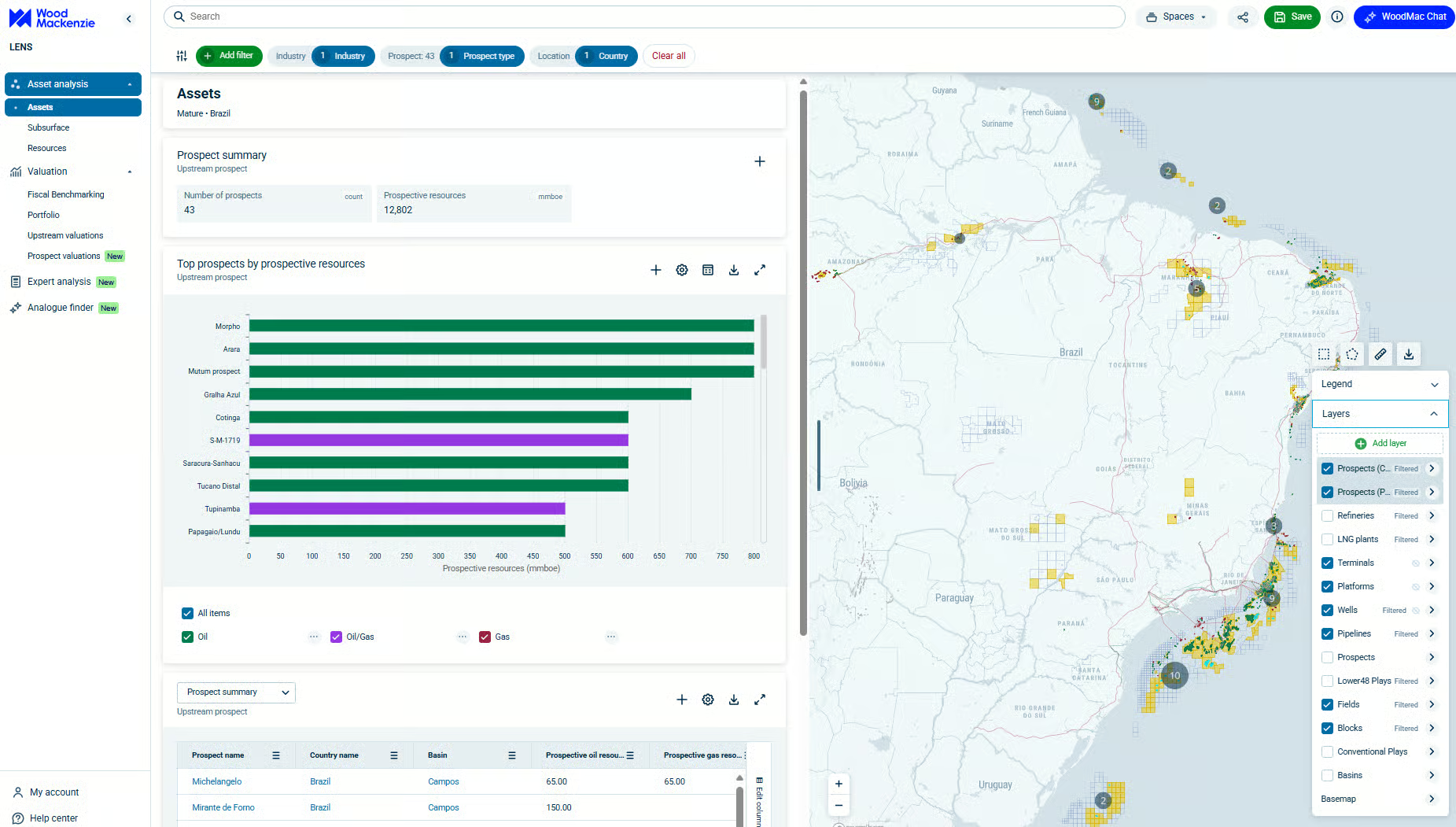
There’s so much more than meets the eye to creaming curves. They are as old as the exploration industry and often used at face value to guide estimates of yet-to-find resources. Read on to see how we leverage our Lens upstream database of wells and fields. Our technique for fingerprinting creaming curves is the starting point for much richer analysis. Parts 2 and 3, to follow, will extend the method to include temporal and spatial aspects of creaming curves. We develop the concept of perfect curves and a range of new exploration metrics.
Table of contents
- Executive summary
- More than meets the eye
- Leveraging Wood Mackenzie wells and fields data
-
Our technique for fingerprinting creaming curves
- Case study: A short history of Mexico’s Salinas-Sureste Basin
- Salina-Sureste’s creaming curve fingerprint
-
Global creaming curve fingerprinting results
- Average of six exploration streaks per basin
- Expect similar size discoveries within a streak and infrequent large outliers
- Expected success rates, but many one-time finds
- Correlation between large discoveries and increased variability in subsequent finds
- Further reading
Tables and charts
This report includes the following images and tables:
-
Figure 1: Example creaming curve of the Salinas-Sureste Basin, Mexico. Colours represent different plays.1950-1970: Initial exploration of the basin was onshore and characterized by the discovery of small fields.1970-1990: Akal is the first mayor offshore discovery in Mexico and one that accelerated the development of the oil industry in Mexico (1977). This period was characterized by increased exploration activity and the discovery of many large fields, including Ku, Maloob and Zaap
-
1990- 2000: Exploration efforts shifted towards the coast to shallower waters.2000-2015: Exploration moved towards the north of the basin and resulted in the discovery of extra-heavy oil fields, including Ayatsil, which is currently the fourth largest produced in Mexico.2015-Today: This streak of discoveries is characterized by heavy participation of private companies. There was also a renewed interest on onshore exploration by Pemex, resulting in large gas and condensate field discoveries, such as Quesqui. Many of the priority fields were discovered during this period.Figure 2: Salinas-Sureste creaming curve fingerprint. The dots on the x-axis represent discovery wells on a normalized scale.Figure 3: Discovered volumes in time, Salinas-Sureste. The x-axis is presented on a normalized scale.Figure 4: Spatial grouping of different discovery streaks in Salinas-Sureste identified by creaming curve peak analysis.Figure 5: Distribution of number of streaks per basin.Figure 6: Distribution of standard deviations of the discovered volumes within a single streak
- 2 more item(s)...
What's included
This report contains: