







Trajectory
Trajectory
Governments seek to reduce their exposure to imported energy and vulnerable supply chains, with greater electrification ultimately providing a more durable route to energy independence.

Outlook
Outlook
Countries initially draw on different domestic resources to strengthen resilience, but over time electrification, renewables and nuclear reduce reliance on imported fuels, ultimately delivering lower emissions than our Base Case.
The Energy Security scenario: can the pursuit of greater energy independence accelerate the energy transition?
Our Energy Security scenario explores what happens when geopolitical risk makes resilience a central objective of energy policy.
Importing countries respond by reducing dependence on globally traded fuels, strengthening domestic supply and diversifying unavoidable imports.
Some domestic fossil fuels play a larger role initially. Over time, however, electrification, renewables and nuclear increasingly allow economies to reduce their dependence on imported energy.
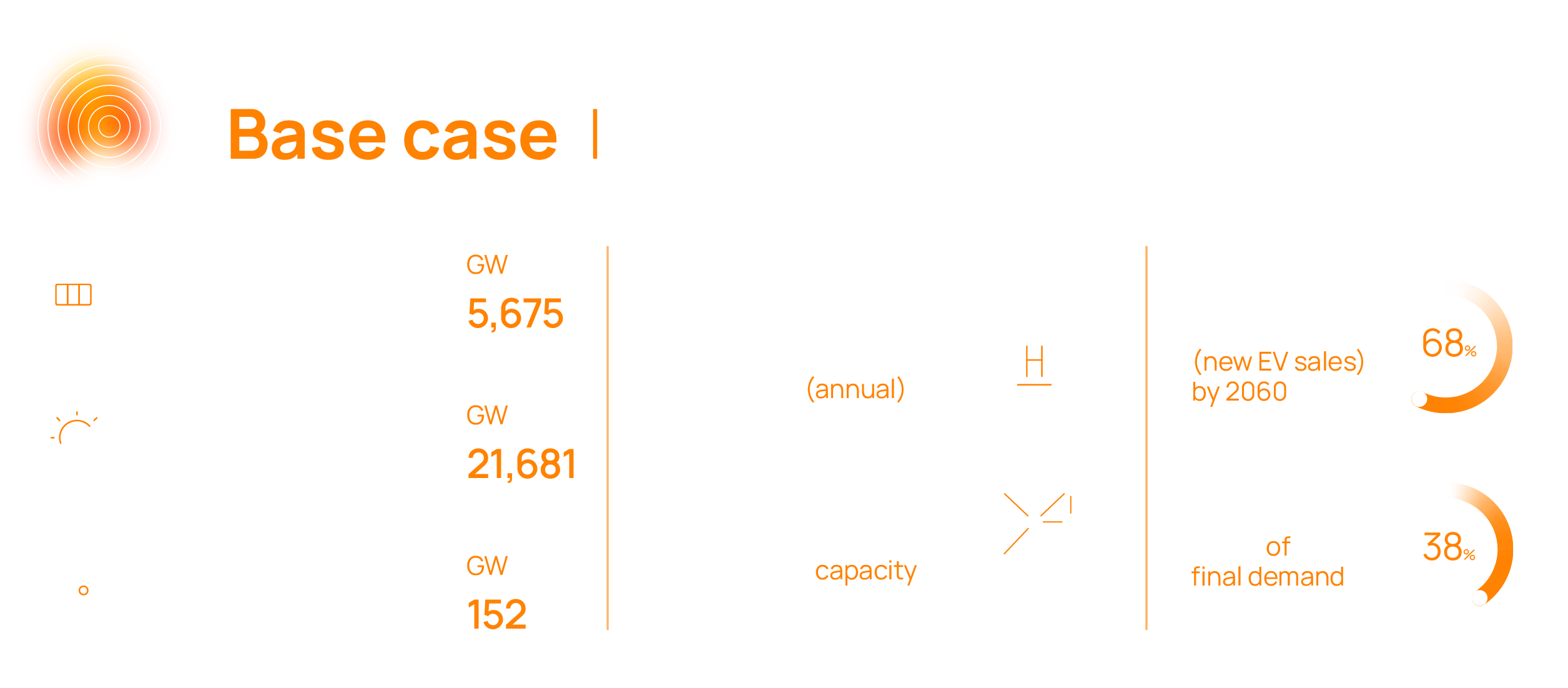
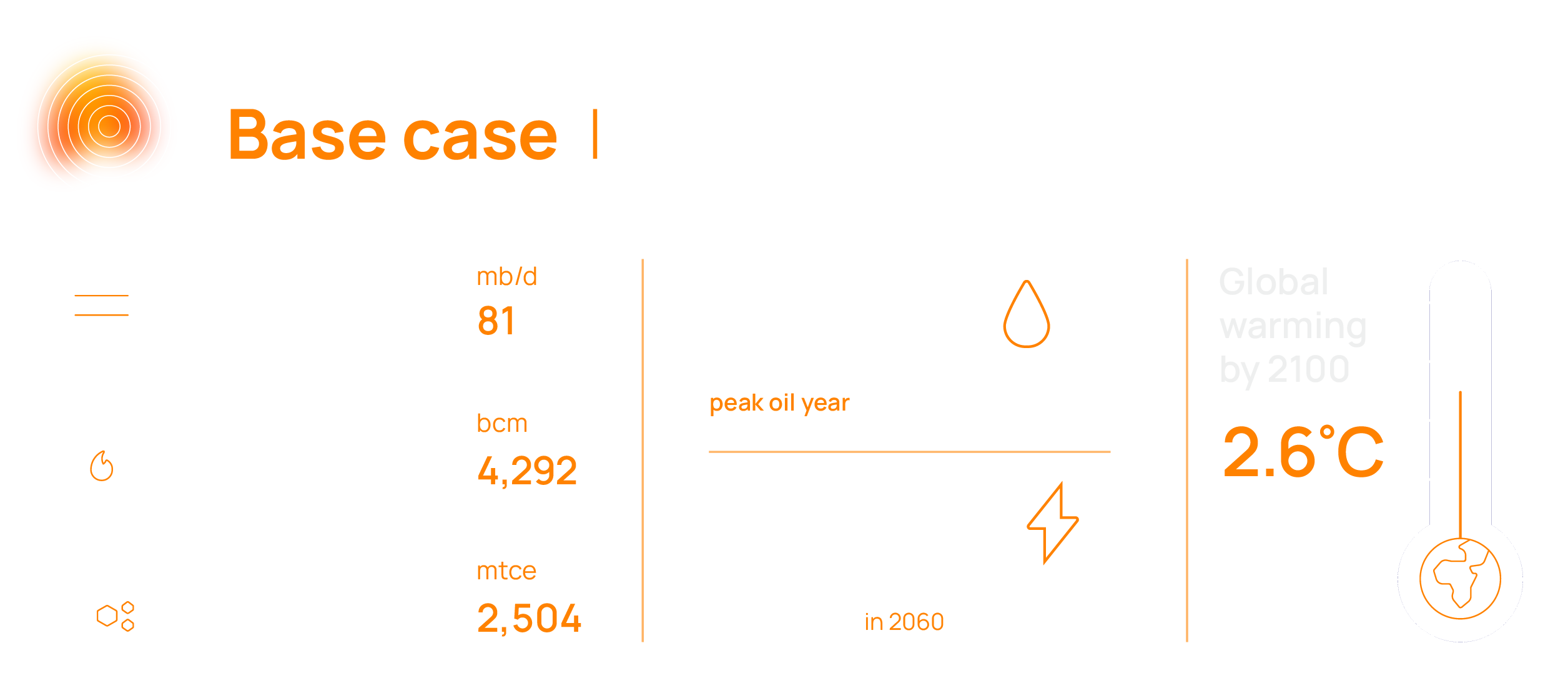
The result is one of the central findings from this year’s outlook: a security-first pathway ultimately delivers lower emissions than our Base Case, corresponding to an approximately 2.5 °C warming trajectory.

How does energy security change the transition?
Import dependence falls
Countries place greater value on reducing vulnerability to external suppliers, trade routes and geopolitical disruption.

Electrification becomes an energy-security strategy
Electric transport, buildings and industry reduce exposure to internationally traded fossil fuels while shifting demand towards domestically generated power.
Renewables and nuclear support resilience
Domestic electricity generation becomes increasingly strategically valuable, supporting greater deployment of renewables and nuclear.
Oil and gas demand weakens
As importing economies electrify and reduce their exposure to internationally traded fuels, oil and gas demand fall below our Base Case.
Trade becomes more regional
Greater emphasis on resilience and domestic capacity reduces some international energy trade, although critical minerals and technology supply chains remain internationally interconnected.
New dependencies emerge
Electrification reduces fossil-fuel import exposure but increases the strategic importance of critical minerals, manufacturing capabilities, grids and clean-energy technologies.
Frequently asked questions
Yes, but the route is not straightforward.
Initially, governments may turn to whatever domestic energy resources are readily available. That can include fossil fuels as countries prioritise reliability and resilience.
Over time, however, the economics of independence increasingly favour electricity.
Our Energy Security scenario sees import exposure halve by 2050. Oil demand is 20% lower and gas demand 10% lower than in our Base Case as electrification and supply diversification reduce reliance on internationally traded fuels.
Gross emissions cross below our Base Case around 2045, with net emissions crossing around 2055. By 2060, emissions are around 7% lower.
Security and sustainability can ultimately converge rather than compete.
Electricity demand more than doubles by 2060.
Renewables, nuclear and geothermal help countries diversify domestic power supply, while electric vehicles and greater end-use electrification reduce exposure to imported fossil fuels.
But not every low-carbon technology benefits equally.
Technologies driven primarily by climate-policy support, including some applications of low-carbon hydrogen and carbon capture, develop more slowly where decarbonisation falls down the policy agenda.
The Energy Security scenario is therefore not simply a faster version of the clean-energy transition. It is a different transition, driven primarily by resilience and sovereignty.