



The 2026 global power market outlook: a complex environment
How will global power markets evolve over the next decade and beyond?
7 minute read

Xiaoyang Li
Director, China Renewables Research

Xiaoyang Li
Director, China Renewables Research
Xiaoyang focuses on analysis of China’s renewables power market
Latest articles by Xiaoyang
-
Opinion
The 2026 global power market outlook: a complex environment
-
Opinion
Power and renewable energy in China: what to look for in 2026
-
The Edge
China renewables investment powers on
-
Opinion
Steadying the grid: why grid forming BESS technology is crucial to future renewable energy supply
-
Opinion
China’s solar & storage exports achieve record growth with more than 40% surge
-
Opinion
Expansion opportunities beckon for China’s wind companies

Peter Osbaldstone
Research Director, Europe Power

Peter Osbaldstone
Research Director, Europe Power
Peter is a research director with more than a decade’s experience in European power and renewables markets.
Latest articles by Peter
-
Opinion
The great power divide: the Middle East crisis is splitting global power markets into winners and losers
-
Opinion
What’s shaping European power markets in 2026?
-
Opinion
The 2026 global power market outlook: a complex environment
-
Opinion
European Power & Renewables: what to look for in 2026
-
Opinion
2025 global power market outlook: divergent paths in a transforming energy landscape
-
Opinion
Iberian blackout: let the finger pointing begin

Ryan Sweezey
Director, North America Power & Renewables

Ryan Sweezey
Director, North America Power & Renewables
Ryan focuses on coverage of North America power markets, producing forecasts of power, capacity and REC prices.
Latest articles by Ryan
-
Opinion
The 2026 global power market outlook: a complex environment
-
Opinion
2025 global power market outlook: divergent paths in a transforming energy landscape
-
Opinion
The 2025 US power market outlook
-
Opinion
The global power market outlook: can global power generation keep up with the energy transition?
-
Opinion
North American power markets: navigating a trickier path to decarbonisation
-
Opinion
The Inflation Reduction Act and its impact so far

Marina Azevedo
Senior Power Analyst

Marina Azevedo
Senior Power Analyst
Marina focuses on market developments, business strategies, energy modelling, and scenario forecasting.
Latest articles by Marina
-
Opinion
The 2026 global power market outlook: a complex environment
-
Opinion
2025 global power market outlook: divergent paths in a transforming energy landscape
-
Opinion
Brazilian Day of Forgiveness allows power plant developers to withdraw from existing contracts without penalties
Global power markets continue to witness unprecedented ongoing transformation in 2026. The push to decarbonise generation continues, however, the need for energy security and affordable supply creates competing demands for governments as they attempt to navigate growing geopolitical and economic uncertainty.
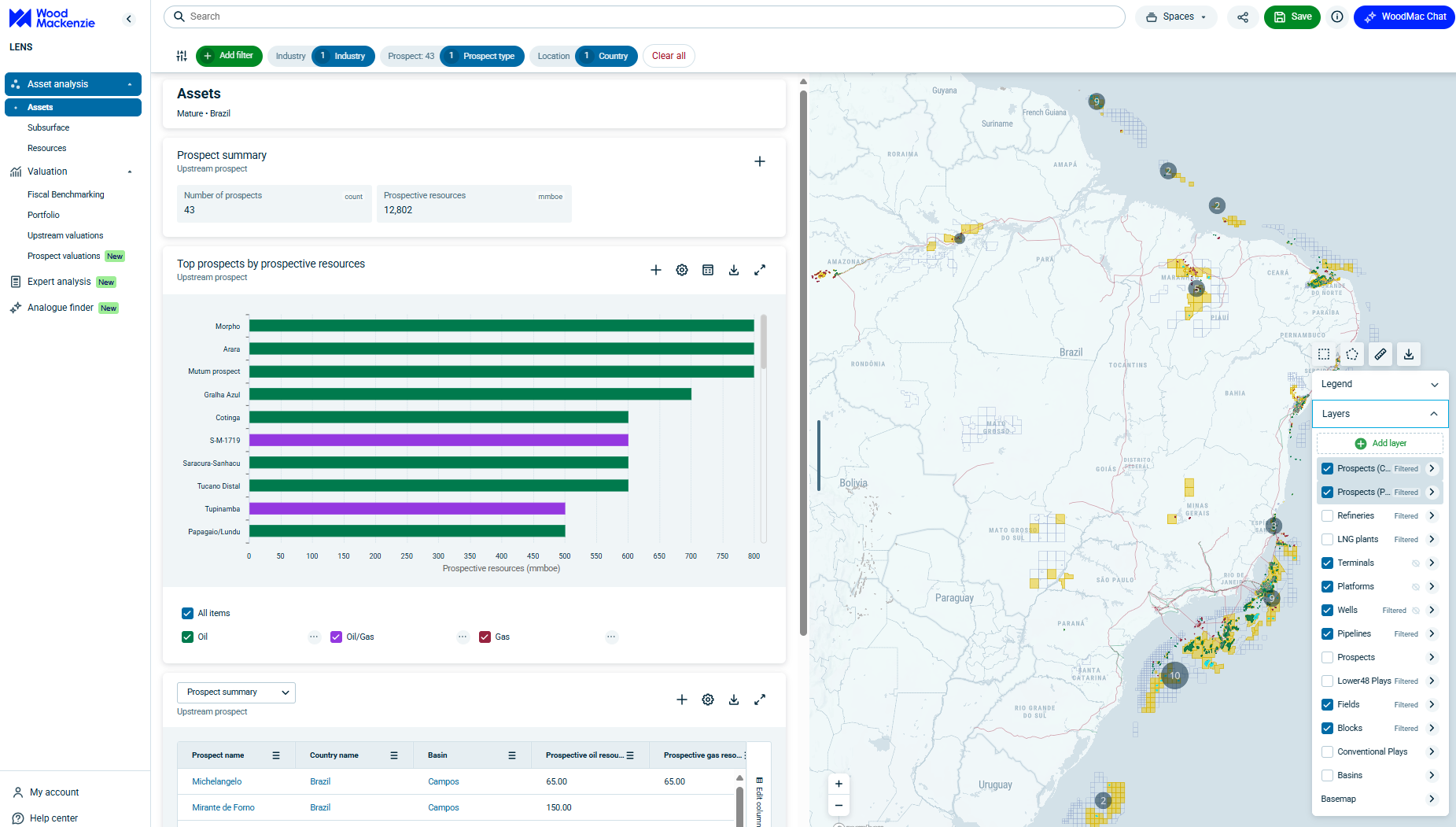
Analysts from our regional research teams have put together a series of long-term strategic outlooks covering power markets globally. Powered by data from Wood Mackenzie’s Lens Power & Renewables platform, their in-depth reports provide invaluable region-specific insight for industry stakeholders and investors.
Read on for a brief overview of the outlook for each region, and fill in the form at the top of the page to access the executive summaries from the full regional reports.
Asia Pacific: A US$4 trillion power market investment boom led by solar and storage
Thanks to economic and industrial growth in China, India and Southeast Asia, the Asia Pacific (APAC) region will continue to drive global power demand growth over the next decade. Already higher than for the rest of the world combined, APAC power demand will grow 57% over the next decade, contributing nearly three-quarters of overall global demand growth and topping 24,000 terawatt hours annually.
The region’s power market investment boom will continue, with nearly US$4 trillion expected to be invested - a 44% rise on the previous ten-year period. Solar will account for a third of total investments, helping drive a six-fold increase to over 7,000 gigawatts (GW) of cumulative capacity by 2050. In the same period, wind capacity will grow somewhat more slowly than previously expected, to reach just over 3,000 GW.
The prize for the fastest growing segment goes to energy storage, which will attract 14% of APAC power market investment to 2034, adding nearly 125 GW annually. In fact, more new energy storage capacity will be added than coal, gas and nuclear combined. Installed gas capacity will more than double, but its share of generation will remain below 10%, while coal capacity will continue to grow in the short term but will peak in 2030, with its share of generation falling from 53% in 2024 to just 10% by 2050. Nuclear capacity will quadruple by the same date, capturing a 10% share of overall generation.
Despite soaring demand, the focus on renewable generation means APAC power sector carbon emissions should already be past their peak and will fall by 56% to 3.7 billion tonnes in 2050. The downside will be 20% higher transmission and distribution costs by 2030, along with an increased risk of curtailment, with levels for solar in particular rising from 2% to 7% by 2050.
US & Canada: The US shifts approach as strong but uncertain demand growth continues
In the US, power demand growth will accelerate as utilities commit to substantial volumes of large loads from data centres - although we expect the challenge of building the necessary supply and infrastructure to be a limiting factor. Our current estimate is for demand to grow 2.9% annually (up from 2% in H1 2025).
The Trump administration’s One Big Beautiful Bill Act (OBBBA) phases out federal tax credits for renewables, marking a shift to a new policy framework that will see thermal generation play a bigger role: we expect 54 gigawatts (GW) of new gas generation between 2026 and 2030, rising to 17 GW annually through the next decade once manufacturing constraints have been overcome. However, strong demand growth, constraints on gas generation and rising prices mean that despite policy headwinds, demand for renewables will remain strong.
Strong growth in gas demand for both power generation and LNG will see benchmark Henry Hub gas prices rise to US$5.20 (2025 real $) per million British thermal units (mmbtu) by 2035, and US$8.31/mmbtu in 2060. This will help drive higher power and capacity prices, while Renewable Energy Credit (REC) prices will fall over time as declining costs and rising energy market revenues improve margins. Affordability concerns, particularly in markets experiencing the highest demand growth, create substantial risk of political intervention.
Canada, in contrast, will continue on its existing policy path, with its headline Investment Tax Credits (ITCs) for renewables set to remain in effect through the mid-2030s. At 1.6%, demand growth will be somewhat lower than in the US; however, like its neighbour, Canada needs significantly higher investment in transmission improvements to economically meet increased demand. Strong overall demand growth across both countries will increase the region’s carbon emissions by 7% over the next decade, but they will eventually fall 38% by 2060.
Europe: Cautious optimism must be balanced with a pragmatic approach to structural risk
In the face of global trade tensions and macro headwinds, European electricity demand growth dipped to below 1% in 2025, from 1.6% in 2024. Despite this slowdown, pockets of activity persist and we expect data centres, a highlight of the near-term outlook, to propel increased demand in numerous of markets, accounting for 4% of total regional power demand by 2030. However, with both momentum and confidence lost, overall power demand growth of 1.9% from 2024 to 2030 will be lower than for APAC and the US.
We predict over 650 terawatt hours (TWh) of additional power demand from 2025 to 2035, with a sustained policy commitment positioning electrification to drive power market expansion. The recovery of industry, commercial and residential demand will drive change in the short term, while later on, transport, heating and cooling, data centre expansion and to a lesser extent green hydrogen will fuel growth.
From a policy perspective, grid stability and resilience will be a priority. National policies and mechanisms will define the market opportunity for renewables, which face increasing commercial challenges as the ability of systems to integrate high quantities of variable supply from wind and solar is stretched. High costs and delivery risks mean offshore wind will grow at a slower pace. However, with dispatchability a focus, the rollout of energy storage will accelerate, with over 230 GW deployed across the region by 2035. With renewables displacing less conventional generation than previously expected, gas-into-power will fall at a slower rate, while proposals for extending the lifespan of existing nuclear generation are gaining traction.
A substantial wave of new LNG supply will bring European gas prices down, bottoming out at around 20 Euros per megawatt hour (EUR/MWh) in 2030, a reduction of over 45% from 2025 levels, before rising back towards 30 EUR/MWh by the mid-2030s. Despite rising carbon costs, gas’ falls will result in falling power prices in the near term, before electrification and increased flexibility — from storage, increased interconnection and, eventually, an increasingly engaged demand side — takes hold and drives price recovery in the second half of the next decade.
Latin America: A common focus on renewables growth with varying support from gas
The buildout of clean energy will continue to be a key focus for most countries in Latin America over the next decade. Renewables will account for 87% of Brazil’s total generation by 2035, with 79.6 GW of capacity additions, including 25.2 GW of utility solar, 32.9 GW of distributed solar, and 21.5 GW of wind power. In Chile, solar and onshore wind will represent 54% of total capacity, with 12.4 GW of solar and 5.5 GW of wind additions planned. Similarly, in Argentina, solar (7.3 GW) and wind (5.2 GW) will grow to comprise 56% of new capacity. Mexico is also at an inflection point for renewables growth, although gas will continue to dominate the generation mix for the next decade.
Mexico’s Electric Sector Development Plan PLADESE includes a 30% energy storage mandate for new renewables projects to help dispatchability, while also outlining 5.5 GW of new gas-fired capacity by 2030. However, a domestic gas production target of 2.0 billion cubic feet per day (bcfd) by 2035 and weakening industrial demand will materially reduce pipeline imports from the US. Meanwhile, Argentina’s gas domestic production expansion will transform it from a seasonal commodity importer to a year-round supplier for regional and international markets. Gas-on-gas competition in the region will help Brazil, a net importer, to secure lower fuel prices.
Brazil will lead Latin America in data centre development, adding 86.4 TWh of load by 2035 — 9% of the country’s total power demand. By comparison, Chile can expect 5.2 TWh, equivalent to 4% of total power demand, while data centres and other emerging sectors like green hydrogen and electric vehicles will account for 5.2 TWh or 3% of total power demand in Argentina.
Learn more
Don’t forget to fill out the form at the top of the page to download your complimentary extracts, which cover the key topics from each of the full regional outlook reports in more detail.
Intelligence connected
Get energy insights and intelligence as interconnected as the industry itself. Powered by human expertise and AI-enhanced analytics, Wood Mackenzie's market intelligence and insight can transform your understanding of the global power value chain; giving you the power to thrive in a complex world. Find out more.