

Sign up today to get the best of our expert insight in your inbox
Venezuela and what to expect for energy in 2026

Ed Crooks
Vice Chair Americas and host of Energy Gang podcast
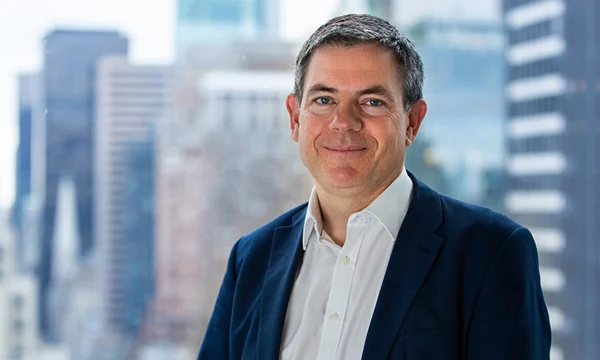
Ed Crooks
Vice Chair Americas and host of Energy Gang podcast
Ed examines the forces shaping the energy industry globally.
Latest articles by Ed
-
Opinion
The mother of all disruptions
-
Opinion
Higher energy prices raise stagflation fears
-
Opinion
A power producer’s view of keeping the lights on. What does rising electricity demand from data centers mean for the US grid?
-
Opinion
Oil prices rise despite IEA reserves release
-
Opinion
The war with Iran: what does the disruption in the Strait of Hormuz mean for global energy?
-
Opinion
Iran conflict a test of US energy supply response
The new year has only just begun, and already we have seen an event with massive significance for the world of energy. The US operation to remove Venezuelan President Nicolás Maduro opens a new era for a country that holds – according to some definitions – the world’s largest oil reserves.
So far there has been little impact on oil markets. But what are the implications going to be for energy in the months and years to come? To discuss how this volatile situation might evolve, host Ed Crooks is joined by regular guest Amy Myers Jaffe, Director of NYU’s Energy, Climate Justice and Sustainability Lab, and an expert on oil earlier in her career.
History never repeats itself, the saying goes, but sometimes it rhymes. Amy draws a parallel between Venezuela today, and Iraq after the US-led invasion and the overthrow of Saddam Hussein in 2003. There are some similarities in the position of the two oil-rich countries, which were both dragged down by mismanagement and sanctions. But Amy argues that Venezuela’s oil system is in far worse shape, with looted equipment, chronic power and fuel shortages, and damage that may not be reversible.
Melissa Lott, another Energy Gang regular, also joins the show, and raises the question of what regime change in Venezuela might mean for the energy transition. Melissa is a partner at Microsoft, but appearing on the show in her usual role as an independent commentator and energy expert.
Then it’s on to the other places, people and technologies that are likely to make a big impact on energy this year. Ed is watching the Gulf Coast buildout of new liquefied natural gas (LNG) plants. It is a boom so big that Wood Mackenzie expects US LNG exports to roughly double from 2023 levels by around 2030, with more growth beyond.
The gang assesses the likely consequences of surging LNG supplies: downward pressure on global gas prices, and potential financial strain for exporters. There is also the possibility that a peace deal in Ukraine could make the oversupply even worse, by allowing more Russian gas to flow west into European markets.
Next up, it’s people to watch in 2026. Melissa names the US energy secretary Chris Wright, and Ed picks new FERC chairman Laura Swett. As the US power grid, and its energy system more generally, face mounting challenges because of the growth in data centres needed for AI, effective policy and regulation will be critical. Amy chooses China’s President Xi Jinping: the country’s next five-year plan could reshape the global competition for energy dominance.
On technologies to watch, battery storage is a hot topic. Melissa and Ed discuss the supply chains needed to meet growing demand, and innovative products such as Form Energy’s iron-air batteries, which are being deployed in a first-ever commercial project that will be fully operational this year. Amy’s choice is humanoid robots. They’re expensive and still imperfect, but are they going to rule the future? They are already being trialled for repetitive factory tasks. Amy says her Roomba can’t cope with a spilt bowl of cereal. But will new flexible AI-guided robots be able to do the job properly?
Follow the show so you don’t miss an episode this year – it’s going to be a busy one.
Business as usual is over
Introducing the latest insight from our thought leaders, the book Connected: Bringing predictability to the increasingly uncertain world of energy.
As climate change accelerates and geopolitical tensions reshape global markets, the energy landscape has become increasingly interconnected. Connected explores why those interconnections have developed, and how they bring clarity to the most important decisions we make about the future of energy.
