



Sign up today to get the best of our expert insight in your inbox
US permitting reform plan could transform energy investment
Proposed legislation would expedite approvals and limit legal challenges
11 minute read

Ed Crooks
Vice Chair Americas and host of Energy Gang podcast

Ed Crooks
Vice Chair Americas and host of Energy Gang podcast
Ed examines the forces shaping the energy industry globally.
Latest articles by Ed
-
Podcast
Predictive care for energy workers
-
Opinion
Elon Musk’s gas strategy shows how the US market is changing
-
Podcast
AI beyond the hype
-
Opinion
US oil production starts to respond to higher prices
-
Podcast
Can energy security and climate action work together?
-
Opinion
US permitting reform plan could transform energy investment
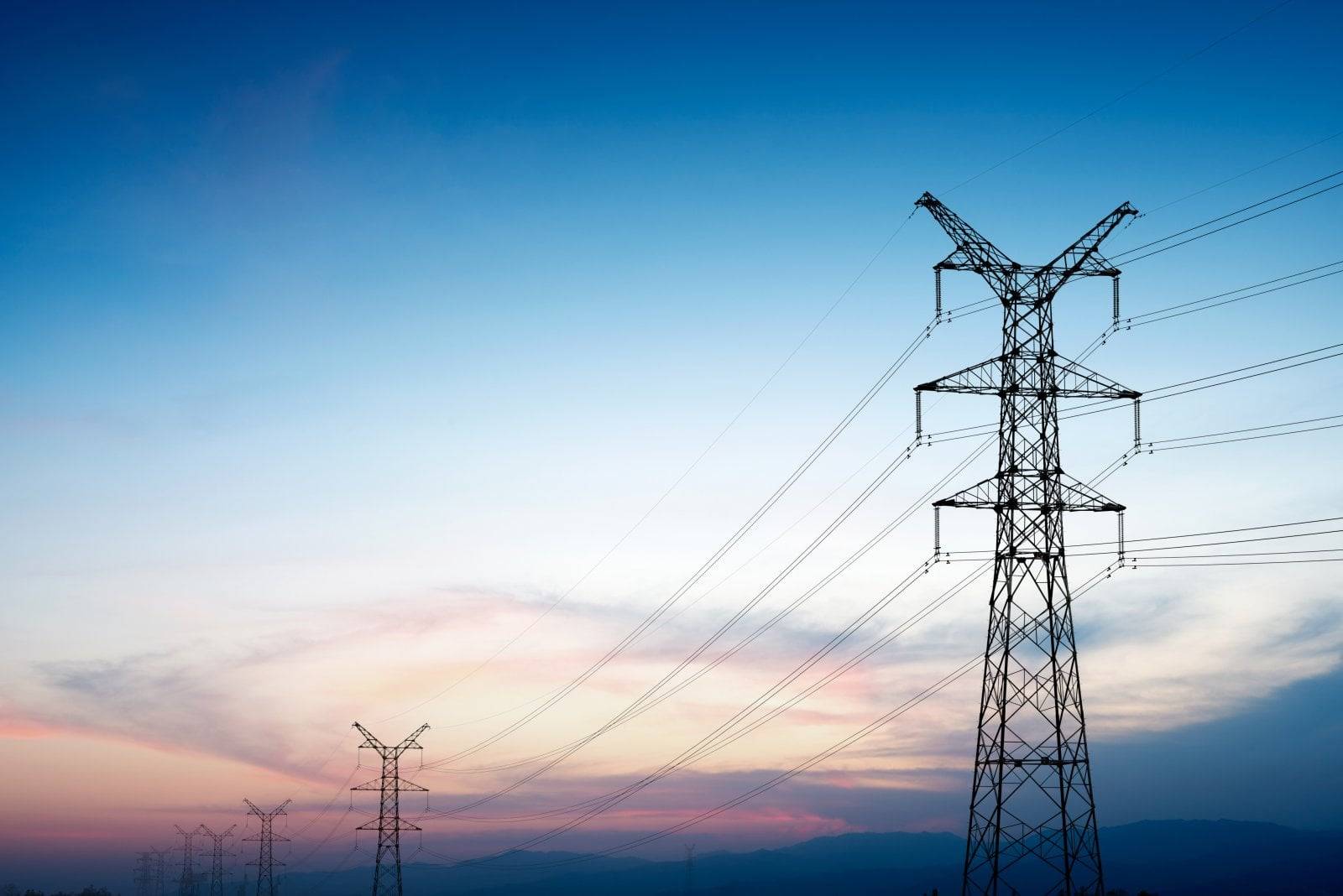
This summer, Governor Kathy Hochul of New York celebrated the completion of the Champlain Hudson Power Express, a new 339-mile electricity transmission line running from Montreal in Quebec to New York City. The line is intended to cut both the cost and the emissions intensity of power supplies in the state by connecting it to supplies from Hydro-Québec.
The time taken to build the line makes the word “express” in its name seem ironic, however: it took more than 16 years from start to finish. That is not unusual for new US transmission lines, which have often taken 15 to 20 years to complete, delayed by protracted regulatory processes and legal challenges. The TransWest Express Transmission Project is expected to have taken at least 26 years by the time it comes into service in 2031 or 2032.
It is not just power lines that are slow to build. Oil and gas pipelines, rail lines, bridges and nuclear facilities across the country have fallen far behind schedule and gone way over budget, or not been completed at all.
Now a bipartisan group of senators has launched a plan to clear away some of the obstacles that have created delays, cost overruns and cancellations for US infrastructure projects. Two Republican and two Democratic senators this week published their proposed Bipartisan American Affordability and Jobs Act (BAAJA), intended to expedite development for energy and other infrastructure.
The 417-page bill is extensive and ambitious in scope. If a bill is passed into law that is close to that published version, the rules for infrastructure permitting in the US should allow faster decision-making, greater certainty and less scope for obstruction from governments and campaigners.
The proposed measures include time limits of no more than two years for federal decisions on environmental approvals. They also include restraints on government agencies’ ability to withdraw permits once granted and restrictions on legal challenges to environmental approvals.
There are also sections designed to help development in specific energy sectors, including electricity transmission, solar and geothermal power. Another key provision would compel data centre developers to cover the cost of any transmission investment needed to support their facilities.
The political impetus behind the bill has been a bipartisan recognition that the current permitting system makes it too difficult to develop both fossil fuel and low-carbon energy infrastructure in the US. Surging electricity demand from new data centres for AI has made the case for reform more urgent.
“America is entering a new era of energy demand,” said Senator Martin Heinrich of New Mexico, one of the Democratic sponsors of the bill. “It should not take decades to build the infrastructure our country needs.”
There was a warm welcome for the announcement across a range of energy sectors. Mike Sommers, president and CEO of the American Petroleum Institute, said Washington has “a generational opportunity” to transform the permitting system and help bring down the cost of energy for consumers.
Tim Pawlenty, CEO of the Solar Energy Industries Association, said: “This is exactly the kind of bipartisan action America needs to meet growing energy demand [and] put downward pressure on energy prices.”
Whether the bill will make it into law or not remains uncertain. Jared Huffman, the ranking Democrat on the House Natural Resources Committee, said his party would not support a permitting reform bill until a new Congress is sworn in next year. The Democrats expect to make substantial gains, taking control of the House and possibly the Senate, in the midterm elections on 3 November.
Representative Huffman said: “Folding our hand now… makes no sense when we can keep working on this and, in a few more months, have a much better deal.”
But if enough political support can be rallied to pass legislation that includes the key measures in the proposed BAAJA, the effect on energy investment in the US could be profound.
The Wood Mackenzie view
Permitting reform could accelerate project development and cut costs across a range of energy sectors. Wood Mackenzie analysts say there are two areas where it could make a particularly significant difference: gas pipelines and electricity transmission.
In both sectors, development became increasingly difficult in the 2020s. Capacity additions peaked for interstate gas pipelines in 2018 and for high-voltage transmission in 2013, and have remained well below those levels, despite clear evidence of growing need. Permitting reform offers a chance to break those trends.
Gas pipelines
Gas pipeline development has picked up under the Trump administration, says Dulles Wang, a director on Wood Mackenzie’s Americas gas and LNG team. The administration has issued a series of executive orders to expedite pipeline projects. And the Supreme Court’s decision in the Seven County case last year, rejecting an attempt to block the construction of a railway to be used for transporting oil, gave government agencies more leeway to make decisions on environmental assessments.
Those moves are showing some results. Next year, the capacity of interstate gas pipelines completed in the US is expected to be the highest since 2018. But for fundamental and lasting change, legislation is still essential.
For gas pipeline developers, the most critical provisions in the BAAJA include the accelerated timeline for decisions on environmental approvals, and the curbs on revoking permits that have already been granted. Restrictions on the use of Section 401 of the Clean Water Act to stop pipelines crossing rivers could also be significant.
Wood Mackenzie’s Wang says that if permitting reform passes into law, early test cases could come with two pipeline extension projects in the Northeastern US. The Constitution Pipeline and the Northeast Supply Enhancement (NESE) are being developed by energy infrastructure company Williams and would run from Pennsylvania to New York.
Constitution was first proposed back in 2012, and NESE in 2017. By connecting Marcellus shale gas production to markets in New York and beyond, they could reduce costs for consumers. But they have faced sustained opposition and delays due to legal challenges. A change in the law could make it possible for them to be completed at last.
Electricity transmission
The outlook for electricity transmission is similar. Efforts by the Trump administration to support investment in grid infrastructure may show some results, but a substantial and sustained pick-up requires legislation.
The administration has put an emphasis on the use of technology to increase capacity on existing transmission routes.
The Department of Energy (DOE) has an initiative called Speed to Power through Accelerated Reconductoring and other Key Advanced Transmission Technology Upgrades (SPARK), which is essentially a rebranding of a grid programme from the Biden administration. Last month, the department announced US$1.9 billion for 31 grid improvement projects across the country under that programme.
However, other Biden-era transmission initiatives have been abandoned. In August, the DOE announced it was scrapping plans for three National Interest Electric Transmission Corridors, because they had been proposed by the Biden administration “as a means to advance their Green New Scam agenda”.
Siddhant Warrier, a Wood Mackenzie research analyst for North American power, says the proposed BAAJA could make a “massive” difference to transmission development in the US. The legislation would strengthen the authority of the Federal Energy Regulatory Commission and compel regions to work together on joint transmission planning. It would also restrict the ability of utilities to block grid projects.
It would also introduce a new framework for the contentious issue of cost allocation: deciding who must pay for investment in transmission. The plan to make data centre developers pay for grid upgrades should help make cost allocation easier.
If all or even most of these changes are implemented, the pathway to develop a transmission project in the US should become significantly easier.
The BAAJA has some way to go before the bill, or some version of it, can become law. The indications from Democrats in the House suggest that the chances of securing a deal in Congress this year are slim. But the progress of the bill will be worth following closely, given the significance of the prize that is at stake.
G7 announces 100 million barrel release from reserves
The G7 leading economies on Friday announced a plan to release 100 million barrels from their reserves of crude and refined products over the next four months, to ease shortages in the market. The programme will be front-loaded with “substantial” releases of diesel over the first 20 days. The release averages out at about 830,000 barrels a day, but is expected to be higher than that for the initial period.
The G7 leaders’ statement said unprecedented volatility in oil markets was threatening economic stability and living standards. They said their goal was to “stabilise immediate energy supplies, shield households and businesses from price shocks, and strengthen the long-term resilience of global energy systems.”
The announcement of the release followed calls from the US for European countries to release more diesel from their reserves. President Donald Trump has suggested he could ban US diesel exports, which would drive up prices around the world, including in Europe.
Prices for diesel and other refined products have been driven higher by the impact of the conflict in the Middle East and Russia’s war with Ukraine, and have remained high despite increased flows of oil from the Gulf region.
Before the G7 announcement, diesel for November delivery in New York was trading at the equivalent of about US$195 a barrel. Immediately after the announcement, it was trading about 5% lower at the equivalent of about US$185 a barrel.
The retail price of diesel in the US averaged about US$6.37 a gallon on Friday, down only about 2% from its record high 10 days ago.
South Korea to review possible investment in Alaska LNG
President Lee Jae Myung of South Korea said his country had not yet made a commitment to invest in the proposed Alaska LNG mega-project, but was reviewing the proposed development with the US. He posted on social media that the project would go ahead “under the preconditions that 1) its commercial viability is confirmed and 2) it complies with the legal procedures of the Republic of Korea.”
Earlier, President Trump had announced that the two countries were working together on the project as part of a package of Korean investment in the US said to be worth about US$200 billion in total.
Other views
‘Here be giants’: unlocking Africa’s deepwater exploration puzzle – Simon Flowers and others
AI is reshaping the power investment landscape – Allen Wang and others
Speed to power: the infrastructure solutions shaping the global data centre race – David Brown
The 2026 global power market outlook: common problems, diverse solutions – Brian Gaylord and others
China’s bigger, better batteries – Simon Mundy
Quote of the week
“Superintelligence factories = surveillance centers”
Governor Ron DeSantis of Florida posted on the social network X to raise his concerns about data centres and emerging technologies linked to AI.
President Trump and leaders in the artificial intelligence industry have been trying to rebrand AI in the face of mounting public opposition. The president has ordered the US government to use the term “superintelligence”, or SI. Jensen Huang, CEO of Nvidia, described the new generation of data centres as “superintelligence factories”.
Governor DeSantis is a leading figure in the Republican party and may attempt to run for president in 2028. His decision to raise concerns about AI is a sign that political opposition to data centre development in the US may continue to grow.
Chart of the week
This comes from a recent presentation titled ‘5 market signals reshaping gas and power markets’, by Miaoru Huang, Wood Mackenzie’s research director for Asia-Pacific gas and LNG, and Allen Wang, our head of APAC power and renewables research. It shows orders for gas turbines outside China since 2015, which surged last year as a result of the AI-driven boom in investment in power generation. The strain on the turbine industry’s supply chain means that many orders, especially for the larger frame turbines, will not be delivered until 2030.
The full presentation has several other charts with insightful and thought-provoking perspectives on those five market signals.


Get The Inside Track
Ed Crooks’ Energy Pulse is featured in our weekly newsletter, the Inside Track, alongside more news and views from our global energy and natural resources experts. Sign up today via the form at the top of the page to ensure you don’t miss a thing.
You can also hear more from Ed on his bi-weekly podcast, Energy Gang.