




5 ways the Middle East crisis has changed APAC upstream
The disruption to energy flows through the Strait of Hormuz is more than a price shock. It is driving a structural reset in energy security, domestic supply, project economics and capital allocation across Asia-Pacific.
2 minute read

Farid Wajdi Mohamad Isa
Senior Research Analyst, Upstream

Farid Wajdi Mohamad Isa
Senior Research Analyst, Upstream
Farid primarily oversees Asia Pacific upstream market activities and initiatives.
Latest articles by Farid Wajdi
View Farid Wajdi Mohamad Isa's full profileWith over 80% of oil and gas exports from the Middle East normally destined for the Asia-Pacific region, the chokepoint in the Strait of Hormuz has revealed a key vulnerability. So, how are Asian countries adapting, and what does it mean for the region’s upstream sector?
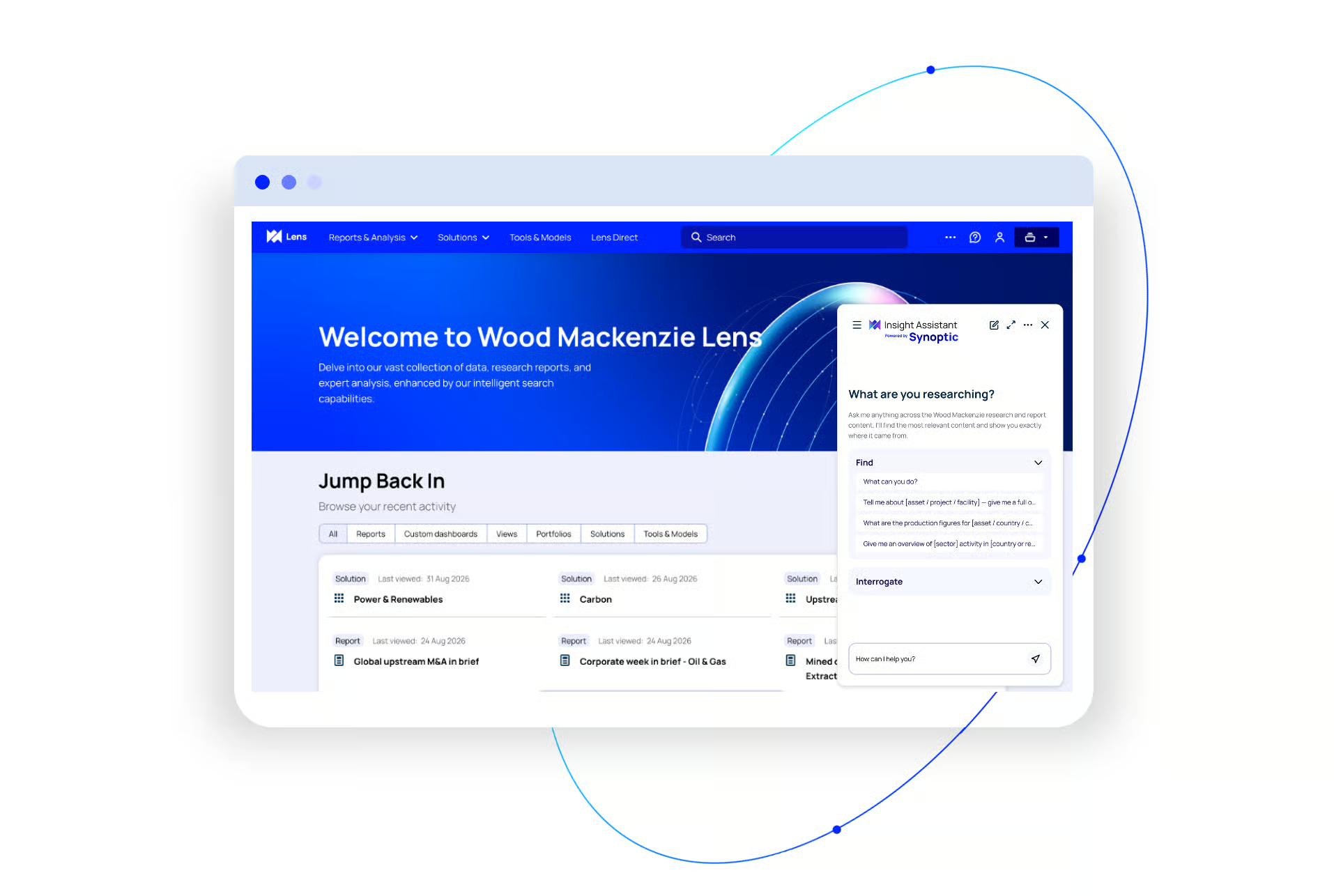
Wood Mackenzie’s regional experts have leveraged data from a wide range of proprietary sources to assess the implications of the ongoing conflict for APAC’s upstream industry — including our Wood Mackenzie Lens Upstream and Lens Gas & LNG platforms.
- Energy security is reshaping policy: Asian governments are renewing their focus on domestic supply and exploration — but balancing affordability, diversification, investment, policy progress, climate goals and long-term pricing signals is a huge challenge.
- Near-term supply growth will remain limited: higher prices alone won’t boost output limited by mature basins, infrastructure bottlenecks and downstream constraints — faster approvals, infrastructure expansion and fiscal support are needed.
- Price upside does not necessarily mean value upside: some governments benefit from higher prices through progressive fiscal measures. Operators, meanwhile, face rising costs, tighter supply chains and execution pressure
- Asian companies are reassessing investment: Asian NOCs and IOCs are reassessing their Middle East portfolios. Some are reallocating capital back to Asia-Pacific to invest in growth projects closer to home, while others are looking harder at diversifying into new core areas outside of APAC and the Middle East. Some are also re-evaluating what new opportunities could be present in the Middle East once the crisis has passed.
- APAC LNG projects are being reassessed as more attractive: the crisis is refocusing local buyers’ attention on the region’s remaining pre-FID LNG projects, which now look more competitive and appealing.
Get more insight
Now fill out the form at the top of the page to download an article which expands on these key findings from the full report.