



LNG: why a resilient portfolio is increasingly key to success
With LNG supply from the Middle East at risk, buyers will need to build LNG portfolios that can withstand supply disruptions
2 minute read

Massimo Di Odoardo
Vice President, Gas and LNG Research

Massimo Di Odoardo
Vice President, Gas and LNG Research
Massimo brings extensive knowledge of the entire gas industry value chain to his role leading gas and LNG consulting.
Latest articles by Massimo
-
The Edge
War is reshaping LNG beyond winter
-
The Edge
Is Europe’s gas market inching towards a winter crisis?
-
Opinion
LNG: why a resilient portfolio is increasingly key to success
-
The Edge
Ten takeaways from WoodMac’s LNG Conference
-
Opinion
Horizons Live: Strait talking | Webinar replay
-
The Edge
How power markets can adapt to energy crises
Just months ago, a period of oversupply in LNG markets seemed inevitable. The war in the Middle East has dramatically changed the outlook for LNG, yet two very distinct narratives are emerging about how the market will evolve.
At our recent Gas, LNG & The Future of Energy conference in London, we delivered a keynote presentation exploring what these very different scenarios would mean for industry decision-makers.
An extended disruption scenario
A delayed resolution to the conflict results in extended disruption to LNG markets. The Strait of Hormuz remains closed throughout 2026, while ongoing tensions means there is a risk it continues to be a recurrent chokepoint thereafter.
A quick peace scenario
In contrast, a quick peace scenario represents a ‘best case’ in terms of conflict resolution, with the Strait of Hormuz opening by July, and a lasting peace agreement avoiding further closures.
How will LNG importers respond?
How importing countries will react to the current situation will depend on how the conflict evolves. Under a quick peace scenario, increased supply availability and lower prices will likely result in future gas and LNG demand being similar to that anticipated before the war. However, under an extended disruption scenario, some countries will be incentivised to to refocus their energy strategies on securing their supply chain and either doubling down on coal or investing in increasingly cheap renewables.
How the global LNG market will balance under the two scenario is becoming increasingly uncertain.
Get more insight
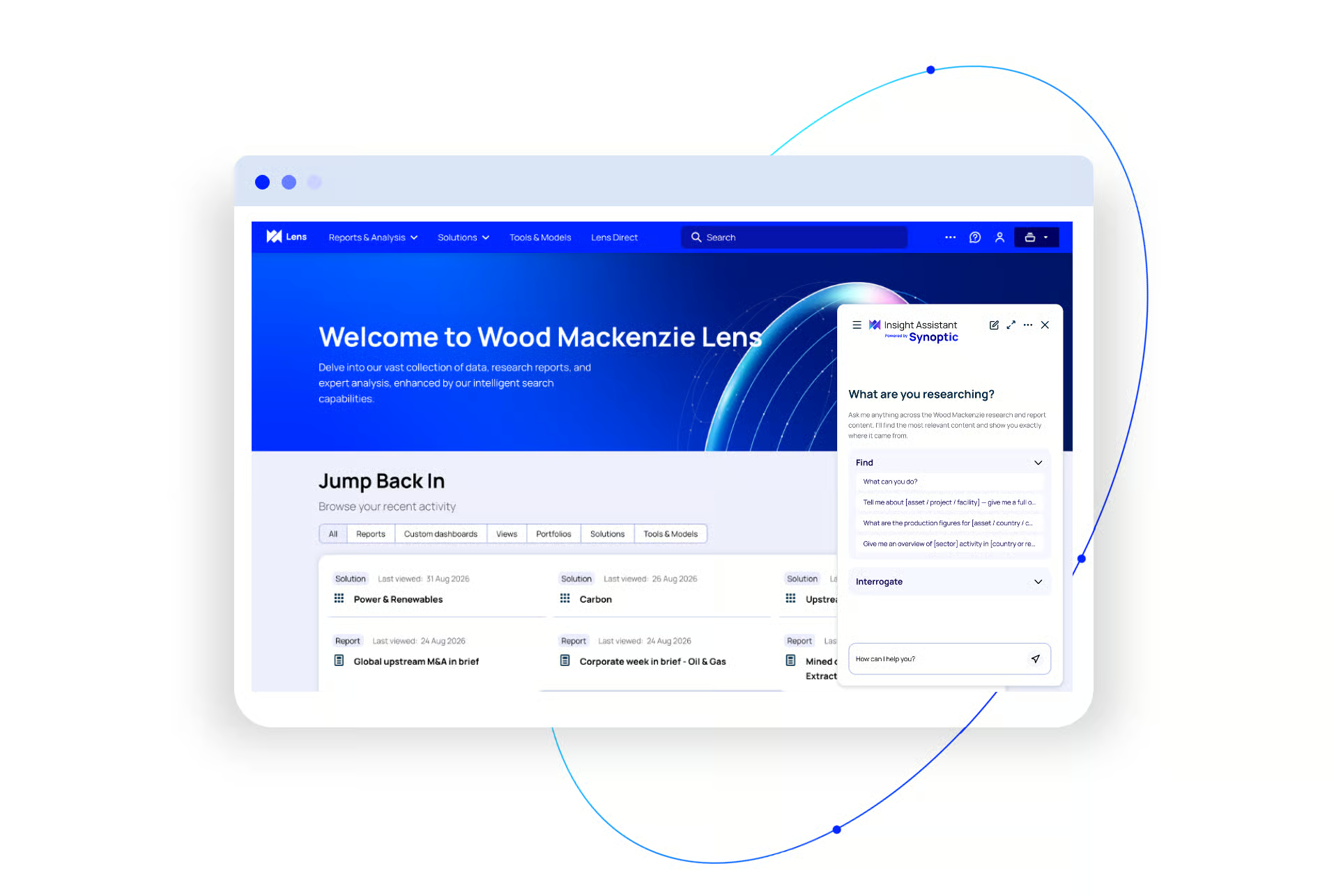
Now fill out the form at the top of the page to download the full complimentary insight, which leverages data and insight from our Wood Mackenzie Lens Gas & LNG platform to explores how these scenarios will play out in terms of LNG supply and demand. Topics covered include:
- How much supply can be expected through 2030 under each scenario
- What options are available for increasing supply
- Why and how downside risk to gas and LNG has increased
- How the two scenarios will affect the supply-demand balance
- What this means for the value of long-term contracts
- How the Gulf supply shock underlines the increasing resilience of the global LNG market