



Sign up today to get the best of our expert insight in your inbox
The extraordinary comeback of concentrating solar power
Complex, outdated, expensive: concentrating solar power used to be seen as a clunky way of harnessing the sun. What’s changed to now make it viable?

Ed Crooks
Vice Chair Americas and host of Energy Gang podcast

Ed Crooks
Vice Chair Americas and host of Energy Gang podcast
Ed examines the forces shaping the energy industry globally.
Latest articles by Ed
-
Opinion
US permitting reform plan could transform energy investment
-
Podcast
Energy in a more dangerous world
-
Opinion
US considers diesel export restrictions
-
Podcast
Power under pressure | Climate Week NYC special
-
Opinion
The US Federal Reserve responds to the rise in oil prices
-
Podcast
Climate finance without Washington
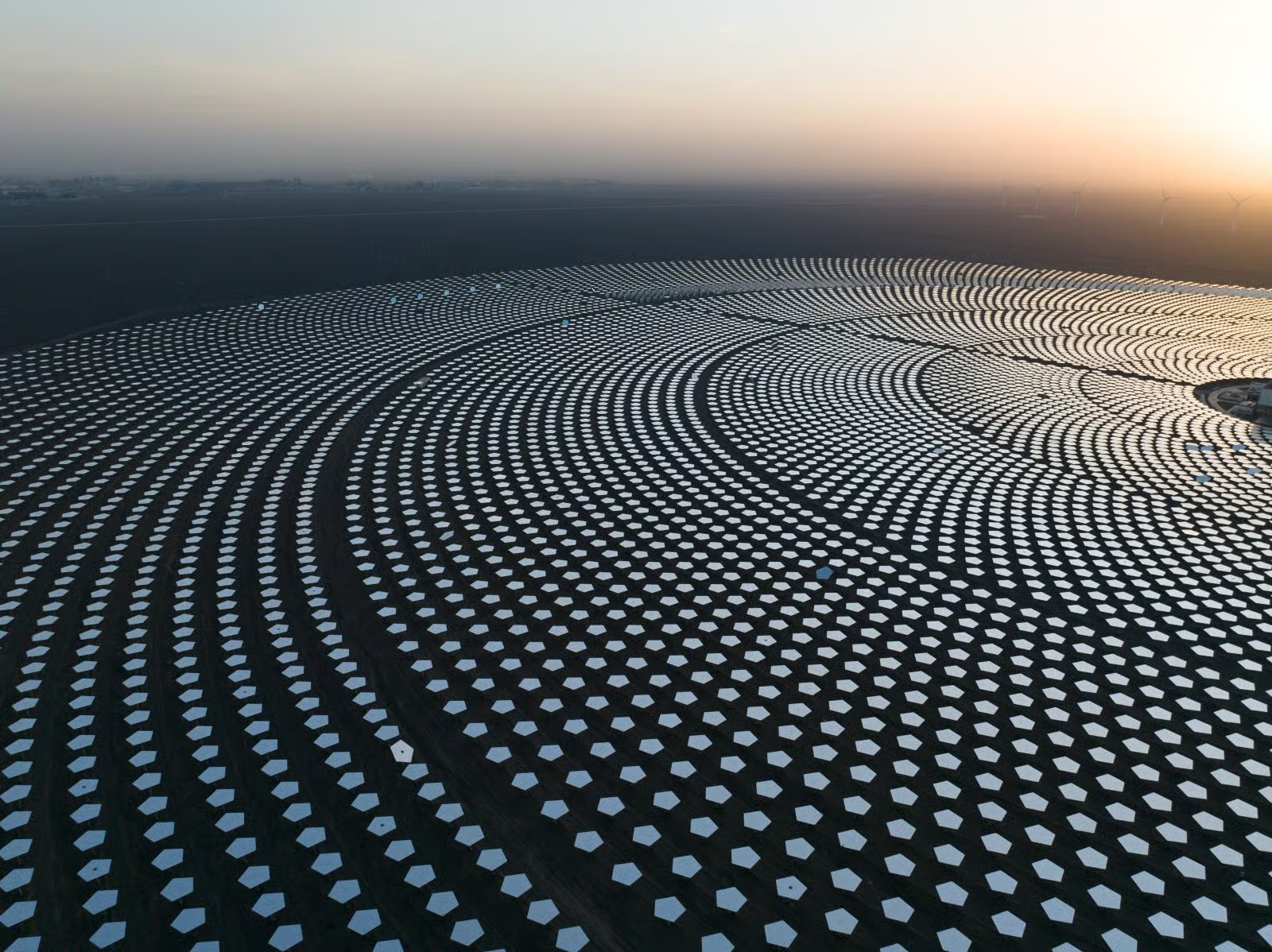
Concentrating Solar Power, or CSP, takes energy from the sun, converts it to heat, and uses it to drive a turbine to provide renewable electricity. It has more moving parts than photovoltaic (PV) solar – which has none – so there is more that can go wrong. But it has the big advantage that the heat can be stored for days, weeks and even months, meaning that CSP can support grid stability even when the sun isn’t shining. Its real competition isn’t PV solar, but other “clean firm” power sources such as geothermal.
The US Department of Energy is funding 25 projects in this area, with almost US$100 million to research and develop CSP technologies. To discuss the technology and the viability of a process that’s been trying to get off the ground in the US for decades, Melissa Lott and Amy Myers-Jaffe are joined by Dr Matt Bauer from the Solar Energy Technologies Office.
They explore the different generations of CSP technology, with Gen 3 focusing on higher temperature heat and more efficient power cycles. The steep learning curve and capital intensity of CSP plants is a particular barrier to deployment at the moment, as is the risk associated with building large thermal plants. The potential for CSP to bridge seasonal energy storage gaps is there; unlocking it is the problem.
You can find Ed and the show on most social media platforms: we’re @theenergygang on X. Subscribe to the Energy Gang on Apple Podcasts or Spotify so you don’t miss the next show.
For more analysis and to keep up-to-date with everything that happens with the Energy Gang, sign up to our weekly Inside Track newsletter.