






Discuss your challenges with our solutions experts
ECA’s first LNG cargo departs amid feedgas disruption signals
Satellite imagery, pipeline nominations and vessel tracking offer an early view of operational shifts as Energía Costa Azul advances its LNG export ambitions
2 minute read

Ricardo Falcón-Bautista
Research Manager, North America Natural Gas and LNG, Commodity Trading Analytics (CTA)

Ricardo Falcón-Bautista
Research Manager, North America Natural Gas and LNG, Commodity Trading Analytics (CTA)
Latest articles by Ricardo
-
Opinion
ECA’s first LNG cargo departs amid feedgas disruption signals
-
Opinion
Mexican gas and power market loses steam: is a rebound in sight?

Nadeem Ahmed
Research Analyst, Global Gas & LNG

Nadeem Ahmed
Research Analyst, Global Gas & LNG
Latest articles by Nadeem
-
Opinion
ECA’s first LNG cargo departs amid feedgas disruption signals
-
Opinion
Energía Costa Azul LNG commissioning begins as flaring detected, but first cargo timeline looks stretched
Mexico's Energía Costa Azul (ECA) LNG project reached a significant milestone in July as the Pacific Success arrived at the facility on 6 July before departing Ensenada on 7 July carrying what Wood Mackenzie vessel tracking data indicates was a fully loaded LNG cargo, and which Sempra Infrastructure confirmed as ECA’s first LNG export on 8 July. The vessel's draft increased from 9.4 metres on arrival to 11.5 metres on departure, equivalent to 96% of its summer load maximum.

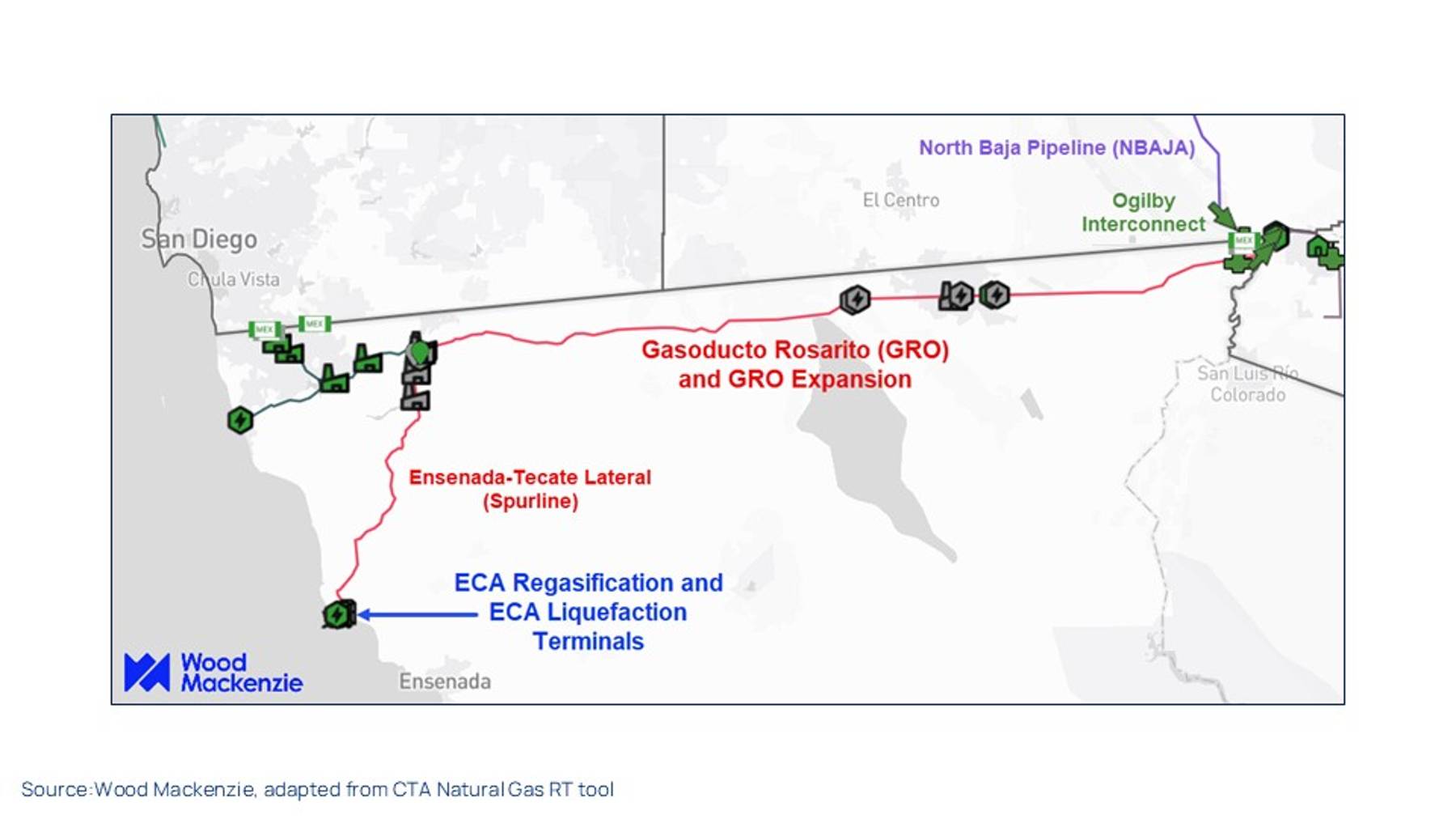
Behind the headline cargo movement, a series of operational signals offered a deeper view of activity at the facility. Wood Mackenzie satellite imagery showed liquefaction activity slowing from gas day 2 July, with no visible heating signatures observed from 3 July onwards. At the same time, Gasoducto Rosarito (GRO) nominations for ECA Liquefaction fell from more than 400 MMcf/d, where they had averaged for the previous two weeks, to just 31 MMcf on 2 July and 7 MMcf on 4 July.
The decline continued in the days that followed. GRO later reported scheduled maintenance at the Las Dunas compressor station running through 10 July and highlighted gas quality issues at ECA's regasification receipt point on 1 and 6 July. Feedgas deliveries that had consistently exceeded 400 MMcf/d for weeks fell sharply, reaching zero from 5 to 7 July according to the latest reported gas days. California pipeline exports to Mexico also dropped from a two-week average of 828 MMcf/d to below 500 MMcf/d after 2 July.
For market participants monitoring North American gas flows and LNG development, the episode demonstrates how vessel tracking, satellite monitoring and pipeline analytics can provide an early indication of operational changes, often days before official announcements. As Mexico's LNG export sector expands, the ability to monitor these interconnected signals is becoming increasingly valuable for traders, analysts and commercial teams alike.


Stay ahead of developments in Mexico's gas and LNG market
Wood Mackenzie’s Natural Gas S&D service combines pipeline flow analytics, satellite monitoring, vessel tracking and market intelligence to help you identify operational changes and emerging market signals with greater confidence.
Learn how Natural Gas S&D can help you monitor LNG facilities, pipeline networks and US-Mexico border gas flows.