





Discuss your challenges with our solutions experts
The Blackcomb question: can the pipeline reach its full 2.5 bcfd capacity at startup?
Mainline construction is progressing well, but compression constraints could limit initial capacity
3 minute read

Devin Cao
Research Analyst, Natural Gas

Devin Cao
Research Analyst, Natural Gas
Latest articles by Devin
-
Opinion
The Blackcomb question: can the pipeline reach its full 2.5 bcfd capacity at startup?
-
Opinion
Open season activity signals renewed push for interstate gas pipelines

Daniel Myers
Senior Research Analyst, North America Gas

Daniel Myers
Senior Research Analyst, North America Gas
Daniel delivers short-term fundamental modelling and regional market analysis.
Latest articles by Daniel
-
Opinion
The Blackcomb question: can the pipeline reach its full 2.5 bcfd capacity at startup?
-
Opinion
Gulf Coast Express expansion begins commissioning
-
Opinion
US gas prices slide as storage expectations tighten: what it means for summer 2026
-
Opinion
Natural gas futures shrug off winter storm impact despite storage drawdown
-
Opinion
Winter Storm Fern shuts in 18.3 bcfd of US gas production at its peak
-
Opinion
US L48 gas: injection season ends
Wood Mackenzie's latest aerial surveillance of the Whitewater Midstream’s Blackcomb Pipeline corridor, conducted in mid-May 2026, points to a project that is making solid progress overall. However, construction sequencing and compression readiness will determine whether the system enters service at full capacity or in a constrained early phase.
Construction status: strong at the margins, tighter in the middle
The 366-mile route connecting the Waha hub to Agua Dulce, Texas has advanced materially across the Permian and Southern spreads, where pipe installation is well in hand. The remaining mainline challenge is concentrated in the Central corridor through Val Verde and Kinney counties, now the active construction front and the key schedule variable for an expected Q4 startup.
Compression asset readiness varies considerably across the system. Rankin is the standout, with late-stage construction indicating near-term mechanical completion. Del Rio is in solid mid-stage execution. More notable is the pace at Freer, a site only recently filed with the TCEQ, which is already showing poured concrete foundations, suggesting the operator is proactively managing the compression schedule.
The outlier, and the one site that warrants close attention, is Big Wells Compressor Station in Dimmit County. As of the May flyover, only preliminary grading was visible, a meaningful lag relative to every other facility on the system.
Our take
Our flight imagery review estimates Blackcomb's mainline at 63% complete. A Q4 2026 in-service date remains achievable, but we view a phased capacity startup as the more probable outcome given the compression picture. Future compression sites identified near Ozona and Uvalde, suggest that Blackcomb may initially come online at 2 bcfd capacity, similar to the initial four compressor station capacity availabile on Whitewater’s sister Whistler Pipeline project.

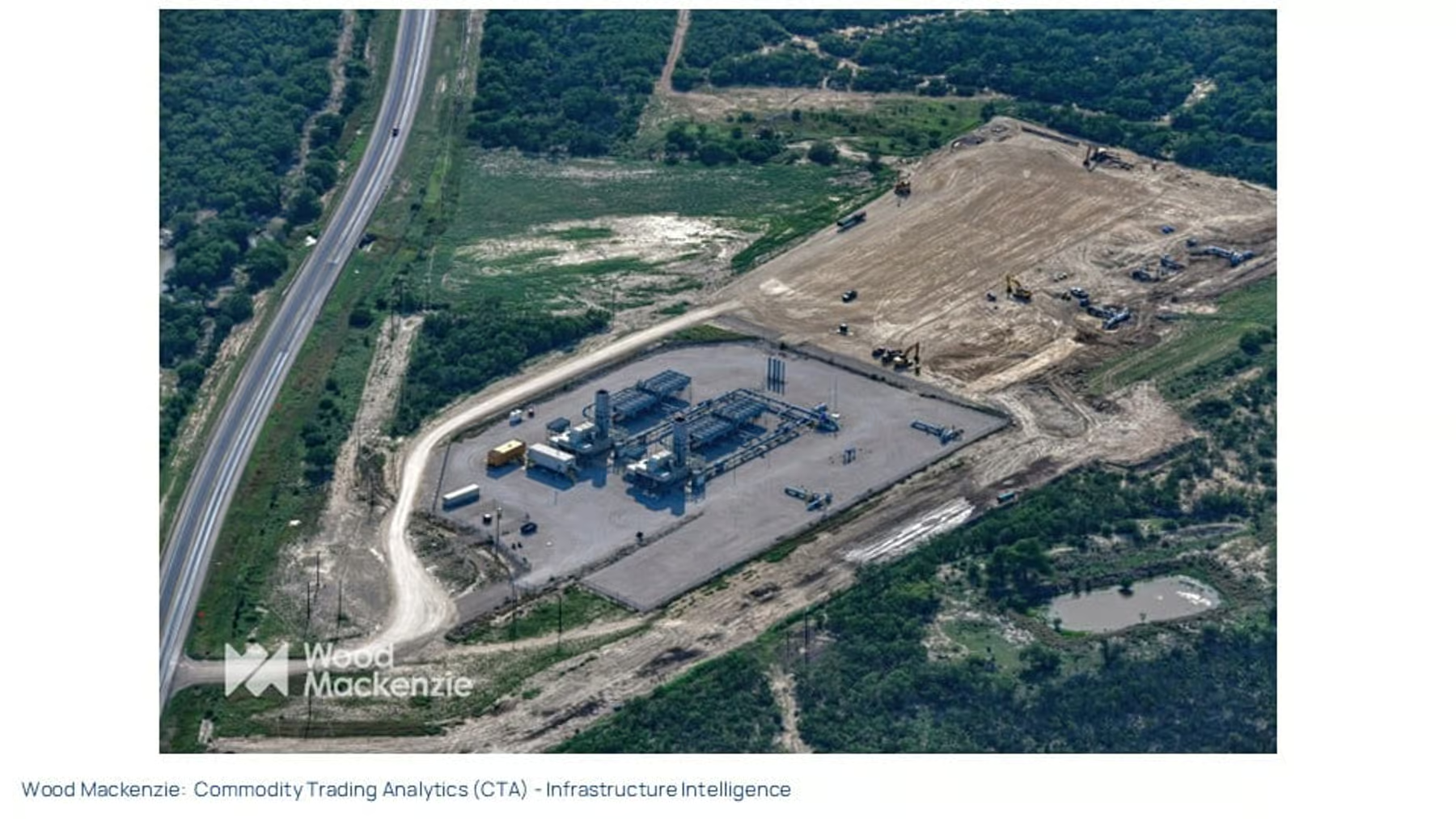
The structural lag at Big Wells is the primary risk to watch. If the facility is not sufficiently advanced by the time mainline construction wraps, initial flow capacity will be constrained, a meaningful commercial consideration for shippers and counterparties planning around Blackcomb's volumes.
On that basis, Wood Mackenzie expects Blackcomb to enter service at an initial operational capacity of approximately 2 bcfd, falling short of its 2.5 bcfd design throughput. Closing that gap will require completion of the outstanding compression build-out, including sites near Ozona and Uvalde, in the months following first gas.
For producers and marketers exposed to the Permian takeaway market, the timing and sequencing of that ramp matters. We will continue to monitor construction activity and update our capacity outlook as conditions evolve.
The infrastructure behind the market
Pipeline projects influence markets long before they enter service. Construction progress, compression build-out and commissioning timelines can all affect the pace at which new capacity reaches the system and the commercial implications for producers, shippers and traders.
Understanding those developments requires visibility beyond public filings and construction updates. Through proprietary aerial surveillance and infrastructure monitoring, Wood Mackenzie provides independent insight into the assets, operational constraints and infrastructure developments shaping energy market outcomes.
This analysis is based on proprietary aerial surveillance and construction monitoring conducted by Wood Mackenzie's Commodity Trading Analytics team. For further detail or to discuss implications for your portfolio, contact us using the form above.