





Fraser McKay
Head of Upstream Analysis

Fraser McKay
Head of Upstream Analysis
As head of upstream research, Fraser maximises the quality and impact of our analysis of key global upstream themes.
Latest articles by Fraser
-
Featured
Upstream oil and gas 2026 outlook: half-time report
-
Opinion
Global upstream update: handpicked for small and mid-sized E&Ps
-
The Edge
How quickly can Gulf oil exports recover?
-
The Edge
Ceasefire in the Middle East
-
Opinion
The biggest topics in global upstream
-
Opinion
Middle East conflict set to drive oil and LNG prices significantly higher

Tom Ellacott
Senior Vice President, Corporate Research

Tom Ellacott
Senior Vice President, Corporate Research
Tom leads our corporate thought leadership, drawing on more than 20 years' industry knowledge.
Latest articles by Tom
-
Featured
Upstream oil and gas 2026 outlook: half-time report
-
Opinion
Video | Venezuela in global portfolios: risk, restraint, and strategic optionality
-
Opinion
Venezuela regime change: what it means for oil production, crude and product markets
-
Featured
Corporate oil & gas 2026 outlook
-
Opinion
Power moves: TotalEnergies’ Integrated Power strategy assessed
-
The Edge
Majors' capital allocation in a stuttering energy transition
Surging oil and gas prices due to the Middle East conflict have delivered a cash windfall for oil and gas companies in H1 2026. So far, capital discipline has been maintained – but can that hold as portfolio pressures build?
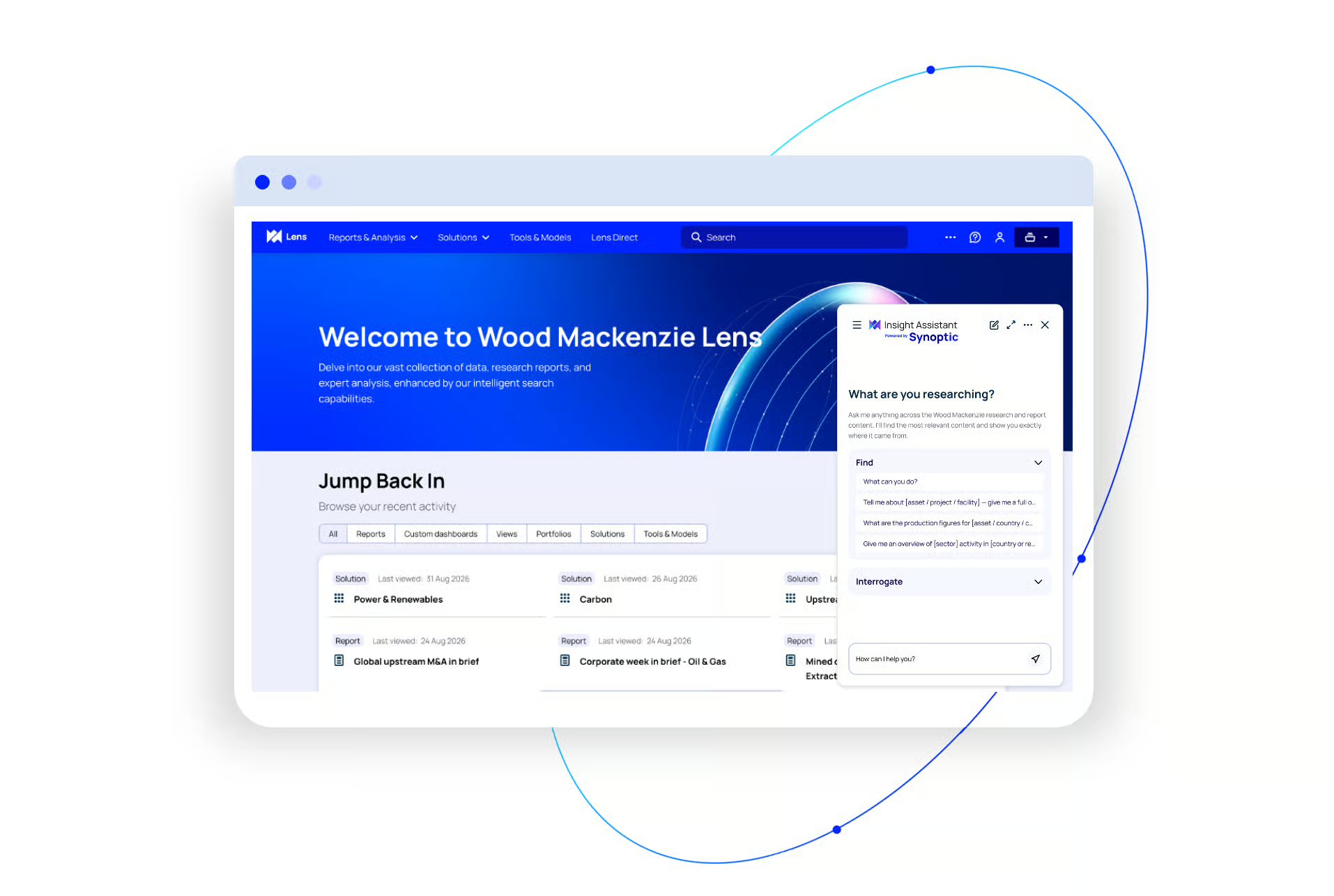
Drawing on unique data and insight from our Wood Mackenzie Lens Upstream platform and Corporate Strategy & Analytics Service, our latest insight takes stock of how 2026 is playing out against our upstream and corporate outlooks and makes predictions for H2 2026 and beyond.
Fill in the form for your free copy of the report, or read on for a short introduction to its key themes.
1. Capex spend remains constrained
We expected a second year of slight decline in global upstream development spend in 2026. This will hold true despite the cash windfall from higher prices accelerating deleveraging. Operators have mainly tried to capture price upside through maintenance deferral, optimisation and ‘capex-light’ activities, rather than major investment.
But will hard-won capital discipline be maintained in H2 and into 2027? Find out in the full report.
2. Margins have exceeded all expectations
Coming into 2026, companies were planning on a Brent Crude price of around US$60 per barrel. Instead, prices could average at least US$15 per barrel higher, while costs have remained relatively stable. Firms operating in the Gulf have lost output, but nearly all will be net beneficiaries of the resulting higher prices.
What does that mean for capital allocation and cost inflation in H2? Read the full report to find out.
3. Geopolitical risk adds to portfolio renewal pressure
At the start of the year, we flagged long-term portfolio renewal and opportunity capture as key priorities for upstream operators. With many companies facing large production declines from their existing assets over the next decade, portfolio renewal has perhaps never been a more urgent issue. Meanwhile, the Middle East conflict has highlighted the concentration risk involved in focusing on geopolitically unstable regions.
Read the full report to find out how businesses are addressing these issues.
4. Will 2027 see a new wave of upstream M&A?
Despite market uncertainty and price volatility, deal count was within touching distance of recent highs in H1 2026. Price volatility and uncertainty has hampered dealmaking, but a lack of inventory is driving strong appetite for M&A.
Read the full report to understand the latest M&A market dynamics. Fill in the form at the top of the page to get your copy.
5. Exploration risk appetite is rising
The need for portfolio renewal and diversification is raising upstream firms’ appetite for exploration risk. Exploration budgets have so far only risen slightly, but companies are changing approach to adding acreage, taking on more exposure and positioning earlier.
Find out more about risk appetitie and corporate strategy in the full report.
6. Why the Middle East is indispensable to upstream long-term
The conflict in the Middle East may cause upstream firms to divert some investment towards other regions, with the Americas, Asia and international gas/unconventional opportunities likely to benefit. Yet we still expect the region to play a critical role in the longer-term portfolio renewal plans of the world’s largest oil and gas companies. Find out why in the full report.
Now fill out the form to download your free copy of the report, which dives into these topics in more detail and includes a range of supporting charts and data.